Climate change – again: Are we in trouble, or not?

Two scientific studies produced recently show just how difficult it is for us to work it out.

First, a bit of background.

Any process that removes carbon from the atmosphere can act as a carbon sink. These include basic processes like having the gas dissolve into the ocean, to more complex ones, such as the sequestration that appears to take place in mature forests. Taken together though, the impact is huge.

We think that carbon sinks remove about 60 per cent of the CO2 that us humans pump into the atmosphere each year. What’s left is referred to as the airborne fraction.

Now – researchers from the University of Bristol’s QUEST programme on climate change and earth system modelling say in one breath that over the last 50 years the average fraction of global CO2 emissions that remained in the atmosphere each year has increased from 40 to 45 per cent.

This suggests a decrease in the efficiency of the natural sinks – such as the oceans and terrestrial ecosystems.

However, a second team found no increase in the airborne fraction over the same period and that the trend was in fact -0.2 ± 1.7 per cent per decade – which is essentially zero – concluding that the capacity of terrestrial ecosystems and the oceans to absorb CO2 has not diminished.

Says science commentator Anthony Watts:

“This work is extremely important for climate change policy, because emission targets to be negotiated at next month’s United Nations Climate Change Conference in Copenhagen have been based on projections that have a carbon free sink already factored in. Some researchers have cautioned against this approach, pointing at evidence that suggests the sink has already started to decrease.”

But, who’s right? Says Ars Technica‘s John Timmer:

“These are two highly technical papers that use different data sets and different methods; it’s no surprise that they’ve reached different conclusions, and it will probably take the scientific community a few months of digesting them and comparing them to previously published work in order to reach a consensus on which one (if either) is likely to better reflect reality. Using them to generate competing coverage in the popular press doesn’t do a public that understands climate science poorly any favors.”

New wireless technology is three years away

In the middle of nowhere and can’t use your mobile phone?

Well, finally, the independent regulator and competition authority for the UK communications industries – Ofcom – has published a discussion document to explore the potential of a new technology that could wirelessly link up different devices and offer enhanced broadband access in rural areas.

The technology works by searching for unoccupied radio waves – called white spaces – between television channels to transmit and receive wireless signals. Compared with other forms of wireless technology, such as Bluetooth and Wi-Fi, white space devices are being designed to use lower frequencies that have traditionally been reserved for tv.

Signals at these frequencies travel further and more easily through walls. This will potentially allow a new wave of technological innovation in wireless communications. Although at least three years away from commercial production, possible applications include:

  • Improved mobile broadband access in rural areas
  • Digital cameras that can automatically transmit photos back to your computer as soon as you click the shutter
  • The ability to control appliances in your home – such as the oven and central heating – hundreds of miles away.

However, white space devices must first prove they can operate without interfering with tv broadcasts and other wireless technologies that share these frequencies, such as wireless microphones. A promising solution is for devices to do this is by consulting a geolocation database that contains live information about which frequencies are free to use at their current location.

Ofcom’s discussion document focuses on the issues that need to be addressed for this solution to work. If there is strong evidence to show that white space devices can coexist with neighbouring tv signals and wireless microphones without causing interference, then Ofcom would allow them to use the frequencies without the need for individual licences. However, this technology remains largely unproven and a significant amount of work needs to be done before these claims can be tested.

The purpose of Ofcom’s discussion document is to further the thinking that is taking place around the world on geolocation and speed the development of possible solutions.

Understanding climate change

A new study of Antarctica’s climate history shows that in some brief warm periods between ice ages, temperatures were up to 60°C warmer than today. The findings could aid our understanding of rapid climate changes.

Scientists from the British Antarctic Survey (BAS), the Open University and the University of Bristol, explain that until now temperatures during the warm periods between ice ages – known as interglacials – were thought to be slightly warmer than those of the present day.

However, some brief spikes in temperature – which recur roughly every 100,000 years and last a few thousand years – seem to have been a lot warmer.

It is quite difficult to reconstruct temperatures from long ago. Although it is generally accepted that the climate was warmer 125,000 years ago, the BAS’ results suggest it was much warmer than previously thought.  It will be interesting to see if other studies agree with its findings.

Ice cores from East Antarctica contain the oldest drilled ice on Earth, and provide a unique record of past climate.  Analysis of the ice cores has revolutionised our understanding of how Antarctic climate has varied in the past. The BAS’ ice core scientist Eric Wolff, a world-leading expert on past climate, says:

During the last warm period sea level was around five metres higher than it is today. If we can pin down how much warmer temperatures were in Antarctica and Greenland at this time, then we can test predictions of how melting of the large ice sheets will contribute to sea level rise.

Jenson! What were you thinking, man?

Don’t get me wrong. It’s fantastic to see two British F1 World Champions installed in one of our greatest British – well, sort of – racing teams. This hasn’t happened since 1968 when Jim Clark was partnered by Graham Hill. Hurrar!

It’s also a dream ticket for the sponsors. They’ll be cock-a-hoop.

That said, what must have been going on in those meetings for Brawn GP – and now Mercedes-Benz – to let the World Champion slip through their fingers, and Jenson abandon the safe haven that was Brawn to join forces with the enemy.

For those of us who follow such things, the whole saga defies logic. Drivers who really want to win world titles stay with the team that supports them the most – that provides them with the stability they crave.

Button has made a number of sacrifices over the last few years and behaved honourably. He deserves a pay rise. Then again, he couldn’t have won this year’s World Championship without Brawn’s team and a damned good car.

So, has Jenson lost his scruples overnight and decided to move for the money?

He and McLaren say no. Brawn GP says it offered Button’s negotiators what they was asking for, but it was they who upped the ante. We’re also being led to believe that Brawn GP’s management pocketed a great deal of money from the deal with Mercedes-Benz and perhaps Button’s negotiators felt Button was entitled to a share.

Who knows? Perhaps all will become clear over time.

What we do know though, is that McLaren is Hamilton’s turf and Jenson’s the new boy, World Champion or not. Jenson is facing an uphill battle to get his feet under the table.

The McLaren machine’s going to be hot at the start of next season. Wonder boy Hamilton is going to hit the floor running. Will Jenson?

I’m told that Hamilton used engines tuned by Jenson Button’s dad – John – to win one of his karting championships. Apparently, there’s a bit of history between both boys’ fathers. It will be interesting to see how the relationship between the racers develops.

More important to me than the Jenson saga

We’ll talk about the Jenson-McLaren development in a minute.

What saddened me more was news that Donington Park has gone into receivership today – and so soon after the passing of 87-year-old Tom Wheatcroft. This treasure of the sport did much to revive and then develop the circuit for world class racing. He also played an important part in the careers of many a GP driver.

In the early 1970s Donington Park was still in a dilapidated and neglected state following its use as a military vehicle depot during the war. Former racer Tom, now a successful builder, was in a position to buy the land upon which the circuit stood.

With amazing enterprise he upgraded and re-routed the circuit – to accommodate the required safety legislation – and a large number of hospitality suites were incorporated to enhance the circuit’s facilities for an ever growing leisure market. Racing eventually returned to Donington Park in 1977.

Tom also built up a unique collection of Vanwall, McLaren, Williams and BRM machines – the Donington Grand Prix Exhibition. The collection contains a pre-war AutoUnion built from the original plans and a perfect replica of Ettore Bugatti’s personal Royale.

I could go on, but Tom’s contribution to the sport has been immeasurable, and the word ‘legend’ hardly does justice to the man. It’s going to take someone with great vision to get Donington Park up and running again.

That’s not going to be easy. Tom’s a tough act to follow.

Understanding culture

President Obama’s bow to the Japanese Emperor (and, come to think of it, UK Prime Minister Gordon Brown’s inability to bow at the Cenotaph) is still causing worldwide media ripples about its appropriateness…or lack of.

But the issue is much more than Obama bowing. It’s about how little we, as politicians, business people, politicians, even journalists know about the culture, etiquette of the foreign countries we negotiate among, do business with and travel to. Says business analyst Ron Cruse:

“Thanks to technology and shifting world economies, countries of the world are becoming one big business community. Most of our business opportunities will be overseas, and it’s vital we understand other cultures and protocol. Not understanding a country’s culture could not only cost you the deal, but have even more severe consequences.”

Forget the bankers, cancer and AIDs need the cash

An expert from the Pancreatic Cancer Awareness Group – which comprises the UK’s major pancreatic cancer charities – is calling for a more realistic approach to pancreatic cancer research funding.

It appears that the current level of investment has led to no improvement in survival rates over the last 40 years.

Consultant Surgeon Hemant Kocher, based at Barts and The London, says that both clinicians and researchers are frustrated by the lack of investment into service provision and research for this deadly cancer – referred to as the ‘silent killer’, the tenth most common type and the fifth most common cause of cancer death:

“It is shocking to think that average life expectancy once pancreatic cancer is diagnosed is just six months. In the next year seven thousand people in the UK will die from this cancer and yet only one per cent of all cancer funding goes towards pancreatic cancer research.”

According to Mr Kocher, where research is able to be carried out there are some encouraging signs for the future. Researchers are discovering that as far as surgery for pancreatic cancer goes, less is more. Says Mr Kocher:

“Allowing patients to undergo surgery and get additional chemotherapy immediately afterwards helps to prolong survival. Information collected from recent studies suggests that doing the standard surgical excision for pancreatic cancer is perhaps as good as the extensive operations, with fewer complications after surgery.

“We can only learn so much with the limited resources we have, however. If we want to make a swift and significant impact then more investment is vital. It is crucial that we capitalise on the progress made to date, otherwise we run the risk of another 40 years with very little change.”

An aggressive spending programme is also the only way to end global HIV/AIDS. This is in contrast to previous research which advises that gradual spending over 15 to 20 years is needed to eradicate the epidemic.

Canadian researchers found that an aggressive programme over five years is the only way to end the epidemic, given our current resources.

Their study – part of a supplement on The OptAIDS project: towards global halting of HIV/AIDS – was based on a mathematical model developed by mathematicians and biologists.

Professor Robert J. Smith and his team from the University of Ottawa – working with researchers from York University and the University of Manitoba – developed the mathematical model to examine how best to eliminate HIV/AIDS worldwide, given the large amounts of money that have been committed to fighting the disease.

They found that the $60 billion currently committed to fighting HIV/AIDS might suffice to end the epidemic globally. However, spending this money over the proposed 15 to 20 years will almost certainly fail, given the ability of HIV/AIDS to spread through travel and migration.

Recent scientific advances combined with education campaigns and condoms have been very effective in reducing the incidence of the disease in many countries and regions. However, the incidence of infection is still on the rise in many countries.

Travel and immigration will also make it impossible to contain the disease to these regions. As a result, the researchers predict that the spread of the disease will continue to outpace treatment. Says Professor Smith:

“The OptAIDS project grew out of a frustration with existing attempts to tackle the disease. HIV/AIDS is mostly addressed at a community or national level, when it needs to be tackled globally.”

The team is now working to develop a model for how best to spend existing resources in the developing world to contain the disease before it spreads beyond our reach.

Watch out for new energy saving technologies

Most domestic heating and automotive air conditioning requires a lot of energy. Domestic space heating and hot water account for 25 per cent of energy consumption in the UK. Across the EU, vehicle air conditioning uses about five per cent of the vehicle fuel consumed annually. Within the UK it is responsible for over two million tonnes of CO2 emissions.

Stick with me!

Researchers have long been aware of a much more energy efficient way to drive heat pumps (or air conditioners) using adsorption technology. This uses heat from a gas flame or engine waste heat to power a closed system containing only active carbon and refrigerant.

When the carbon is at room temperature it adsorbs the refrigerant and when heated the refrigerant is driven out. A process which alternately heats and cools the carbon can be used to extract heat from the outside air and put it into radiators or hot water tanks. With air conditioning it extracts the heat from the inside of the car.

The major snag has been that adsorption technology to date would need to be roughly 300 litres in volume for a car air conditioner and larger for a heat pump to heat your house.  Clearly that is not going to fit into a car and the volume of unit required for domestic heating probably couldn’t fit under your stairs at home either…

Now – I’ve got to the point – researchers at the University of Warwick have made a breakthrough in adsorption systems design that

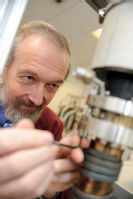
UoW's lead researcher Bob Critoph

dramatically shrinks these devices, making them small and light enough for use in both domestic heating and automotive air conditioning.

They have devised and filed a patent on a clever new arrangement that distributes thin (typically 0.7mm thick) sheets of metal throughout the active carbon in the heat exchanger. Each of these sheets contains more than a hundred tiny water channels (typically 0.3mm in diameter) designed to make the heat transfer much more efficient.

This has enabled the Warwick team to create adsorption based equipment that is up to 20 times smaller than was previously possible.

The researchers expect that their new adsorption technology can create domestic heat pumps that will produce a 30 per cent or more reduction in domestic fuel bills (and CO2 emissions) compared to even the best condensing boiler. In car air conditioning systems their new system can exploit waste heat from the engine, converting it into useful cooling.

Because no (or very little) mechanical power is then taken from the engine it will reduce both fuel consumption and CO2 emissions by nearly five per cent. The research team also anticipates that in new vehicle models the system can be integrated with little or no extra cost.

We’re told the UoW’s engineers have had significant interest in the new technology from a range of companies, and they have already entered into a technical partnership with a major global vehicle manufacturer to develop and demonstrate the technology.  There has also been considerable interest from the domestic heating and hot water market.

This significant commercial interest has led to a new spin-off company, Sorption Energy Limited, being set up by Warwick Ventures, the University’s technology transfer office, and H2O Venture Partners. Initially the company will use the new patent pending technology to focus on two high value markets: greener heating and hot water systems for houses and air conditioning for cars.

Overtaking in Formula One (Part 2)

I see that Formula One’s governing body – the FIA – was discussing the much debated subject of overtaking on Wednesday.

Among those present were circuit designers Hermann Tilke and Clive Bowen. Bearing in mind what I said on Tuesday, I’d love to have been a fly on the wall in that meeting!

Values – then and now

Have been reading extracts from David Kynaston’s ‘Family Britain 1951-57’ (published by Bloomsbury). Perhaps my children should read it.

For years I’ve been painting a picture of a long-gone era of respect, Spitfire kits and dolly mixtures. But no-one believed it to be true. Now Mr Kynaston has come to the rescue. It’s a bit ‘Just William’:

“We played in the street with our friends and were safe; we climbed trees, skinned our knees and ripped our clothes, got into fights and nobody sued anybody. Sweets were a treat, not part of lunch. We got a clip round the ear when we had been naughty, and Mum gave us a teaspoon of malt and cod liver oil before school.”

As well as the reference to sweets, I particularly liked:

“We were allowed to answer the phone on our birthday as a special treat.”

In fact, I guffawed at that one. Imagine today’s little darlings doing without their mobiles. What Kynaston identified were wartime values which were still very strong, even in the 1960s. As were respectability and trust.

Contrast this with The Sunday Telegraph’s excellent leader of 8 November which shows how far we’ve sunk. It lays the sacrifices of both World Wars against the behaviour of today’s politicians, and the public’s belief in the integrity of the political process which has been greatly damaged by this Government:

“The contempt for ordinary voters, and so for democracy itself, shown by the failure to call a referendum has many to doubt whether the present Government can be trusted with any important decision at all.

“The scandal over MPs’ expenses has had a similar effect, for it has created the impression that whatever they say about their devotion to ‘public service’, MPs’ highest priority is actually their own private gain. While the party leaders have insisted that all of Sir Christopher Kelly’s proposed reforms to the system of allowances and expenses must be adopted, the reluctance of MPs themselves to embrace those reforms has reinforced that pernicious impression.

“This is extremely dangerous, for it strikes at the heart of the trust that we, as people, must have in our representatives if our system of government is to work.

“If we come to believe that our MPs are working not for us but for themselves then we cannot trust them to choose what is best for the country.

“As the trust on which our democratic system depends continues to evaporate, that democracy becomes ever harder to sustain. And if it falters, the sacrifices made to preserve it in the wars of the last century will have been in vain. On Remembrance Sunday, that is certainly something sobering to remember.”

Ditch Hermann and save F1

The deliciously witty crew at grandprixdiary.com have, as usual, put their fingers right on it. The latest generation of F1 venue may be OK for supermodels and sundry celebs, but Hermann Tilke‘s circuit design has killed racing.

And why does this guy get all the business anyway?

The list of contracts he’s won is impressive but it begs the question whether it is good for the sport for one architect to maintain such a grip on circuit design.

Bring back the old style of circuit, we say. You don’t need all this plastic frippery when all that’s required for proper F1 racing is a nice bit of tarmac, handy thermos and, in the words of Clive Bowen – Founding Director of Apex Circuit Design – a track that builds in confidence and grip for drivers just where they need it the most to make a pass.

In response to F1 writer Joe Saward’s analysis of the subject, Bowen suggests how we can get around the problem.

His three ways make a great deal of sense.

Sailing into greatness

Just been watching Channel 4’s The Schoolboy Who Sailed the World, an account of Michael Perham’s circumnavigation of the globe.

It’s an impressive feat for any lone yaughtie. But when I tell you that Mr Perham was just over 17 years of age, a schoolboy from Potters Bar and the youngest person to achieve it, then it becomes all the more remarkable.

Now, 16-year-old Jessica Watson from Australia is having a crack, having just passed the 2,000 nautical mile mark of her 23,000 mile journey. Waiting in the wings is Dutch girl Laura Dekker. She is only 13 years old!

Some may disagree with teenagers embarking on such dangerous adventures. They may possess the technical abilities necessary for long distance sailing, but do they possess the life experience necessary to deal with all the potential adversity they could face while at sea?

Of course they don’t, and who cares anyway? In a time when the world likes to brand teenagers as uninspiring and unremarkable, leading a life of consumerism, television and video games, it is a pleasure to see these truly remarkable individuals proving everyone wrong. As Jeannie Babb Taylor says:

“Amazing teens can do amazing things. We cheer our young Olympians without asking too many questions about their education, because we realize that their experiences are a different kind of education. We listen to young music phenoms without worrying too much if they miss some of the ordinary experiences of youth, because we recognize that they are allowed to experience the extraordinary.”

The forgotten evolutionist

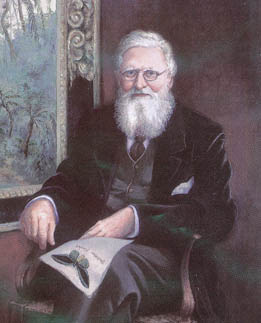
The man who might have been Darwin – AR Wallace – is the subject of a fascinating new exhibition at Cambridge University’s Museum of Zoology from tomorrow until February 2010.

Among the many thousands of Darwin stories that have circled the globe during the bicentenary year of his birth, AR Wallace has remained something of a forgotten man.

But this new exhibition by Fred Langford Edwards at the Downing Street museum aims to cast new light on Wallace’s theories of natural selection and evolution.

Yes, he is worthy!

I don’t know. Yet another commentary, and yet another person asking the great and the good whether a certain J Button is a worthy champion.

Yes, he is. Now, can we move on please? Thank you. Even today’s Telegraph has finally conceded:

Unfailingly polite, refreshingly articulate and humble, Button is a hugely deserving world champion.

Abu Dhabi GP (Problem One)

Just been watching Senna driving out to the Yas Marina circuit. Everyone’s alluded to it, but that pitline exit has to be a major accident spot once the drivers start to put their foot down. Looks more like a car park. A very expensive one!