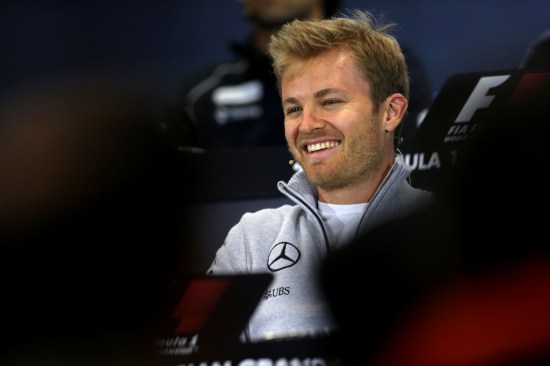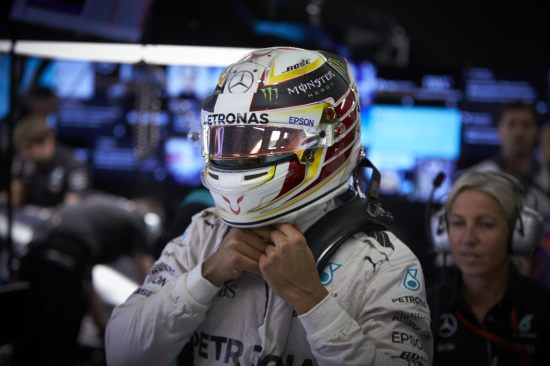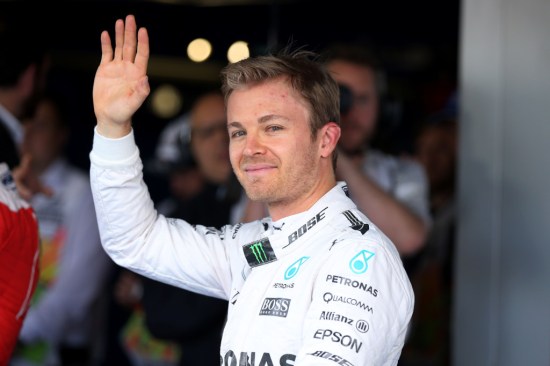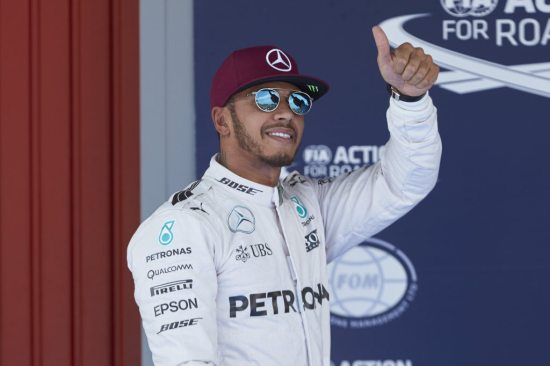
A “magic lap from Lewis”

1206418_2526648_1024_682_sne29772


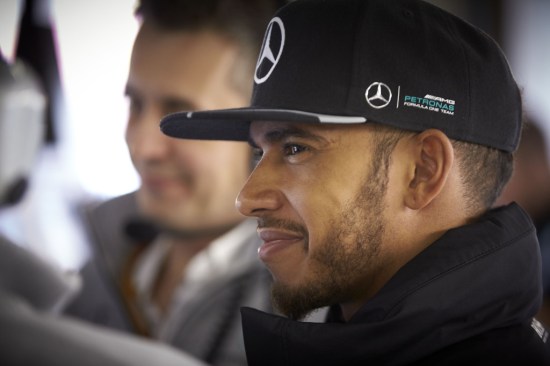
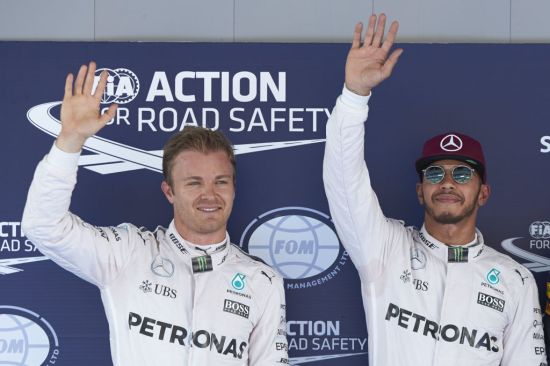
Lewis Hamilton today claimed his 52nd career pole position. Nico Rosberg completed a Mercedes front row lock-out with a time of 1:22:280. Hamilton’s pole time of 1:22.000 was 2.681 seconds faster than the 2015 pole. Both drivers completed one run in Q1 (soft) and Q2 (soft) and two runs in Q3 (soft).

Lewis Hamilton:
“That felt great today to finally put the lap together, I’m very very happy. You always need to put that performance in, it reassures your belief, and Nico had been so fast this weekend, sometimes two tenths quicker, sometimes more. I could see on my data where I was losing, so I had to try and figure it out on track, and it is so satisfying to attack that obstacle and get through it.

“I am really grateful to the team for working hard overnight to put the car in the right place for me to fight – and now it’s three poles from three for me when I’ve been able to do the laps in qualifying. I haven’t had a proper race with Nico yet this year so I am hoping that will start tomorrow. It’s very hard to overtake here, so strategy is important, as is looking after the tyres: the forces round this circuit means it just eats the tyres up, so you need to get that balance just right and see it through to the finish.”

Nico Rosberg:
“Lewis did the better job today but tomorrow is when it really counts. There is a big opportunity for me at the beginning: I had some good starts this year and Lewis hasn’t led into the first corner this season so far. Maybe in the race there will be an opportunity. Tyre usage will also play a factor and the right strategy will be crucial. So I’m expecting a pretty interesting race and I’m looking forward to the battle. We need to keep eye on Red Bull as well, as they are surprisingly stronger than Ferrari here.”

Toto Wolff, Head of Mercedes-Benz Motorsport:
“After the problems we had in the last two qualifying sessions, it was great to get both cars to the end of the session today – and to see the drivers put them on the front row. It was a magic lap from Lewis. He’s struggled with the set-up this weekend but worked with the engineering team to get the car where he wanted it, and delivered at the right moment. I’m very pleased for him.

“As for Nico, he’s second on the grid but it looked like he had something in his pocket in Q2, so his tyres might be a little fresher for the race start – and we will see if that makes a difference tomorrow afternoon. I’m expecting a tough race, a big battle between our boys and a challenge from the guys behind us on the grid. We must make sure we do our job and give the drivers reliable equipment, then see how the race unfolds.”

Paddy Lowe, Executive Director (Technical):
“First of all, well done to all our colleagues at Brixworth whose hard work and expertise over the past weeks has got us through the weekend reliably so far. Our aerodynamic upgrade package is also working well, which is a good confirmation that our development rate remains high and competitive.

“But we have had some difficult qualifying sessions recently, so it is a weight off our shoulders to have enjoyed a trouble-free session today in Barcelona – and it was a privilege to watch the battle between our two drivers performing at their very best. Congratulations to Lewis on his third pole of the season; he put in a tremendous performance during all three sessions and, at one point, was on course for a time in the 1:21 bracket. Well done to Nico, as well; he delivered some great laps to take our first all-Mercedes front row since Bahrain. Our focus now turns to tomorrow’s race. We will need good starts, given the difficulty of overtaking at this circuit, and we expect a challenging race in terms of strategy with plenty of opportunities to take advantage. We want to make sure our long-run performance is on the same level as we showed over a single lap today.”
 

1206413_2526633_1024_683_SNE29812

F1 pitstop techniques to help in resuscitation of newborn babies

On your marks...

On your marks…


Now, here’s an interesting one…

Williams has been assisting the neonatal unit at the University Hospital of Wales (UHW) in Cardiff by bringing Formula One pitstop know-how to help in the resuscitation of newborn babies.

Recognising the similarities between neonatal resuscitations and Formula One pitstops, the resuscitation team at UHW invited members of the Williams team to the hospital last year for an exploratory meeting to discuss how Formula One techniques and processes could be incorporated into their work. Wednesday 4 May saw members of the neonatal team from UHW visit the Williams factory in Oxfordshire to observe the team practice pitstops to see first-hand how they operate.

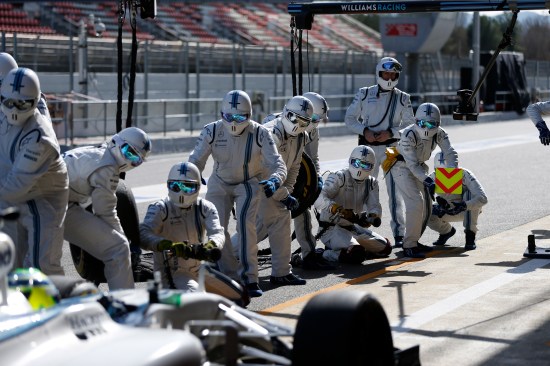
Both scenarios require a team of people to work seamlessly in a time critical and space-limited environment. In Formula One, a pit crew can change all four tyres on a car in around two seconds, with a team of nearly 20 people working in unison to successfully service a car. Williams has a dedicated human performance specialist who works with its pitcrew to fine tune the technique, processes, team work and health and fitness of team members.

Their experience previously treating new-borns in clinical practice has facilitated the transition of knowledge between the two industries and they have been the primary advisor to the hospital. Williams’s pitstops have been a real success story for the team in 2016, recording the fastest stops of any team at each of the first four races of the 2016 Formula One season.

Following these site visits, the neonatal team has identified and started implementing a number of changes to improve its resuscitation processes that are based on those used in Formula One racing. The resuscitation equipment trolley has now been audited and streamlined to ensure that equipment can be located as quickly as possible.

The neonatal team has mapped out a standardised floor space in delivery theatres to clearly show the area for the neonatal resuscitation team to work in; copying the customised floor map the Williams team takes to races to map out the specific pit box requirements at each track.

The pitstop resuscitation team at UHW are also in the early stages of implementing Formula One communications and analysis techniques, including the use of a “radio-check” prior to a resuscitation, greater use of hand signals rather than verbal communication, and video analysis to analyse performance following a resuscitation with debrief meetings as standard.

Speaking about the project Dr Rachel Hayward, specialist registrar in Neonates at the University Hospital of Wales said: “Resuscitation of a compromised neonate at delivery is time critical, requiring the provision of efficient and effective resuscitation to ensure an optimal outcome.”

Lovely the language medics use…

“Delays in providing effective resuscitative care can have marked consequences on survival or the development of long term complications. There is a growing amount of evidence to support a systematic approach to resuscitative care which is time-critical and dependent upon optimal team dynamics and clear communication.

“Analogous with the requirements of an effective pitstop we have worked with the Williams team to implement Formula One techniques and processes to augment neonatal resuscitative care”.

Claire Williams, Deputy Team Principal of Williams, added: “When we were approached by the Neonatal team at the University Hospital of Wales last year to offer some advice we were delighted to assist. Their work is vitally important and the pressure they work under is difficult to comprehend; it’s a matter of life and death every day of the week.

“If some of the advice we have passed on helps to save a young life then this would have been an extremely worthy endeavour. We are increasingly finding that Formula One know-how and technology can have benefit to other industries and this is a great example.”

I think this is great. We should have many more cross-industry knowledge transfers like this.

Sir Jack Brabham in top 100

Matt Brabham

Matt Brabham


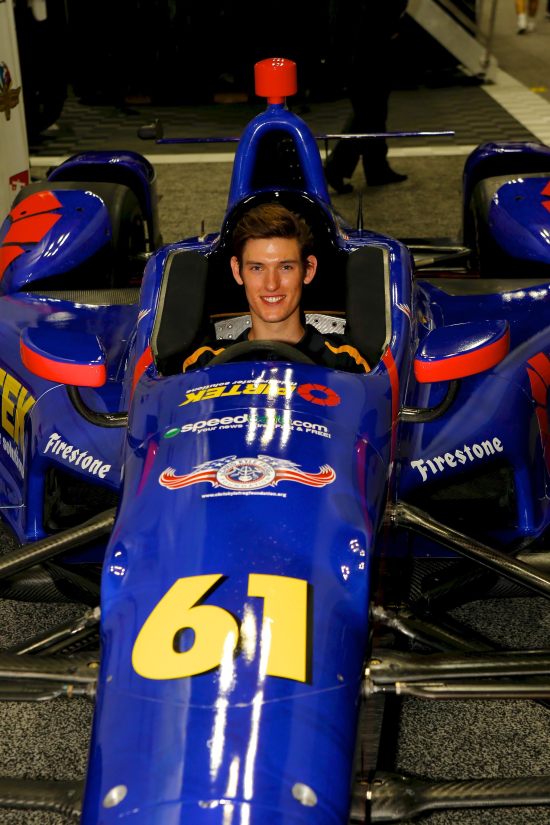
This month’s 100th running of the Indianapolis 500 means that little bit more to 22 year-old rookie Matt Brabham every day – this past weekend he learned that his grandfather, Sir Jack Brabham was included in the 100 most important people in the Indy 500’s history.

22-year-old Brabham will create his own history later this month driving in the 61 PIRTEK Team Murray Chevrolet in the Angie’s List Grand Prix of Indianapolis (14 May) and the Indianapolis 500 (29 May).

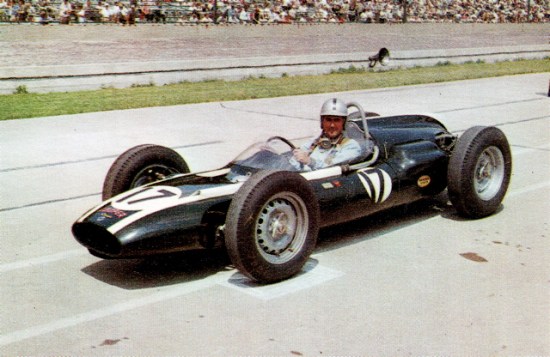
Sir Jack, who passed away in May 2014 at the age of 88, started the rear-engine revolution at the Indianapolis Motor Speedway in 1961 and competed in the race four times. The pioneering Australian qualified 17th on his debut and finished ninth and on the lead lap after inconsistent tyre wear forced him to make one further pit stop than he had scheduled.

His Kimberly Cooper T54 was the only rear-engine car in the 1961 race and by 1969, there were no front-engined cars in the field.

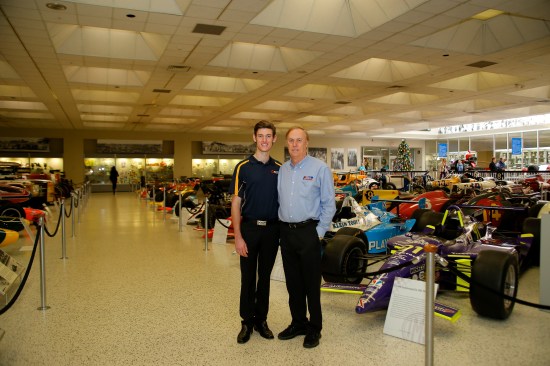
Sir Jack’s son Geoff made his Indy 500 debut in 1981 and competed in 10 events, with a best result of fourth in 1983.


Matt and his father Geoff

Matt and his father Geoff


Matt will become just the third third-generation driver to qualify for the race on Saturday 21 May – putting the Brabham family name beside that of Vukovich and Andretti.

The top 100 list was compiled by respected US motorsport writer Curt Cavin from the Indianapolis Star and USA Today. The list was topped by Tony Hulman – who purchased the track in 1945 and rejuvenated the place after it had deteriorated during the war years.

The Hulman-George family maintain ownership of the Speedway to this day and have just completed another multi-million dollar upgrade of the facility in time for this month’s 100th running which is set to draw the biggest crowd in the race’s history.

Number two on the list is original track creator Carl Fisher, while Wilbur Shaw was at number three. Shaw won the race three times and helped broker the deal between Hulman and former owner Eddy Rickenbacker (9) before becoming track President and General Manger.

Four-time race winner A.J Foyt, the legendary Mario Andretti, who won the race in 1969, and 1963 winner Parnelli Jones sit fourth, fifth and sixth respectively on the list. Roger Penske, who has won 16 Indy 500s as a team owner, sits seventh ahead of Sid Collins who was the radio voice of the Indy 500 from 1952-1976 and credited with coining the phrase “the greatest spectacle in racing”.

Rickenbacker, who owned the track from 1927 to 1945 before selling to Hulman, is at number nine while Tom Carneige, who was the public voice of the Speedway from 1946 to 2006 rounded out the top 10.

Sir Jack is the only Australian on the list which includes investors, drivers, team owners, promoters, media, officials, track staff, celebrities and team members.


Jack Brabham in his debut year at the Speedway

Jack Brabham in his debut year at the Speedway

Silver Arrows seals Sochi one-two in high tension Russian GP

1204534_2521911_1024_683__20i2725 1204536_2521920_1024_682_sne27040 1204537_2521919_682_1023_sne27078


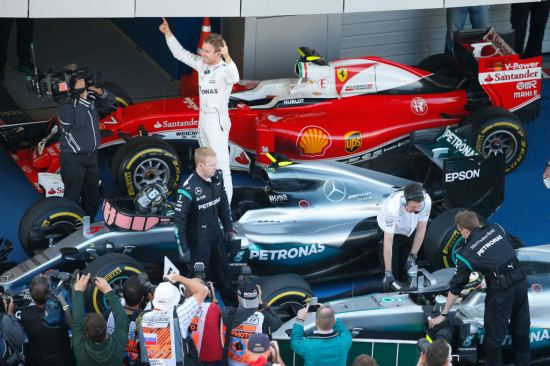
Nico Rosberg took his 18th career victory today – his first at the Sochi Autodrom and fourth of the 2016 season. Lewis Hamilton completed a second Mercedes 1-2 finish of the 2016 season in P2 with a battling performance from P10 on the grid. Rosberg set the fastest lap of the race – beating the previous best of 1:40.071 (Vettel, 2015) by just under a second (0.977s).

Hamilton produced a superbly controlled drive to manage a water pressure problem in the closing stages of the race and retain second position from Räikkönen. Rosberg (100) leads the Drivers’ Championship by 43 points from Hamilton (57) in P2. Mercedes (157) leads Ferrari (76) by 81 points in the Constructors’ Championship.

Nico Rosberg
“This weekend really went really perfectly for me. Already in qualifying I had found a perfect balance and that continued throughout the race, which was fantastic. Lewis drove really well to come back up to second so quickly, so well done to him too. The only down side to the weekend was to see that reliability is becoming a bit of a concern, as Lewis obviously had a problem yesterday and both cars had issues during the race today.”

Lewis Hamilton
“Firstly, I would like to thank the guys who came together to get the new parts over here from the factory last night – and then to the mechanics who worked all through the night to get everything prepared for me to go out there and race today. The guys on my side of the garage are having a really hard time of it at the moment – but I have every faith and confidence in them. We’ve swapped things round in the garage a bit this season but that is absolutely not the reason we’ve been having issues. It hasn’t been the case for the past three years and I have no reason to believe it would be now. Without their hard work I wouldn’t even have got to this point, so a big thank you to them once again.

1204518_2521863_1024_683_HAM_01 1204521_2521872_1024_683_HAM_ROS_01


“The first corner was pretty hectic. I don’t know what happened – but I saw something happening in the corner of my eye and just thought ‘I’m not getting caught again!’ I managed to get out of the way and avoid it – but if I’d turned in I would have collected them. It was pure instinct and I’m glad I was able to come out without any contact this time. From there I had good pace and I felt like I could challenge for the win – but then there was the water pressure problem which ended that chance.

“It was tough to hang on at the end but I handled it as best I could. I had to really nurse the car home and I’m just relieved to have made it to the flag after how this weekend has been. I’ve got a long way to go yet this season with not many healthy engine parts left, so we need to do a better job on reliability.”

Toto Wolff, Head of Mercedes-Benz Motorsport
“That race was anything but plain sailing today – it was a pretty stressful experience to get both cars home, and there was a point when we thought neither of them might make it to the flag. First of all, congratulations to Nico, he did a perfect job all weekend and controlled the race from the front once again. He didn’t put a foot wrong and, when we faced an issue on the MGU-K during the middle part of the race, he was able to do all the necessary steps to keep it under control and bring it home.

“As for Lewis, he drove brilliantly. Some really good, aggressive passing manoeuvres and clever racing brought him to P2 – and he was just getting his head down to charge when we saw a water leak and he was losing water pressure. The only thing to do was ask him to back off to bring the car home and fortunately that meant the situation stabilised but cost him the chance of racing Nico. No doubt he will be thinking about what could have been today – but it was a fantastic recovery after such a tough moment in qualifying yesterday.

“A one-two finish is always something special and to be savoured, especially with the performance advantage we enjoyed this weekend. We are pushing hard this year and finding the limits of our car – but we need to get on top of our issues so the drivers can battle it out on track themselves. That’s what we all want to see and what we will be working hard to achieve in the coming days before Barcelona.”

Paddy Lowe, Executive Director (Technical)
“Coming into the race, the team did a fantastic job to get Lewis’ car back into shape for the race in the right specification and preserving his tenth place on the grid under parc ferme restrictions. It was quite a dramatic start, from which our drivers fortunately emerged unscathed.

“The result, in fact, worked in their favour, with Nico comfortable at the front and Lewis moving up to fifth. After the re-start, Lewis made some fantastic overtaking moves on Massa and Räikkönen, then once again on Bottas following the first round of stops. This proved critical to his result. After Nico’s stop, his car developed an MGU-K problem which we were able to manage to some extent but remained a concern to the end of the race. Then, shortly afterwards, Lewis’ water pressure started to progressively drop. We encouraged him to ease off, which helped to a degree. But, in reality, this appeared to be a terminal situation and we were sitting for about 20 laps with our fingers crossed hoping the car would make it to the flag. By some miracle it did just that, which came as a huge relief after the difficulties of the weekend. Overall, it’s great to get another one-two finish. But it’s clear that we have more work to do in the days leading up to the next race to understand the series of problems experienced over the past two weekends.”


1204435_2521614_1024_683_04f1rus-hz0416 1204438_2521625_1024_682_sne14179 1204441_2521634_1024_683_sne23028 1204500_2521809_1024_683_LH04 1204505_2521824_1024_683_04f1rus-hz8220 1204510_2521839_1024_682_sne25914 1204513_2521848_1024_683_04f1rus-hz8924

James Hunt remembered

9b7ee7ac-281f-4d31-bab5-d7a5e272de26

Freddie Hunt

d40506a8-83d6-4af8-860b-e9cb6166e5a2 e21455ac-daab-4561-b27a-9283ab045f7c


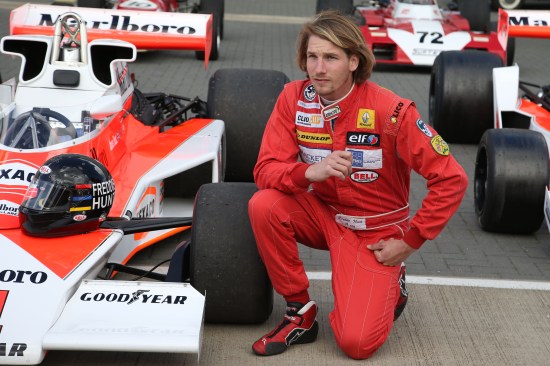
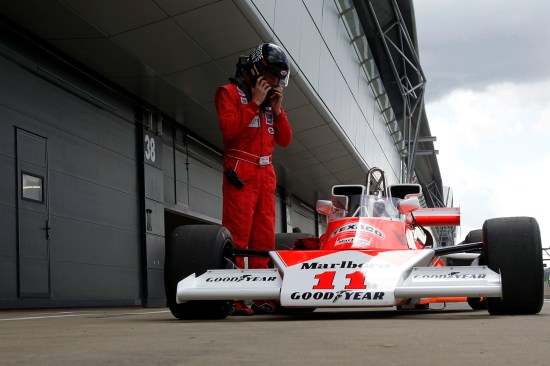
The headline-grabbing career of one of Britain’s most charismatic and colourful sportsmen will be celebrated at this summer’s Silverstone Classic (29-31 July). It’s exactly 40 years since hard driving, fast living James Hunt overcame all the odds to win the FIA Formula One World Championship in 1976.

Hunt sadly passed away in 1993 at the age of just 45 but the legend lives on and the ruby 40th anniversary of his crowning achievement will be marked at the world’s biggest historic motor racing festival in July, with special displays curated by his two sons Freddie and Tom. These displays will include a number of James’ most notable road and racing cars plus rarely seen trophies and memorabilia from the flamboyant Englishman’s title winning 1976 season.

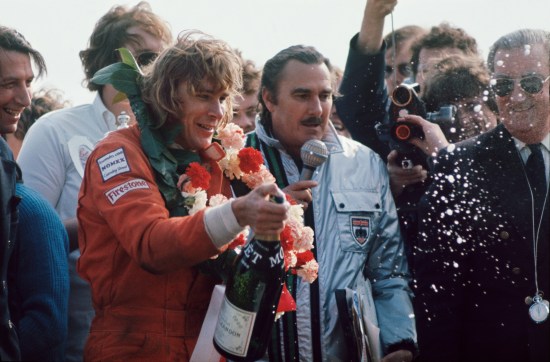
The special celebrations at Silverstone are very appropriate, too, as Hunt savoured more Formula One success at the superfast Northamptonshire venue than at any other circuit worldwide. As a much-loved underdog, home hero Hunt scored a hugely popular maiden F1 win at Silverstone in April 1974 when racing for the locally based Hesketh team. Although the BRDC International Trophy was non-championship, the grid featured many of the era’s top teams and drivers.

Two years later, Hunt ignited his title winning campaign with a second confidence boosting International Trophy victory, this time for his new team McLaren. And it was at Silverstone that, as reigning champion, he won his only British Grand Prix after an epic dice with John Watson in 1977.


1974 BRDC International Trophy.  Silverstone, England. 7th April 1974.  James Hunt, Hesketh, 1st position, on the podium.  Ref: 74IT02. World Copyright: LAT Photographic

7th April, 1974 BRDC International Trophy, Silverstone. James Hunt, Hesketh, 1st position, on the podium.

1977 British Grand Prix. Silverstone, England. 14th - 16th July 1977.  James Hunt (McLaren M26-Ford), 1st position, action. World Copyright: LAT Photographic. Ref: 77 GB 02.

14-16th July, 1977 British Grand Prix, Silverstone. James Hunt (McLaren M26-Ford), 1st position.

Chinese GP post race: Mercedes

1202294_2515974_682_1023_SNE12521


Nico Rosberg took his 17th career victory – his second at the Shanghai International Circuit, four years after sealing his first Formula One win at the same venue. Lewis Hamilton produced a battling drive to finish P7 from the back of the grid – despite incurring significant damage to his car in a first lap incident.

This result marks the 100th podium finish for the Mercedes-Benz Silver Arrows in Formula One. Rosberg (75) leads the Drivers’ Championship by 36 points from Hamilton (39) in P2. MERCEDES AMG PETRONAS (114) leads Ferrari (61) by 53 points in the Constructors’ Championship.

Nico Rosberg
“It’s been a fantastic few days for me here in China. First of all, the fans have been amazing from the moment I arrived. They’re so enthusiastic, which gives us drivers a very special feeling. Then, racing wise, it was an almost perfect weekend. Only the start could have been better – but luckily I was able to pass Daniel later on the straight and from then on I could build up a gap. I must say, I’ve never had a better balance in my car than I had today. It was really perfect, so a big thanks to everyone who helped me achieve that. I’m a very happy man today and, after three races I can be really pleased about how my season has gone so far. But it’s a very long year ahead and there’s a lot of points still on the table, so I’m not losing my focus. Now I look forward to Russia, where I started my good run of qualifying results last year. Hopefully I can get on a nice run like that again.”

Lewis Hamilton
“That was definitely a difficult weekend. I got a good start – but it’s always tricky being at the back and trying not to get caught up in the domino effect of any contact at the first corner. I tried to avoid whatever happened in front of me but I just got tangled up in it. It was just a bit unfortunate, really. From there it was always going to be a battle – but I had a lot of fun fighting back through! There were plenty of overtakes, from what I can remember! I gave it everything I had and P7 was about the limit. There was nothing left in the tyres at the end and, although it’s pretty good for overtaking here, I had quite a lot of damage to the car which made it difficult to get close on the brakes. From what I could feel there was definitely some aero loss and possible suspension damage too, as the car seemed to be flexing all over the place. But that’s racing – it happens sometimes and at least I still managed to get a few points on the board. It’s a pretty big hit points-wise today – but I’ll just have to do what I can to make it up over the next few races. Onwards and upwards…”


1202257_2515893_1024_683_sne10552
Toto Wolff, Head of Mercedes-Benz Motorsport
“That was a rollercoaster race. Nico enjoyed the perfect weekend: he was totally dominant this afternoon, always in control of his performance and did really a flawless job. For Lewis, the circumstances couldn’t have been more different. He got a great start, tried to stay out of trouble in the first corners and still got collected by a Sauber, who was avoiding another car coming back on track. His front wing was lodged under the car for a while, which damaged the leading edge of the floor and cost him a chunk of downforce for the rest of the race – though it was hard to know exactly how much during the race. We did something different with him under the Safety Car, cycling through the SuperSoft tyre with no loss of position, in order to open up some strategic options later in the race. He put in a great recovery drive and pulled off some great overtakes – but the damage to the car meant the tyres didn’t last as long as we had hoped and made it hard to catch cars through Turn 13 before the back straight. He still did a great job and kept charging to the end – but it was damage limitation again for him this afternoon. We are just three races into the longest season in Formula One history, so this isn’t the time to be looking at Championship tables or points gaps. We just need to keep scoring points right now, continue to work on our reliability after some wobbles this weekend and keep working very hard to bring more performance to the car and Power Unit. Today looked like it could have been a three-way fight with Mercedes, Ferrari and Red Bull if our rivals had a cleaner race – so there is no margin for us to relax.”

Paddy Lowe, Executive Director (Technical)
“Starting on Lewis’ side, one of the debates we actually had overnight was whether to do a bit more work to the car and start him from the pit lane, which ironically would have been a better decision in hindsight given what happened at the first corner. Equally, Lewis had by far his best start of the season, which ironically contributed to him being caught up in the cascade of collisions ahead of him. So, a perfect storm of unfortunate circumstances all round put him on the back foot straight away. We could see that there were problems with the car – both aerodynamic and mechanical – affecting him through the low-speed corners in particular. Under the safety car, we chose to perform consecutive pit stops with Lewis to get rid of the SuperSoft and enable us to run the rest of the race on the Soft, which was the stronger race tyre. As it transpired, his first set of softs were cut from the first corner incident – something we were unaware of at the time – which meant we were then forced to run the medium at the end of the race, rendering our SuperSoft eliminating tactic redundant. So, overall, Lewis did a great job to recover what he could with a car that was significantly underperforming. On Nico’s side, he actually had a less good start, losing a place into the first corner – although he was obviously running a less grippy tyre compound than the cars around him. He was, however, able to re-pass Daniel quite quickly once DRS became available and went on to have a straightforward race from there – running a soft/soft/medium strategy as intended from the beginning. An uneventful race from his perspective – but that’s not to underestimate the top job he did to manage the car safely within its limits and claim a well-deserved third victory of the season – and the 100th Formula One podium for the Silver Arrows in the process. We now look forward to Russia – targeting a clean and successful weekend on both sides of the garage.”

Sakhir – watch out for turn 1

Just been looking through brake manufacturer Brembo’s analysis of the Bahrain circuit. All the teams now produce quite nice infographics for the GPs which I find really useful.

Definitely one of the most demanding circuits for brakes. The races on the Sakhir track, surrounded by the desert, are characterised by high temperatures that increase mechanical grip, and make it difficult to dissipate the heat generated during braking.

This aspect – combined with the presence of numerous high energy braking sections which are quite close together – makes Sakhir a hard bench test for all the braking system components which are continuously stressed by the high energy forces and the hellishly hot temperatures.

If the drivers want to finish the race, the high wear of the friction material is the biggest danger that must be avoided.

Since 2004, Bahrain has staged 10 Formula One Grands Prix. In the 2010 season the race took place on an extended layout: instead of the usual 5.412 km GP circuit, the 6.299 km configuration was used. The first man to win a race at the Bahrain International Circuit was Michael Schumacher in the 2004 season.

According to Brembo technicians who classified the 21 World Championship tracks on a scale of one to 10, the Bahrain track earned a score of nine on the difficulty index, identical to recently built tracks like Singapore and Baku, which has yet to be used.

Of the eight braking zones half are classified as difficult on the brakes, while the other four are of medium difficulty. The four most challenging braking sections – those with a deceleration greater than 4.4 g – are confronted by vehicles travelling at 300 km/h or just slightly less.

The one feared the most is the Schumacher curve (turn 1) because the drivers arrive at speed that reach 330 km/h and they have to face a 5.2 g deceleration: the braking force required is greater than 2,200 Kw, but more importantly is the brake time (1.76 seconds) which is one of the highest in the entire World Championship.

The four braking sections that have a medium level of difficulty on the brakes are all positioned in the central part of the track and are broken up only by curve 11, where a load of 143 kilos is applied to the pedal.

New F1 talent

pasted image 0 pasted image 0-1


Sedna Lighting, a British based LED lighting manufacturer and global distributor is highlighting young engineering talent in partnership with Cardiff University.

It’s supporting the local Cardiff Formula Racing Team and creating new opportunities for the young engineers of the future. The partnership highlights the University’s school of engineering and Formula racing team.

In a collaborative test of racing light in the dark, Sedna Lighting raced the CR12 series car around the home test track at Llandow.
The car, fitted with 1,500 individual LEDs from Sedna’s flexible LED strip range, was the joint effort of designers from two universities (Cardiff University and Cardiff Metropolitan University), film makers and engineers who translated the brief idea into a realistic design and created an inspirational video featuring the project.

This time Formula 1 style driving was given an unexpected twist with driving taking place in the night and cars generating exterior lighting on their own.

You can see what they got up to here.

Hermann Tilke on Baku City

Hermann_Tilke-H-cc-Thilo Vogel


The F1 circuit architect (above) has been responsible for designing the majority of Formula 1’s ‘new’ circuits, including the likes of the Yas Marina Circuit (Abu Dhabi), Marina Bay Street Circuit (Singapore), Bahrain International Circuit and Circuit of The Americas (Austin).

Most recently, he’s tackled downtown Baku circuit (Azerbaijan) as the city prepares for racing this summer.

What was your first thought when you heard of the opportunity to build a street circuit in Baku? I had no idea about the city. After my first visit to Baku I was left with just one thought: Amazing! From the very first moment, I was really proud to be a part of the project and the team here. Baku will be the world’s fastest city circuit and the track loop around the city’s historical centre will create a unique and remarkable atmosphere for fans watching in the grandstands and at home. The City Circuit of Baku is located in a vibrant city. The streets are really narrow and this is exactly what makes it so appealing.

What was the most challenging part of the construction process? Coming up with an idea for the routing of a city track suitable for F1. City circuits are always challenging to build because the team has to construct the racetrack within the city. Various problems arise when designing a circuit in the city.

What is the average lap time expected to be? We calculated a lap time of 101 seconds, but that depends on the individual set-up of the racing cars and on the developments of this year’s new cars. The brake point in front of Turn 8 is V max= 204km/h. Between T8 and T9 we expect a V min of 86 km/h. The layout of the track is designed to show off the beauty of the historic and modern views and sights of Baku.

You can also race the virtual circuit.


F1 at Donington


240316-donnington-a 240316-donnington-b


The unmistakable sound of Formula 1 engines will echo round Donington Park on Saturday 30 April and Sunday 1 May as historic cars stage a series of demonstrations on the first two days of the Donington Historic Festival.

The youngest of the demos will be the 2002 Jordan EJ12 from Takuma Sato’s F1 debut year, the Michael Schumacher 1992 Benetton B192, and the 1990 Camel Lotus 102 (Derek Warwick/Martin Brundle/Johnny Herbert).

The previous two decades will be represented by the Rupert Keegan 1977 Hesketh 308E, 1983 Williams FW08 (Keke Rosberg/Jacques Laffite), the Jean-Pierre Jarier/Piercarlo Ghinzani/Corrado Fabi 1983 Osella FA1-D and two Tolemans. The 1985 TG-185 is Teo Fabi, while the 1984 TG-184 was Ayrton Senna’s regular test car throughout 1984, and is the car in which he caused a sensation in Friday practice for the British GP at Brands Hatch, setting the fastest time in both of the day’s sessions.

Q&A with Haas F1

Guenther Steiner, Team Principal

Haas F1 now has its first grand prix under its belt. Obviously this was highlighted by Grosjean’s sixth-place result, but how did it go overall and what can you take from Australia and apply to Bahrain?
“We had our ups and downs. It started out with not being able to get enough testing in on Friday during practice. We tried to make up for it on Saturday morning during third practice, but we had an incident with a car colliding with Romain (Grosjean) as he was exiting the garage.

“It started off not too pretty, and then qualifying was not what we wished for, but the team bounced back and we got ready for Sunday. We showed a good race speed and we are ready to go racing. In the end it was all positive. It was hard to get to the positive, but with a lot of work with a lot of hard-working people, we got there. Now the biggest task is to replicate this, which won’t be easy, but for sure we will be trying again.”

Upon your return to Haas F1’s headquarters in North Carolina were you able to get a sense of how the team’s Australia performance resonated in the US?
“I think it resonated in a very positive way in all of racing in America. Even those who don’t follow Formula One considered it a big achievement for a new team to finish in sixth place and to be from America, which hasn’t had a presence in Formula One in 30 years.”

From the outside looking in, it appeared the team was taking a very unorthodox approach to building a Formula One team. And while that is relatively true, did the team’s performance in Australia vindicate your methodology, specifically in regard to partnering with Scuderia Ferrari and Dallara?
“I think our plan is working, but we won’t finish sixth every weekend, so we need to be careful with our expectations. I think we showed that you can start a new team and end up in the midfield. We were not last in Australia, which was one of our goals, and I don’t think we will be last this year. How far we’ve come is a sign that our plan is working.”

Haas F1 came out of the gate strong in the season-opener in Australia. History tells us not every grand prix will bring that kind of success. How do you manage expectations, internally and externally?
“We are not being arrogant about our early success and we will have our races where we will underperform. Our sixth-place finish in Australia keeps the team going, working very hard and trying to do the best possible job we can. If we continue to do what we did in Melbourne, good results will come.”

The flip side to Grosjean’s sixth-place finish at Australia was Gutiérrez getting caught up in a crash. There was a good bit of damage to the left-rear of Gutiérrez’s car. What needs to be done to repair it and what kind of logistics are involved to get it ready for Bahrain?
“Some of the parts, for example the chassis, were sent back to Europe to be checked and fixed because we can’t do it onsite in Bahrain. We have enough spare parts to build up another chassis, so we will use that. Then the chassis that is repaired will be sent to Bahrain via air to serve as our spare. The guys will have to work day and night to get to Bahrain, but it’s all doable. Our spare quantity is down, but we have enough to get going again, so we will just keep on working.”

You appear to have handled adversity extremely well – be it with technical issues during the second week of testing at Barcelona and when you endured a pit lane collision in practice Saturday at Australia. From your perspective, how well is this new group of personnel working together?
“We chose good, quality people. Nobody gets down in adversity. Everybody gets up. They are working on the solution, not on the problem. They work together because they are professionals and they know they can get it done together as a team. It all comes down to the quality of people, and I think our quality is pretty high.”

With wet weather Friday at Australia, it compromised the team’s ability to work on the car’s set-up for the race. The weather in Bahrain is usually pretty consistent, and that means consistently dry. How helpful will a full weekend of consistent weather be for you and the team?
“If we can get a good day of practice in with both cars and six hours of running, that will be fantastic just to learn more about this machine.”

With Gutiérrez’s lap 17 crash and Grosjean changing tyres during the red flag, you didn’t make any pit stops in Australia. How is the team preparing for pit stops and is there any worry this is one element of the programme that hasn’t really been tested?
“We didn’t complain that we didn’t have to do a pit stop in Australia, but we will have to do it in Bahrain, for sure. We will do a lot of things during practice in Bahrain to ensure that we are ready. We got away with not doing pit stops in Australia, but we won’t be able to in Bahrain. The focus will be on completing pit stops this weekend so the team goes into the race confident that they have trained properly.”

How did the addition of a third tyre option impact your strategy for Australia, and what impact do you think it will have on your tyre strategy for Bahrain?
“Everyone has the third tyre option, so you just deal with it. I don’t think it has a huge impact because it’s the same for everybody. We just need to make sure we use the three options we’ve got to the best of our knowledge.”

Whilst we’re at it… the tyres

Pirelli is bringing three tyre compounds to Bahrain:

P Zero White medium – less grip, less wear (used for long-race stints)
P Zero Yellow soft – more grip, medium wear (used for shorter-race stints and for the initial portion of qualifying)
P Zero Red supersoft – highest amount of grip, highest amount of wear (used for qualifying and select race situations).

Two of the three available compounds must be used during the race. Teams are able to decide when they want to run which compound, adding an element of strategy to the race. (If the race takes place in the wet, the Cinturato Blue full wet tyre and the Cinturato green intermediate tyre will be made available.)

A driver can use all three sets of Pirelli tyres in a race. For example, if they used the P Zero Red supersoft to advance from Q2 to Q3, they would start the race on those tyres and attempt to make some lightning-quick laps to gain a margin over their counterparts before pitting for the P Zero White medium. Then depending on circumstances that unfold during the race, another pit stop could be made for the P Zero Yellow soft, allowing the driver to better attack during the race’s closing laps.

Pirelli provides each driver with 13 sets of dry tyres for the race weekend. Of these 13 sets, drivers and their teams can choose the specifications of 10 of those sets from the three compounds Pirelli selected. The remaining three sets are defined by Pirelli – two mandatory tyre specifications for the race (one set of P Zero Yellow softs and one set of P Zero White mediums), and one mandatory specification for Q3 (one set of P Zero Red supersofts).

Qualifying again…

After much deliberation, the new qualifying procedure Formula One debuted in the season-opening Australian Grand Prix is back at Bahrain. In case you were wondering, it’s an elimination-style format broken into three sessions and it works like this:

Q1
Lasts 16 minutes, with all 22 drivers participating
After seven minutes, the slowest driver is eliminated
In 90-second intervals thereafter, the next slowest drivers are eliminated until the checkered flag falls
Seven drivers get eliminated, with 15 drivers moving on to Q2

Q2
Lasts 15 minutes, featuring the 15 fastest drivers from Q1
After six minutes, the slowest driver is eliminated
In 90-second intervals thereafter, the next slowest drivers are eliminated until the checkered flag falls
Seven drivers get eliminated, with eight drivers advancing to Q3

Still with me?

Q3
Lasts 14 minutes, featuring the eight fastest drivers from Q2
After five minutes, the slowest driver is eliminated
In 90-second intervals thereafter, the next slowest drivers are eliminated until the checkered flag falls
Two drivers will remain in the final 90 seconds, theoretically creating a shootout for the pole.

Any questions? Yes, it will be a disaster… again.

Qualifying

They’re going ahead with the same approach for the Bahrain Grand Prix, and review it after the face.

Why? First Bernie says F1’s boring and wouldn’t take his famille along to watch, then we have this farce in qualifying. I’m beginning to think there’s a sub plot at work to which we’re not privy.

Well, what did you think of Channel 4’s F1 coverage?

Adverts. I just hate the adverts.

We’d been promised uninterrupted coverage but this seemed to be a play on words. We went back to where we’d left off after what seemed like an interminable break – usual in so many ways these days – and viewers hadn’t ‘missed’ anything, but in a way they did.

The live element – even if perceived to be live in a recording – is important for F1. It’s one of those sports that demands continuous coverage or we just lose the element of excitement.

Certainly the balance of David Coulthard and Mark Webber – who stole the show in my view – really worked. Steve Jones was filled with enthusiasm and was somewhat in awe to find himself in such illustrious F1 company it seemed.

But I’m sorry to say by the second round of ads I turned off to follow the ‘action’ via other feeds. This means I missed the rest of the team who I’m sure were marvellous.