Quite an amazing guy.
An inspiration…
Quite an amazing guy.
Quite an amazing guy.
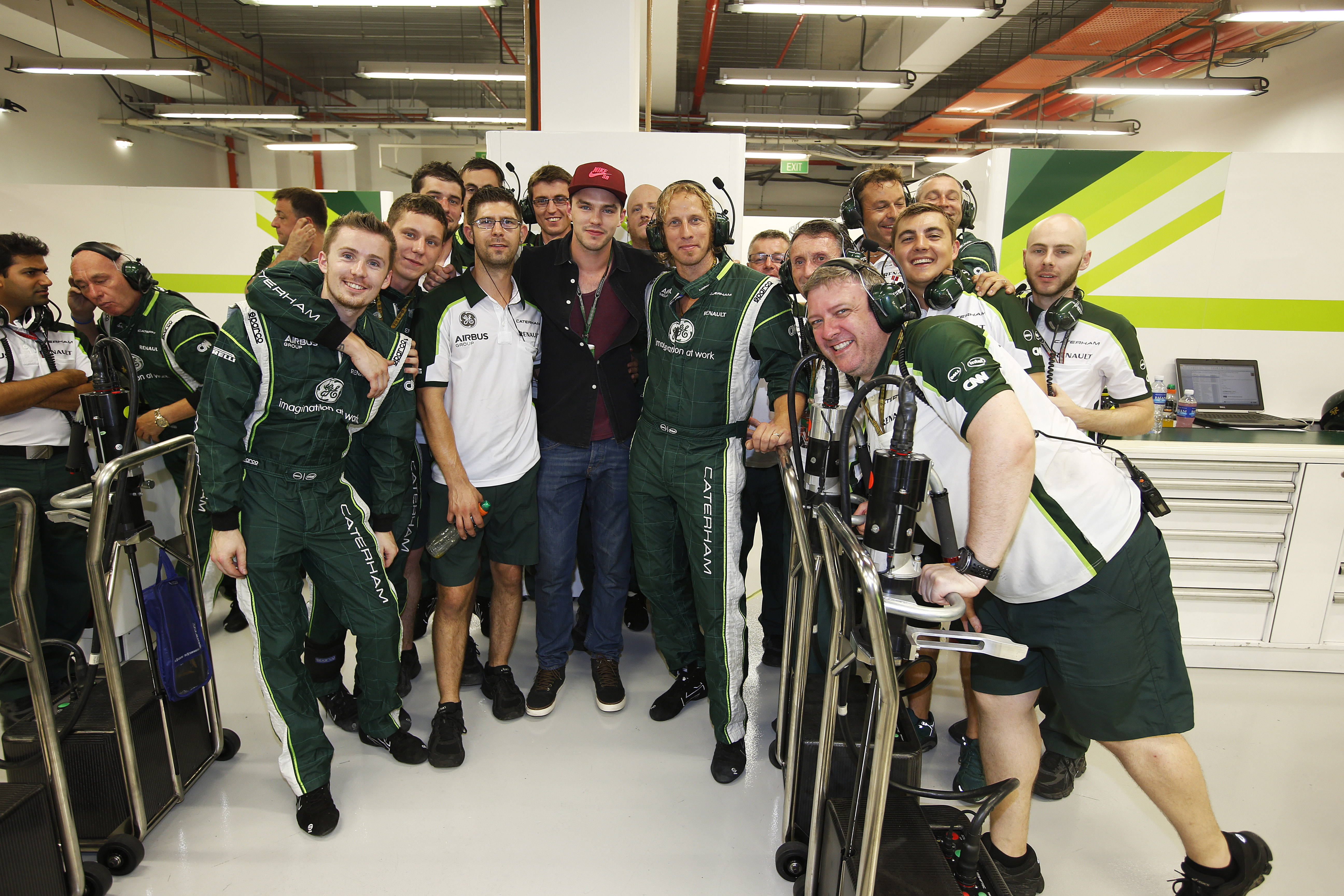
Nicholas Hoult with the Caterham team at the Marina Bay Circuit, Singapore.
I’ve just learned today that, since Friday, Caterham F1 has raised over £1 million of the £2.35 million it needs to race in Abu Dhabi.
Some result. More than I thought it would raise anyway. Still a long way to go with a deadline of 14 November but let’s be positive. Pop over to the Crowdcube website and pledge an amount, even if it’s just a fiver. Supporters may receive something novel from support badges and T-shirts to a one-off opportunity to get their name on the Caterham F1 car.
Finbarr O’Connell, Caterham Sports Limited’s administrator told me:
“I’m not packing my toothbrush as yet and there is still a lot of fundraising to be done. We’ve been approached by a number of people from Simon Ward, the artist, offering to produce an original artwork, and 500 prints of it, to trading partners who are offering their support. They want to see the Caterham F1 team back on the grid.
“Most importantly, a new financially sound interested party has entered the arena and is considering acquiring the team. This new interest is wholly due to this campaign.”
The latter sounds promising although it’s all too little, too late. After team meetings in Brazil today it sounds as though Bernie et al are washing their hands of it all. Some of the comments they’ve been making are quite outrageous.
I can’t see it but apparently there has also been a bit of confusion about the purpose of the #RefuelCaterhamF1 crowd funding project, claims O’Connell. The plan is not to run an F1 team by using crowdfunding but rather this funding is providing a supposed lifeline for the team. One would have thought this was obvious. I therefore don’t think the comment from Red Bull’s Christian Horner about the merits or otherwise of funding an F1 team via crowdfunding is either timely or relevant.
It’s a desperate move which has a very slim chance of succeeding. But if you were in Caterham’s position you’d try anything. Clearly the administrator has run out of options. If teams don’t race they won’t attract a purchaser. Well, that’s the theory anyway.
Don’t also forget the human element to all this. The 200 people in Leafield, in the Prime Minister’s constituency incidentally, have been working without pay for the last six weeks. Without them there would be no team and they deserve all our support. Chew on that Bernie.

Spent a very enjoyable time in the company of some lovely people the other night at Mark Gallagher’s book launch event at the Marriott County Hall (the former London GLC building to you and me) in Waterloo.
Mark’s an old friend and colleague who has just released The Business of Winning – strategic success from the Formula One track to the boardroom (Kogan Page – ISBN: 978-0-7494-7272-6) and I recommend you buy it – now. If you’re in the US, click here.
Apart from it being a rattling good read, full of stories from his time in the F1 industry, many people draw parallels between the worlds of business and F1 and Mark has set out a series of his ‘insights’ into branding and image, team building, change management, innovation and global communications strategy.
Former F1 driver David Coulthard has written the foreword but interestingly, later in the tome – chapter 12 – he talks about winning culture, team building, etc from the sharp end. The driver’s angle doesn’t get talked about much so this is a good addition.
About time
As Mark reminded me on the night, he’d talked to me about writing a book at lunch in Covent Garden over 10 years ago (nice Italian if I recall correctly) but he’s been somewhat busy so one can forgive him.
“It’s been a very interesting 32 years working in motor racing. Lots of different experiences. I keep thinking of better stories I forgot to tell. To work with someone like Michael Schumacher even just for a weekend gives you an opportunity to see what excellence really looks like.
“And then to work with someone like Eddie Jordan (Jordan GP founder and team principal). Every time I mention him people laugh. Worked for him as marketing and communications director – as his interpreter. I tried to make sense of what he was saying,” says Mark jovially.
“But I chose Eddie intentionally. He has this slightly mad persona. But the reality is for 15 years he ran a highly profitable, race-winning F1 team. To work with a guy like this who is totally driven and a leader who understands what it takes to be number one is a very inspirational experience. Those 10 years I worked with Eddie taught me so much.
“It was also then quite incredible to meet Red Bull’s Dietrich Mateschitz and work with him. He said he’d been inspired by EJ: ‘If EJ can create a race winning team as an independent guy with private funding then maybe I can also do the same.’ Of course he went on to win four world championships.”
Mark goes on to say
“Over 32 years I’ve met a lot of interesting people and I share these insights in the book. It has been fun not just to talk about leadership but also teamwork. There’s an innovation culture in F1, it’s not just a sport. We live in a country where there are 6,000 full time jobs in F1, 14,000 people working in the supply chain. This is a real industry in the UK of which we should be very proud.
Williams’ Patrick Head (l) and Mark Gallagher
“It’s an R&D-centric industry which is heavily involved in managing risk. We produce these amazing high performance machines and risk management and safety becomes a very important part of what we do, combining the ultimate in performance with the ultimate in safety.
“In my book one of the most difficult chapters to write is the one on safety because when you’ve worked in this sport which kills people and then see that come to an end in 1994, the last time an F1 driver was killed in a race, I can tell you that the world of industry is utterly fascinated in how F1 stopped killing drivers.
“The statistic is we had 43 drivers killed before then, so there’s a big lesson. If F1 knows how to stop people being killed in a 200 mph accident what can this teach other industries about risk management?
“Of course in recent weeks this has become very topical. We have a driver who has been very seriously injured in an incident at the Japanese GP so risk is again centre stage to what we do.
“We’ve also had two F1 teams go into administration which puts commercial risk management at the centre of what we do,” and so the parallels continue.
Next steps
“I find the whole environment utterly fascinating in terms of what business can learn from F1. It’s a really vibrant area to have worked in.
“And it’s been good to have the book published when my own racing team Status GP – having just bought Tony Fernandes’ GP2 team – is now at the level of racing immediately below F1.
“I had a letter last week from Bernie Ecclestone saying: ‘Dear Mark, You know what the final step is…’ I haven’t replied to it yet,” Mark says with a smile.
“But we’re on the cusp with a very exciting 2015 ahead. Having the book out as my team takes another step forward – it’s a very exciting time.”
It certainly is Mark. And long may it continue. Good luck matey, you damned well deserve it!

Sochi Autodrom, 10 October 2014: Caterham’s Marcus Ericsson in the garage.
Following on from Bernie’s insanity over double points for the last GP of the season, I fear those who run F1 and clearly who are far cleverer than me are either losing the plot, or more likely acting like Dr Strangelove – only this time the right people are pushing the wrong button.
Marussia F1 has ceased trading and those super people at the Caterham F1 Team are launching the #RefuelCaterhamF1 project so the team can go racing in Abu Dhabi and hopefully beyond.
As they say: “The team will reward both fans and sponsors in this unique opportunity to be the driving force behind the team by crowdfunding its return to the grid.”
If I win the lottery tonight, I’ll be the first one in. I fear though all will be in vein.
But this doesn’t matter. What does is that those who keep the cogs of the sport turning are losing their jobs, and that I find unforgiveable.
I don’t like alter slaughters at the best of times but there is no reason why smaller teams should be sacrificed. Clearly a plan operating at a high level is being played out. I hope the buggers have a conscience.
I know F1’s a business but we’ve crossed the line here people!
Joe Saward’s reworking of F1’s finances. Quite interesting.
Thanks to the BBC’s Andrew Benson for identifying the elephant in the room (which we all recognise):
“Mercedes have been so dominant this season – Hamilton has 10 wins while Rosberg has four – that one of their drivers will almost certainly win both remaining races.
“If Hamilton wins in Brazil with Rosberg second, his lead would increase to 31 points going into the final race. A second place would be all Rosberg needed in Abu Dhabi in that scenario to beat Hamilton to the championship if the Englishman failed to score.”
Crazy. If Rosberg beats Hamilton into second place in Brazil on Sunday he would cut his deficit to 17 points and Rosberg would need only a fifth place in Abu Dhabi to be champion in the event Hamilton did not score a point.
Hamilton said: “You can’t think about it. It’s a fact that it’s a possibility but it’s not something I’m willing to accept.”
Of course not. I love Bernie. I admire him on so many levels. Really I do. But this would be his death knell…
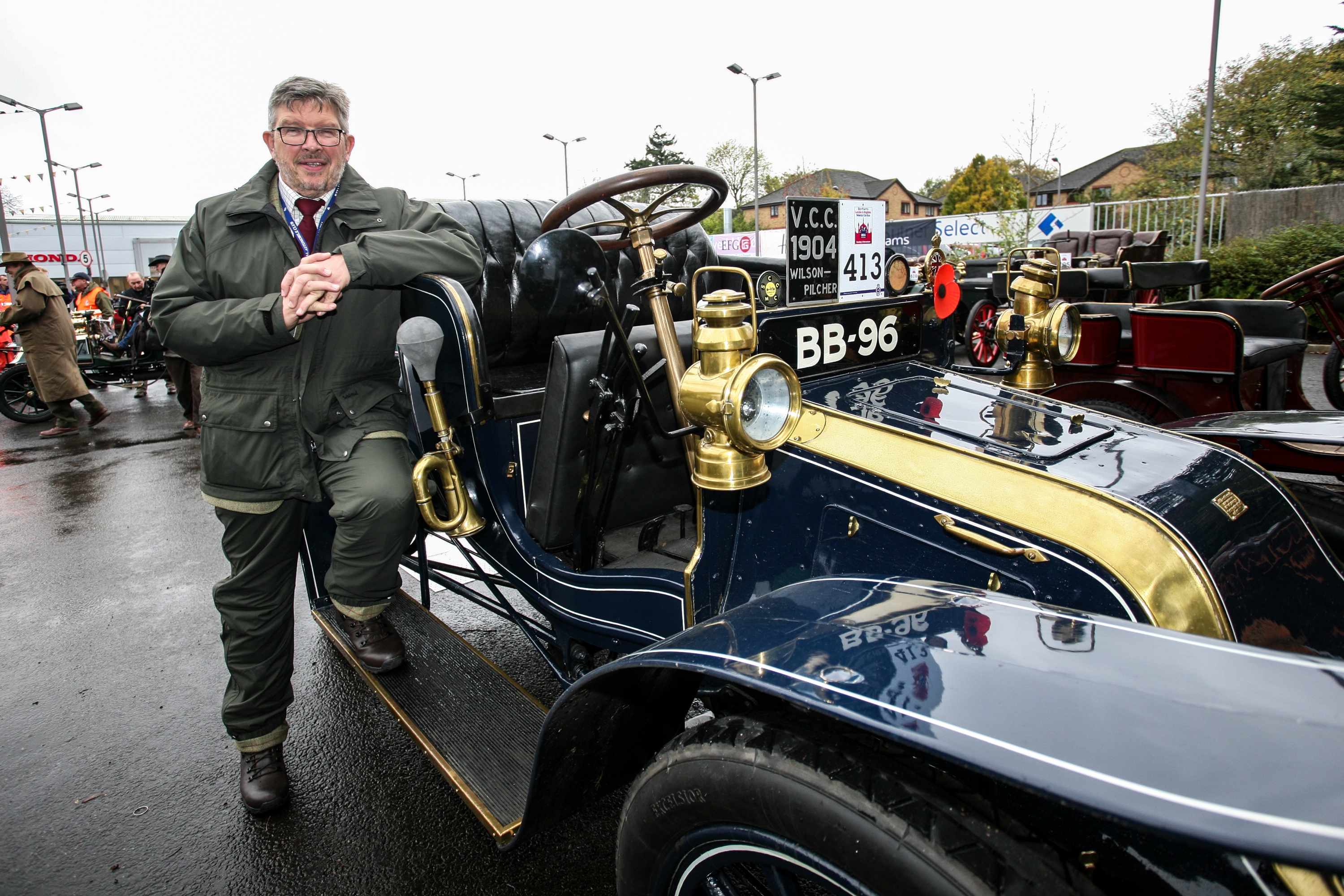
Mr B looking the part
400+ cars dating back to the dawn of motoring braved blustery – and often sodden conditions – to take part in today’s Bonhams London to Brighton Veteran Car Run.
As tradition dictates, the 118th Anniversary Run set out from Hyde Park at daybreak and headed 60 miles south through London and on to a stormy Sussex coast. For only the second time in more than half a century, this year’s route took the intrepid participants – all driving pioneering cars from the pre-1905 era – past Buckingham Palace and down The Mall before heading past Big Ben and over Westminster Bridge.
Among those turning back the clock were Sir Steve Redgrave and Sir Ben Ainslie, as well as former F1 team principal Ross Brawn and Le Mans winner Jochen Mass.
Remarkably one of the illustrious participating celebrities was in the first car to reach the ceremonial finish on Madeira Drive, as Lord Irvine Laidlaw’s 1904 Panhard-Levassor romped to the Brighton seafront with Ainslie onboard. Laidlaw is not only a Veteran Car Run regular but also a keen sailor, so it was little surprise to see the duo coping best with the challenging elements.
There was high drama for Brawn whose 1904 Wilson Pitcher – the last known surviving British built machine of its kind – had difficulties on its coast-bound run.
“It was very enjoyable,” said Brawn. “Obviously I don’t get the chance to actually drive the car in most of the automotive work that I’m involved in so that was a nice change. The mixed weather provided an extra challenge and edge but one that we enjoyed very much.
“We had a broken oil pipe just as we got to Crawley and the RAC Motoring Services volunteer patrolmen did a sterling job. They rescued us by fitting a piece of rubber pipe in the middle of the fractured one and it’s thanks to them that we got here.
“The whole thing has been wonderful fun. I’d never experienced the sheer enthusiasm for the Run before – from leaving London at that time of the morning, to driving through the villages along the way and then indeed arriving in Brighton itself. It truly has been a wonderful experience.”
Another impressive entry was the steam-powered 1888 Truchutet – the oldest car on the run – but this was one of the machines that unfortunately failed to make the finish.
Never thought it would go ahead until, that is, I saw the first images of the circuit set-up. And now, here we are in October and post Ukraine it’s almost upon us and appears to be going ahead as planned (10-12th) minus controversy. Well, troubles elsewhere are keeping the press busy.
The Sochi Autodrom – in Krasnodar Krai, Russia and another circuit designed by Formula One architect, Hermann Tilke – features 18 corners across 5.8 kilometres and will host round 16 of the 2014 World Championship. It’s an interesting layout with a good mix of high speed corners and technical sections.
Sebastian Vettel was the first F1 driver to lap the circuit and you can see an onboard video of his lap here.
Pointless me posting images when you can see them all here.
Poor Jules Bianchi. The odds against this immensely liked driver going off at the same spot in Suzuka as Adrian Sutil must have been phenomenal. The weather had just turned for the worst. The signs are at least encouraging post operation but having seen the footage of his ‘off’ Jules is truly lucky to be alive.
And now news that former F1 driver Andrea de Cesaris has been killed in a bike crash in Rome, aged only 55. Tragic.
In 1982, aged 22, de Cesaris became the then youngest driver to start a Grand Prix from the front of the grid after he took his sole career pole, the same year a young Clive Couldwell first started reporting on F1 – in the business and technology sense, that is.
So then, at long last, Fernando Alonso is parting from Ferrari which has a lot to thank him for, making it look like a half decent team despite the politics and engineering disaster that has been this season. One might argue Alonso is not the best at providing feedback to the team, but what the hell.
Main thing is what will Vettel be able to do. After a dismal season this year at Red Bull I do wonder what he can contribute to the team without a thorough overhaul of the operation which one assumes is quietly underway…

One also assumes, reading between the lines of comments made recently by Ron Dennis and the talented Eric Boullier, that Alonso will be heading over to McLaren to work with next year’s Honda engines and poor old Jenson Alexander Lyons Button is out, sadly in my view.
Prepare yourselves for a game of musical chairs over the next few weeks..
Personally, I think Alonso could end up at Red Bull. Even though Red Bull has not been too happy with its engine supplier of late, Alonso won two championships with Renault, so could add value to the relationship. One might also argue that the Honda technology for next season’s McLaren may not be good enough to win races and Alonso is not getting any younger.
It’s difficult. If I was Alonso, I’d take the Red Bull option…
Some more good images from the team at the Singapore GP:

Marina Bay Circuit
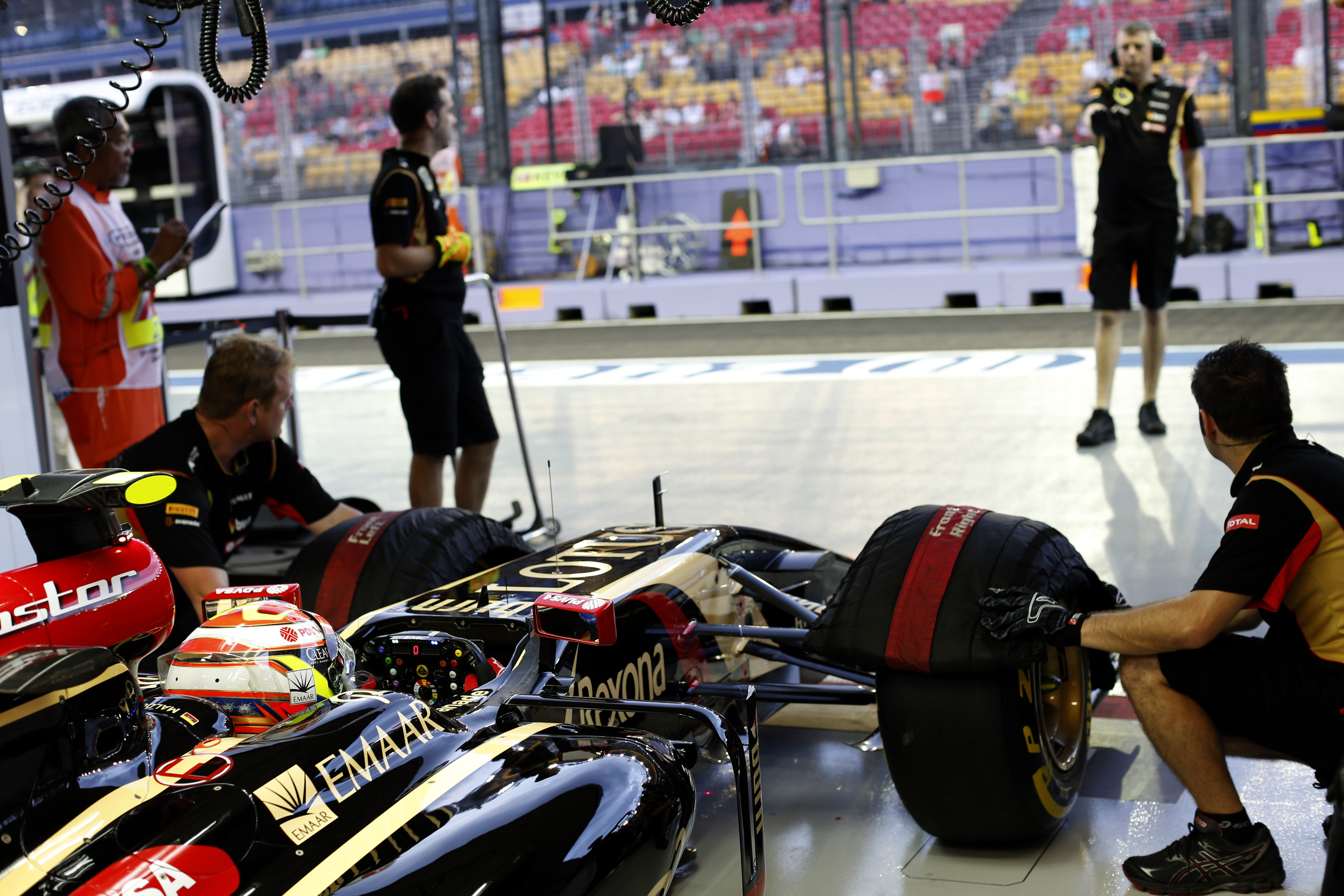
Pastor Maldonado, Lotus E22 Renault, prepares to leave the garage
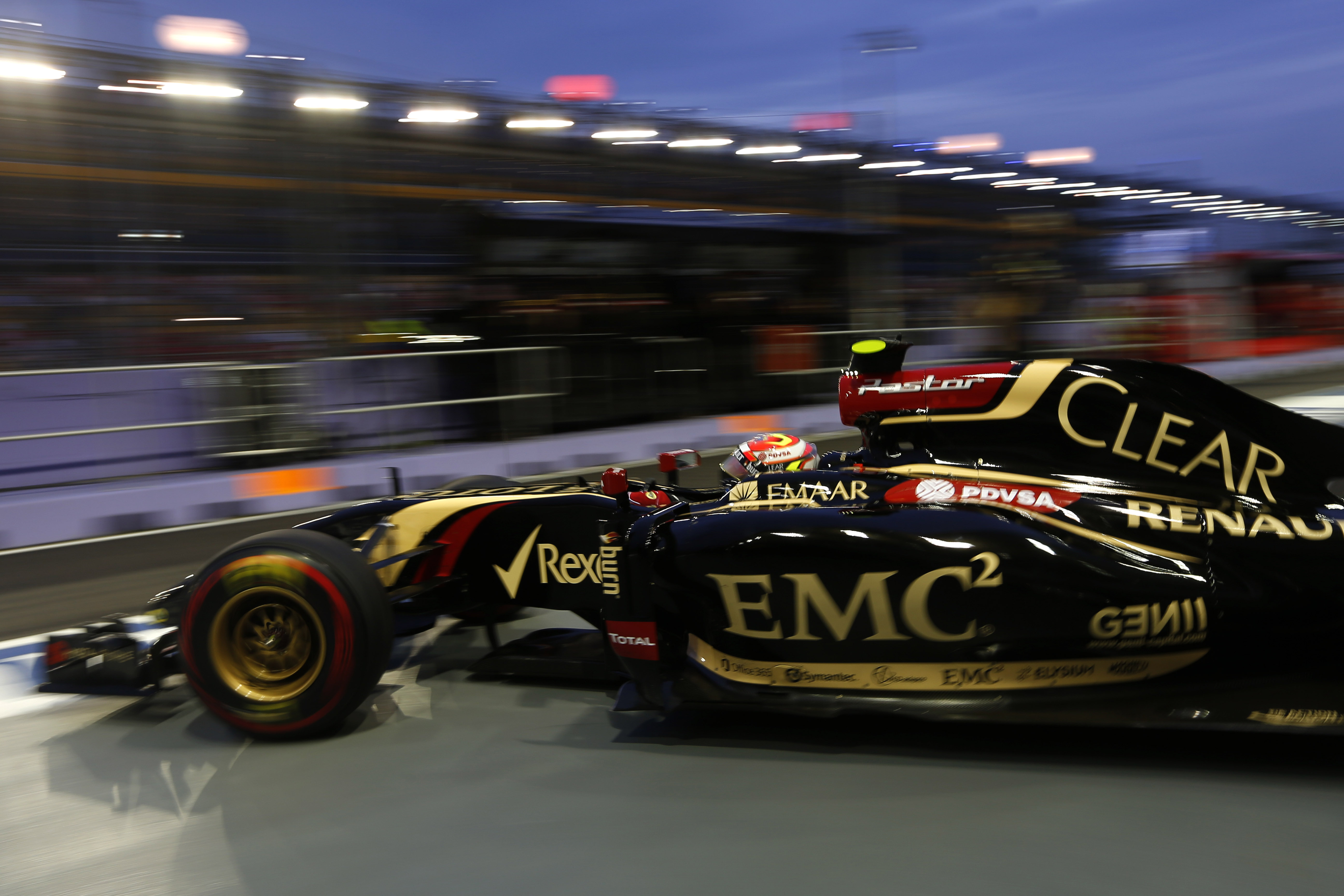
And, off he goes…

Romain Grosjean in the drivers parade
There are two compelling questions raised by the exit of Ferrari’s long-time chairman, Luca Cordero di Montezemolo. The first is: Did Montezemolo fail with Ferrari, and if so, why?
It is hard to speak of failure when, in the last 23 years, Montezemolo helped Ferrari win 13 world championships and made the Prancing Horse the “most powerful brand in the world” (Source: BrandFinance). In doing so, he increased its car sales, royalties and technological excellence exponentially.
Montezemolo himself has responded to past criticisms of poor racing results by reminding critics that Ferrari is – commercially speaking – an extremely successful company. So why let him go?
Sales are not, and never were, a real issue for Ferrari. Even in previously turbulent times, such as the 90s (where racing results were also lacking), Ferrari sold everything that it produced.
Indeed, management research shows that company status is more resilient than most people believe, and it might take decades before negative results in races end up corroding the shiny appeal of Ferrari’s road cars and related merchandise. In other words, while racing results might influence sales, their impact is lagged in time with a considerable delay of several years.
So why would a top manager be unable to repeat his former success? Management researchers often quote the ancient Greek word of hubris, an individual feeling of extreme pride or self-confidence which creates a systematic bias in underestimating the challenges ahead, or overestimating his/her own possibilities of hitting targets.

Cass Business School’s Dr Paolo Aversa
Says Dr Paolo Aversa, Assistant Professor of Strategy at Oxford’s Cass Business School: “If we look at Montezemolo’s public life through this lens, we notice how he practically left Ferrari years ago when he turned his active leadership into a representative one. In his early days at Ferrari, Montezemolo started his career at the pitwall, where he applied his extraordinary management qualities to trigger an amazing strategic turnaround for Ferrari as both a car manufacturer and racing team.
“Montezemolo excelled as a manager when applying a very hands-on and active leadership. However, in recent years, he changed his leadership style from active to representative and spread himself too thin through a series of business, political, and social ventures. Rather than applying his skills to the task, he used his successful personal brand to endorse various and mildly-related initiatives. This is a typical sign of hubris and even exceptional performers cannot compensate for the lack of time when they are actively in charge of such an exorbitant number of high-profile activities.
“As a result, some of Montezemolo’s outside interests are clearly struggling and underperforming compared to their initial expectations – see among others the civic and political think tank Italia Futura and the high-speed train Italo. Similarly, a few months ago, Montezemolo took the decision to quickly turn around the negative performance of Scuderia Ferrari by replacing Stefano Domenicali with Marco Mattiacci. Installing a leader who lacks a racing background – and who might need years to acquire the right skills to trigger a turnaround – clearly demonstrates Montezemolo’s complete detachment from the reality of the F1 competitions he once knew how to navigate well.”
The second critical question to ask is: Will Montezemolo’s exit help Ferrari get back to winning days?
Montezemolo’s departure creates the right opportunity for a new leader to step-in at Maranello, and leaves space for a leader who can devote more time and commitment to the non-trivial task of putting Ferrari back on pole. Sergio Marchionne’s leadership is a necessary, transitory phase, motivated by another non-racing goal: the upcoming flotation on the Wall Street stock market of FCA Group.
Adds Aversa: “But in the long-run Ferrari will need to integrate a full-time, committed leader, possibly someone with long-term technical experience in the racing world if F1 victories are the real goal (Ross Brawn could be a good contender). Winning Formula 1 is far too complicated to be achieved with representative leadership, motivational speeches and random show-ups at races. But unfortunately for Montezemolo he might have realised this a little too late.”
Well, now we know thanks to the Business Book GP2014 and reported on TomorrowNewsF1.com:
Drivers:
1. Fernando Alonso Ferrari – €22m
= Kimi Raikkonen Ferrari – €22m
=Sebastian Vettel Red Bull Racing – €22m
4. Lewis Hamilton Mercedes – €20m
5. Jenson Button McLaren-Mercedes – €16m
6. Nico Rosberg Mercedes – €12m
7. Felipe Massa Williams – €4m
= Nico Hulkenberg Force India F1 – €4m
9. Romain Grosjean Lotus F1 Team – €3m
= Pastor Maldonado Lotus F1 Team – €3m
= Sergio Perez Force India F1 – €3m
12. Adrian Sutil Sauber – €2m
13. Kevin Magnuseen McLaren-Mercedes – €1m
= Valtteri Bottas Williams – €1m
15. Daniel Ricciardo Red Bull Racing – €750,000
= Jean-Eric Vergne Scuderia Toro Rosso – €750,000
17. Jules Bianchi Marussia – €500,000
18. Esteban Gutierrez Sauber – €400,000
19. Daniil Kvyat Scuderia Toro Rosso – €250,000
20. Max Chilton Marussia – €200,000
21. Marcus Ericsson Caterham F1 – €150,000
= Kamui Kobayshi Caterham F1 – €150,000
What the F1 teams spent on drivers in 2014:
1. Ferrari – €44m
2. Mercedes – €32m
3. Red Bull Racing – €22.75m
4. McLaren-Mercedes – €17m
5. Force India – €7m
6. Lotus F1 team – €6m
7. Williams – €5m
8. Sauber – €2.4m
9. Scuderia Toro Rosso – €1m
10. Marussia – €700,000
11. Caterham – €300,000
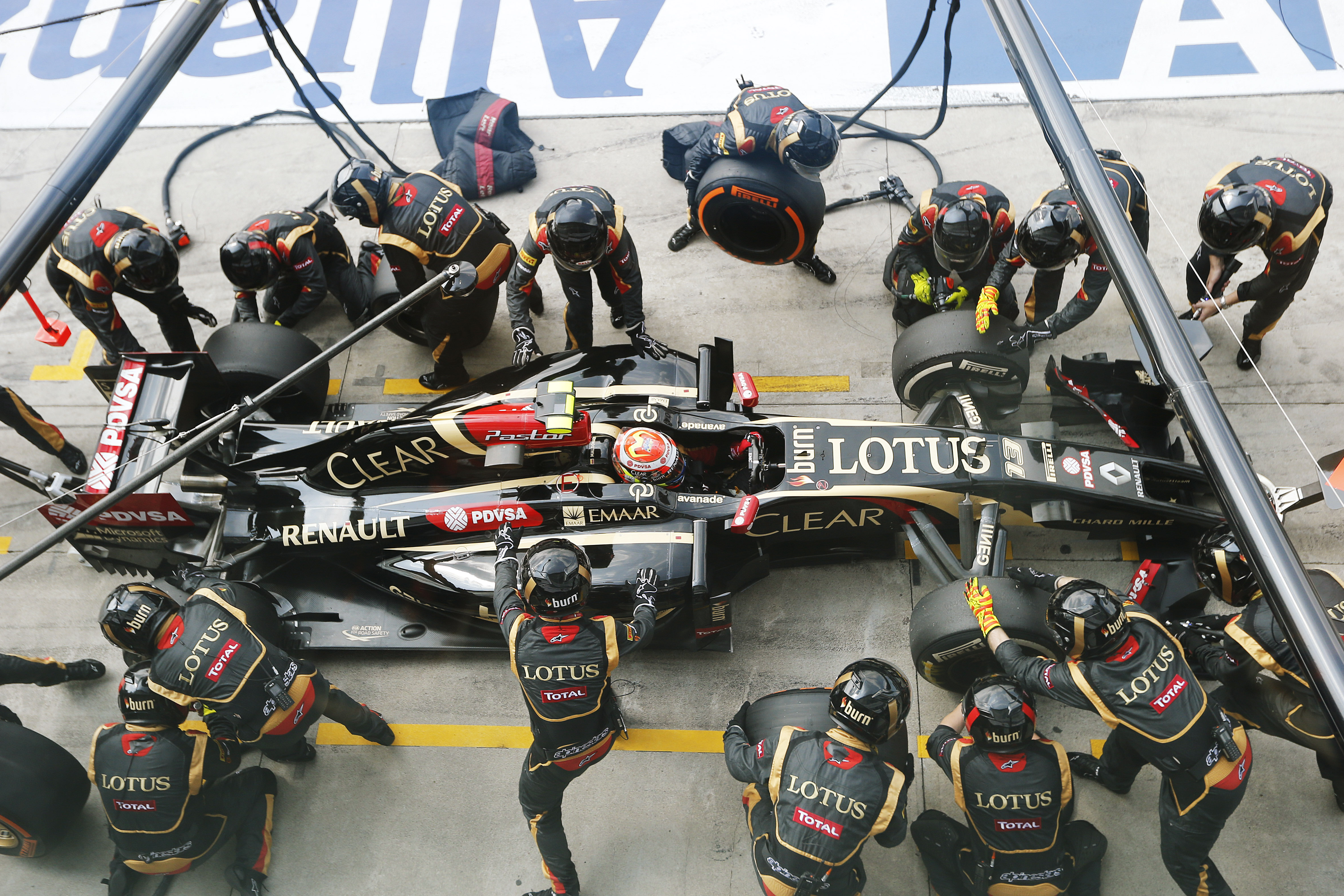
Nice shot of the pit stop at Monza.
A quite interesting take on the recent ‘incident’, if you want to call it that, between our favourite Mercedes drivers.
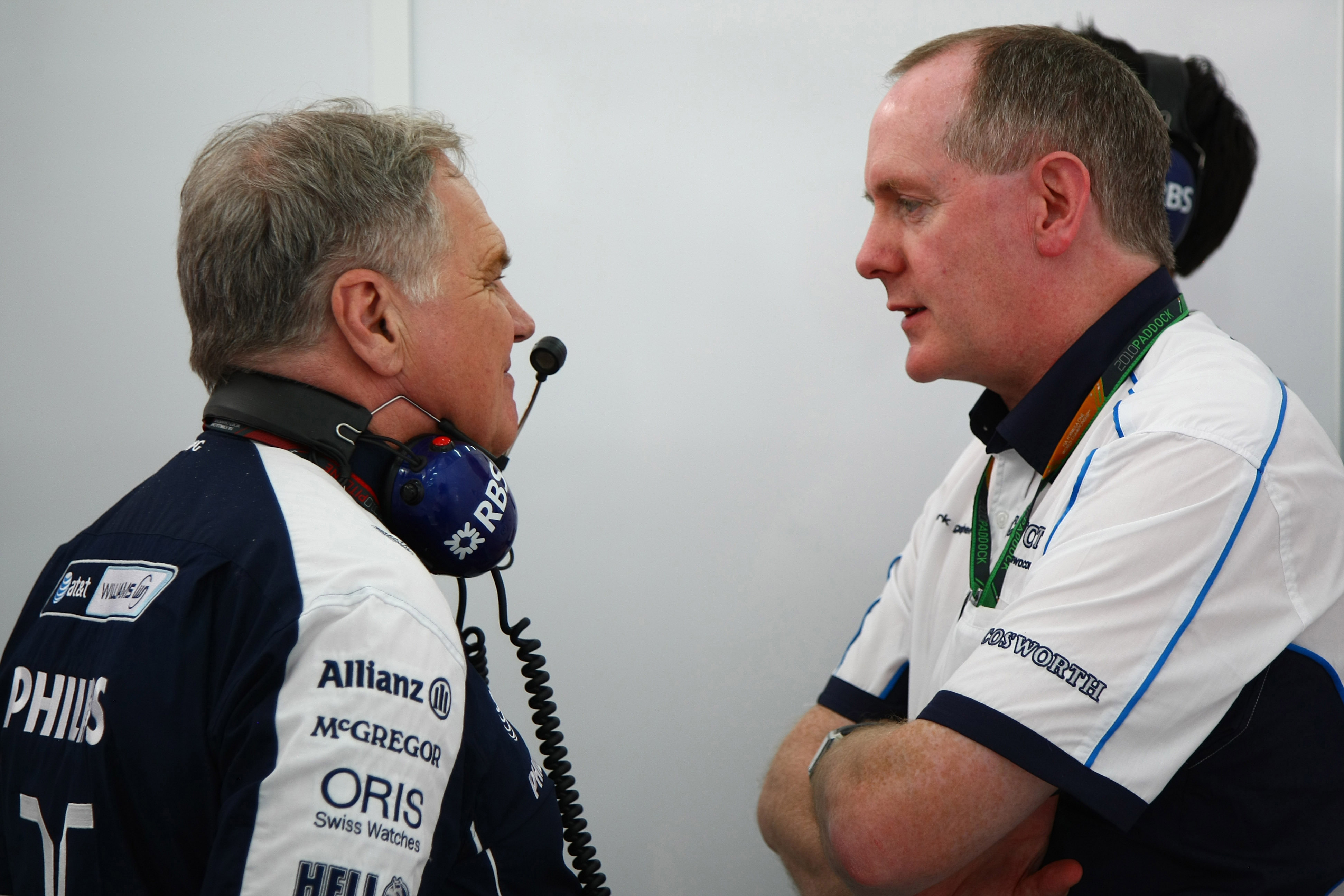
 CLIVE COULDWELL: Formula One as it is...