Reporting for beginners

It’s amazing how much broadcast tech is finding its way into the hands of the non-telly market.

Get in there. Get reporting..

Get in there. Get reporting..

Take Livewire Digital’s NetCaster, for example. A low-cost iPhone and iPad app can be used by groups of untrained personnel to send in realtime photos, sequences of stills and video directly to a producer or a command centre.

Ideal for event organisers, the emergency services, the military and NGOs, this new application is perfect for breaking news coverage of sporting events, expeditions and situation awareness.

Designed to help users reduce and manage operational costs, this new app provides rock solid audio and uses the ‘pay by volume’ Inmarsat satellite service to transfer media.

Netcaster uses sophisticated bandwidth control to efficiently deliver media to base – be these photos, realtime sequences of stills or motion video. Producers or command centre staff at base can then determine how the footage from multiple field personnel is presented to the viewers.

Easy-to-use production facilities offer split-screen functionality so the producer or command centre staff can view media from up to six contributors at once and manage their audio feeds.

50 years of McLaren

“Life is measured in achievement, not in years alone.”

A 1969 McLaren M7C sits alongside todays 12C Spider

A 1969 McLaren M7C sits alongside today’s 12C Spider

When a 27-year-old Bruce McLaren penned these words in 1964, his new company – Bruce McLaren Motor Racing Ltd – was less than a year old.

In those days, Bruce’s vision was shared by fewer than half a dozen loyal souls who slogged across the world to race his self-made cars. Nowadays, the McLaren Group employs more than 2000.

On 2 September 2013 the McLaren Group will celebrate its 50th anniversary. Its Formula One team has become a global household name. Since its arrival in the sport – at the 1966 Monaco Grand Prix – it has won more races (182) than any other constructor, started from pole position 155 times and scored 151 fastest laps. In 2012, McLaren achieved the fastest-ever time for a Formula One pitstop (2.31s at Hockenheim), recorded its 58th consecutive points-scoring finish – an all-time record – and has now led more than 10,000 racing laps.

It’s all a long way from that small south London lock-up back in 1963.

Have a look at this superb piece of film:

Thanks Bruce..

Sport in schools rant

Predictably, the politicians, Uncle Tom Cobley and all are jumping all over it.

The decision by the Coalition Government not to require schools to provide two hours of physical education every week will destroy any possibility of Britain’s businesses feeding from the feel-good factor created by our Olympic success, warns Will Davies – co-founder of London property maintenance and refurbishment company, aspect.co.uk.

You’ve probably never heard of the guy, or his organisation, but he has a point (perhaps reinforced because he used to be a rugger player, as was I briefly before seeing sense and taking up a rowing career). Unsurprisingly, he says:

“The boost our economy could have received from the energy created by Britain’s astonishing successes in the Olympics will all be washed away by this political blunder. In my experience, the leaders on the sports field often become the leaders in the workplace, and the sorts of young people who commit themselves to excelling in sport are also the individuals who work hard to make a success of the working lives.”

He’s right there. Even under the previous government all children were required to take part in two hours of sport every week and there was an outline plan to increase that requirement to five hours every week. Blair started it off in fact.

A spokesman for the Department for Education said, perhaps somewhat naively if you give them the benefit of the doubt:

“Instead of handing down target and quotas from Whitehall, we have chosen to trust teachers and parents when it comes to deciding how much sport pupils should do.”

What tosh. You can just hear them smirking as they say it. But the Youth Sport Trust criticised the decision saying:

“Measuring the number of young people participating in two hours of school sport did give a clear indication of participation levels in sport in schools across the country. There is still some great work going on in schools but it is now more difficult to know exactly where provision is good and where it needs to be improved.”

Figures obtained by the Guardian through a freedom of information request also demonstrate embarrassingly that 21 school playing fields have been sold off since the Coalition Government came to power. Adds Davies:

“Selling sports fields and replacing competitive sports with yoga and circus skills will not build on our Olympic legacy. Working hard to become competitive at sport instills passion, teamwork and dedication in our youngsters. All of which are attributes that will help them be successful in their working lives.”

Cue National Anthem.

Why the Bank of England is wrong

The Bank of England has just issued a forecast predicting zero growth this year – down from a prediction of 0.7%  GDP growth three months ago. But the bank continues to downplay the UK economy because it is basing it on the wrong measure.

If you play conkers then you can recognise when someone is playing with stones rather than horsechestnuts. But what if the game is about winning and not sport?

The problem with measuring the performance of the UK economy against the rest of Europe is that the Bank of England continues to regard it as a conker match and fails to see that the UK is an aggressive performer which does not compete on the same terms as most other countries.

The UK is by far Europe’s single biggest exporter of foreign direct investment in the rest of the world. It is not another Germany producing manufactured products or a country with a service economy largely based on retailing or IT services.

UK investments can be found all over the globe and it owes its success to a powerful financial sector.  For this reason GDP – which measures production within the confines of national borders – is not an appropriate measure of UK success.

We therefore need to look at real gross national income (GNI) which takes into account the proceeds of foreign direct investments. And on that measure the performance of the UK looks very healthy – with significant gains for the last two available quarters in a row and a 5.7% improvement since Q3 2009.

Yes, Germany continues to outperform the UK in terms of real GNI – but because Germany’s economy relies on manufacturing it is necessary to offset the capital reinvestments required to maintain growth.  On a net basis the UK economy is moving at an equal pace to Germany and there is every sign that this pace of growth could continue – unless companies believe the Bank of England and retrench.

Responding to the latest Bank of England forecast The Secretary-General of the Federation of European Employers (FedEE), Robin Chater, said at a press conference today that:

“a reliance on GDP as the only measure of economic performance can be highly misleading and we must recognise that the world is far from the position it was in during the Autumn of 2007. We are in danger of talking ourselves into a double dip recesson and the UK has certainly reaped additional advantages in recent months from not being part of the eurozone.”

Paedophile profiling

Community management software company, Crisp is noticing a 10 per cent, month on month increase in spam targeted at the brand pages of social media sites, such as Facebook.

Chris Hildreth, Crisp’s Founder

With the world’s biggest brands currently paying hundreds of thousands of pounds per year to protect their online communities from spammers and profanity, Crisp Founder Adam Hildreth argues that the widely adopted human moderation techniques are no longer scalable or indeed feasible when used in isolation.

In 2005 Hildreth (27) founded Crisp to make the internet a safer place for children. After realising that simple human moderation methods would never be able to spot online predators – their numbers ever increasing – the British entrepreneur invented a new type of technology that could accurately spot the underlying context of online conversations and ultimately the behaviour of a user. The technology went so much further than simple keyword filtering.

Using behaviour analysis technology Crisp can identify harassment, spamming and predators on the lookout for victims with over 98.4 per cent accuracy. Since 2006 Crisp has helped hundreds of global child entertainment brands – including Sony Online Entertainment, Nickelodeon, Electronic Arts and the LEGO group – keep their online game areas a safe place for children.

By applying the same intelligent technology it uses to identify online child grooming, Crisp is now protecting global brands; their social media and online communities from a different kind of threat.

The Crisp Community Management platform allows a brand to pull in content from its social media, forums and other community applications. The content is intelligently categorised according to business goals and placed into priority queues for action to be taken.

Crisp’s intelligent classification algorithms prioritise which content to moderate, who to engage with and what to listen to, making it easy for the brand to manage and monitor all online activities. It not only helps brands respond to customers quicker but the technology also captures key business changing insight.

Says Hildreth:

“There are already plenty of tools to help customer service and moderation teams manually manage content from social media but none have any real intelligence when it comes to finding what content needs to be reviewed. Simple keyword filtering is more likely to block an annoyed customer’s comment for using a mildly offensive word than a commercial spammer.”

Crisp currently analyses over 600 million pieces of data for clients each month, to examine online behaviour. This is something that human teams simply cannot compete with alone. Its software complements the work of human teams by prioritising content and cutting out ‘noise’.

Samsung’s spanking new phone

The south Korean manufacturer has introduced the third generation of its flagship smartphone brand, the Galaxy S III. The phone will be branded as the official 2012 Olympics phone. It belongs to the super-phone category of smartphones which also includes the HTC One X, the forthcoming iPhone 5 and LG Optimus 2X.

According to Informa Telecoms and Media, the super-phone market will generate above 50 million units in terms of sales by the end of 2012. Galaxy S III will certainly enable Samsung to reinforce its position as the leading vendor in this market. It will also enable the consumer electronics giant to maintain its leadership as the dominant Android manufacturer, with an estimated one-third market share by end of 2012. Says Informa Telecoms and Media’s Principal Analyst, Malik Saadi:

“What is unique about the Galaxy S III is the level of intelligence Samsung has created around its embedded features and sensors which takes smartphone innovation into another league.

“The device’s features are capable of communicating with each other and sharing information, enabling it to react intuitively and automatically to an action taken by the user. For example, the phone can recognise a face in a picture taken with the camera and will associate it with a contact saved in the address book.

“The phone will then automatically save the picture in a relevant file (family, friends, colleagues), tag it, and suggest you should upload it to facebook or Twitter.”

Malik Saadi

While the Galaxy S III will be highly desirable for enthusiastic and advanced users, Samsung will have to build on the already popular Galaxy brand and push it hard to various distribution channels before the iPhone 5 is launched.

However, Samsung will find it hard to convince and educate the typical mobile phone user to adopt and use all the advanced experiences enabled by this phone. In this specific segment, Samsung Galaxy S III is unlikely to meet with great success, at least in the early stages after launch.

Continues Saadi:

“The casing of the Galaxy S III is another weakness, as it’s based on the usual plastic casing found in most of Samsung’s phones and doesn’t do justice to the device’s impressive features. Samsung needs to learn from the likes of Nokia and Apple which use high-quality materials and the best designs for casing their premium devices.

“Galaxy S III could, potentially, also cannibalise sales of some of its popular smartphones including Galaxy Note, Galaxy S II, and Galaxy Nexus. Therefore, Samsung will have to come up with a well-structured price segmentation, where Galaxy S III addresses the premium price points while the existing Galaxy devices enter the lower price points to widen the audience of the overall Galaxy brand.”

Sponsor a future F1 star

Ronan McKenzie’s the name. Our budding F1 star needs money – and now.

Ronan at Ellough Park Practice Day

His father and step-mother – Jason McKenzie and Karen Box – are trying to secure the budget which will enable Ronan to take up an offer from kart manufacturing giant Birel of a place on its Junior Motorsport team in Karting Formula 3 (KF3) for the 2012 season.

Races take place in Italy, Spain, France and the UK. They’re televised on Italian tv and the Internet.

At this level Formula 1 teams begin to take an interest in young drivers. Ronan’s ultimate goal is to reach F1, and this is the next step.

Ronan is the Associate Driver of Cranfield University’s prestigious Motorsport Programme and is already very well publicised in the media and online.

He will work hard as your brand ambassador, exposing your company to a wide audience and working to promote your brand and/or products.

You will see from his achievements and photos he is a very marketable young man, and he is also very personable and understands fully the obligations to marketing partners.

Jason and Karen have a very limited deadline of 16 December 2011 to accept the offer from Birel. They’re looking to open communications with potential partners at the earliest opportunity.

Please visit Ronan’s LinkedIn profile to access pdf files under “Marketing Partnership Opportunity” – these are details of Ronan’s recent career, a selection of photos and the 2012 season budget to enable Ronan to compete.

If you are interested in partnering with Ronan, or you have contacts who may be interested, please don’t hesitate to get in touch.

The future of Formula One

Yes, the sport is up for sale.

It’s just a question of price.

Hot off the press – Lotus judgement

SUMMARY JUDGEMENT APPLICATION

Hingham, UK 24 January 2011

Team Lotus is delighted that we were successful at the Summary Judgment Application hearing today and that the Judge threw out Group Lotus’ application even before hearing the arguments of the barristers on either side.

Although this decision was never in doubt, it means that we start the 2011 season under the Team Lotus name. Whilst we expected that the Judge would refuse this application, it is good to have the decision in black and white.

The Judge also felt that it was in everyone’s best interests to bring the hearing date for the full trial forward and that is now fixed for 21 March rather than us having to wait until Autumn 2011 or even later. We remain confident that we will succeed at the full trial and we can now focus on the challenges ahead in the 2011 FIA Formula One World Championship.

Williams F1 to be floated?

Williams chief exec Adam Parr

For some years Sir Frank Williams has been considering how to secure the long-term ownership of his racing organisation such that it will remain true to the aims with which Patrick and he established the team back in 1977. Says Williams:

“My goal then was to race in Formula One as an independent Constructor. This was and is my great passion and I will race for as long as I continue to be blessed with good health. It is also my desire that the team is in good shape to go on racing long after I am gone. To that end, it is prudent and necessary to plan for an ownership structure that will enable Williams to be an independent Constructor, owned and staffed by people committed to Formula One and to the sound business practices which have supported us over three decades.

“I have concluded that the option which will best achieve this is to broaden our shareholder base with public shareholders, while having a stable core of long-term investors closely involved in the running of the team. This will ensure stability, good governance and will, I believe, enable us to attract and retain the best people and partners.

“Patrick, Toto and I are therefore examining this option closely and, if the environment is propitious, we may act in the near future. Regardless of whatever steps we take, I shall remain the majority and controlling shareholder and the Team Principal of AT&T Williams.”

Q&A WITH ADAM PARR – CHAIRMAN, WILLIAMS F1

Q: It sounds like Williams is considering a flotation on the stock exchange. Would that be correct?

ASP: Yes, it would be correct to say that Williams F1 is considering a flotation on the stock exchange. At this stage, all we have concluded is that it is the best way to secure the future of the team and its 450 employees.

Q: What is the timetable?

ASP: As the plan develops we will provide further information.

Q: Is retirement a current consideration for Frank?

ASP: No. Retirement is categorically not on Frank’s agenda. Anyone who knows Frank knows this.

Q: Are there any concerns surrounding Frank’s health?

ASP: No. Frank’s health is absolutely fine.

Q: What other options has the Board investigated?

ASP: We have had many approaches in the past, but none have offered the same benefits as this route.

Q: Toto Wolff invested in the team in November 2009. What is his future role?

ASP: Toto is a non-executive director and a significant shareholder in the company. He has already established himself as an important part of the team and he will play a central role in its future.

Q: If Williams were to go public, what are the implications for the team’s partners and relations with the FIA and FOM?

ASP: The team has always enjoyed honest and open relationships with its partners, the governing body of the sport and the commercial rights-holder. Whether we are a public or private company, this will not change.

Q: Would any flotation involve raising funds for the company?

ASP: No.

Q: Does Williams F1 have the financial track record to support a flotation?

ASP: Yes, we believe we do. The company has always been run on sound financial principles. In spite of the economic environment in recent years, we have turned a profit and generated positive cash-flow from operating activities in 2008, 2009 and 2010 and we have a fully contracted budget for 2011.

Cosworth: More than just engines

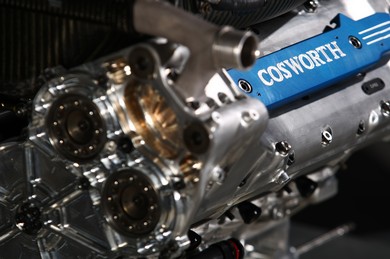
Last month’s exciting finale to the 2010 FIA Formula One World Championship marked the end of Cosworth’s first year back in the sport as an engine supplier following a three year absence. It saw the Northamptonshire engineering firm maintain its record for 100% race reliability with the Cosworth CA2010 engine.

With 1,129 laps and 5,795km racing over 19 races, the Cosworth CA2010 engines supplied to AT&T Williams, Virgin Racing, HRT and Lotus Racing amassed over 100,000kms of race weekend running. The competitiveness of the engine was also noted, helping Williams to make steady progress with the Williams Cosworth FW32 package during the season to finish the year in 6th place in the Constructors’ World Championship.

On top of Cosworth’s return, the company’s electronics division continued to develop its long standing business activity in Formula One, supplying complete solutions to both HRT and Lotus, and steering wheels to all three of the new teams. Allied to Cosworth’s provision of wind tunnel control systems, this gave significant presence to the Cosworth Group throughout the paddock.

So Mark (Gallagher – General Manager of Cosworth’s F1 Business Unit), what’s your assessment of the 2010 season?

“We achieved all our key operational objectives from an engine supply perspective, providing our four customers – one third of the grid – with a competitive, reliable and affordable Cosworth CA2010 engine supported trackside by a dedicated team of technicians embedded within the teams, and backed up in Northampton by the personnel in engineering, manufacturing, build, test and operations.

“From a business perspective the season went well; we spent money where we needed to and we achieved the profitability required to continue investing in the programme. The relationships with our customers were good, and have developed well – so we can look back on the season with a good degree of satisfaction.”

Did the engine perform as expected?

“The Cosworth CA2010 was created in a very few months using the original CA2006 as the baseline, but revising it to produce peak power within a rev limit of 18,000rpm, a much extended duty cycle of up to three full race weekends, and fuel consumption correspondent with the ban on refuelling and increased emphasis on start-weights. I believe our engineers did an outstanding job.

“The engine performed very well in pre-season dyno-testing, but we knew that once it hit the track we would need to optimise its performance more fully. The fact that pre-season testing was rain affected, and that only one of our four customers took part in all the tests, rather limited the gathering of useful data.

“Once we started racing we had a couple of issues which, while not ‘show stoppers’, necessitated some action to revise the oil system and tackle slightly higher than expected power degradation. I am pleased to say the issues were quickly identified and tackled. Obviously we had an initial pool of engines already with the teams and it took a little time to cycle rebuilds through the system to revise specifications, but at no stage was the programme compromised and the best measure of that was total race reliability.”

What about actual results on track and pure performance?

“If you work in any significant aspect of Formula One whether as a team or a key technical supplier and don’t focus on winning, then there is no point being here. As a supplier of engine and electronics technologies Cosworth plays an important part in contributing to the overall package of the teams we work with but, ultimately, the chassis, the vehicle dynamics, the aerodynamics and the myriad of other systems which go to defining a Formula One car are not within our control. We therefore focus on making sure our technology behaves absolutely to the best of its abilities.

“The results on track in relation to the new teams were very much in line with our, and their, expectations. It was always going to be a three-way battle behind the vastly experienced teams, many of which have enjoyed manufacturer support over the last decade and therefore have extensive technical facilities and resources as well as deeply experienced personnel.

“Williams gave Cosworth a much better opportunity to show our true performance and together we achieved every possible points finish in 4th – 10th places and scored that pole position in Brazil which, whilst due to conditions, was a memorable milestone.”

Speaking of Williams, how does Cosworth view 2010?

“AT&T Williams is one of the very best teams in Formula One, with enormous capability and experience. We have worked hard to ensure that the Cosworth engine contributed successfully to their overall package and at all times they have demanded from us a constant push to optimise performance. We have no problem with that; it’s a very good thing because when you add our inherent motivation to the determination of a team such as Williams, success will come.

“The package started the season with the team demanding improvements in every area, but from Valencia onwards the results started to improve with both cars making it through to Q3 on a regular basis and both Rubens (Barrichello) and Nico (Hülkenberg) scoring points. Ultimately the package finished 6th in the Constructors’ World Championship and there were an increasing number of occasions when we could outpace Mercedes in qualifying and mix it with both them and Renault in the races. There is much reason to believe we have now achieved a good platform on which to build.”

Lotus Racing won the ‘battle of the new teams’; what’s your view of their achievement?

“Tony Fernandes and Mike Gascoyne set out with a number of goals for 2010 and appear to have achieved them all, particularly in terms of being the most successful of the new teams and achieving a degree of credibility which some of their critics did not expect.

“Considering that they only received their official entry in September 2009, it was an impressive effort and I am pleased to say Cosworth engines and electronics played a key part in helping them make the grid and deliver a consistent performance.

“Unfortunately a number of issues involving their transmission system set the team on a different course in terms of seeking a new engine-transmission pairing for 2011 – but none of the reasons for their decision to switch to an alternate engine had anything to do with the performance of the CA2010. We wish them all the best for the future.”

How do you feel HRT performed in 2010?

“One of the benefits of supplying engines and electronics to teams is the extent to which you get to know them, and although HRT have come in for a lot of criticism in relation to on-track performance, I think the team pulled together incredibly well and did a very solid job all year.

“Their reliability was actually very impressive and, when one considers that it was only mid-February when Dr Kolles took over as Team Principal, in many respects their accomplishment in building the cars and competing in all 19 events against a backdrop of easy-to-make criticism, deserves reward.

“Bruno Senna, Karun Chandhok, Sakon Yamamoto and Christian Klien all did their best, trying not to create traffic problems for the truly competitive cars, and yet adding to the show for race going spectators and the audiences in their home countries. The team deserves to progress.”

Can you comment on Virgin Racing’s year and also the recent deal with Marussia Motors?

“Virgin Racing made enormous strides throughout 2010, coping with some severe reliability problems early on to achieve improved performances and ultimately real credibility as a team. Under John Booth’s direction the team never made any secret of the fact that this was going to be a learning year, and Nick Wirth’s CFD-designed VR01 acquitted itself well against Lotus and gave the team a lot to build on for next season.

“The investment by Marussia Motors is good news for the team, and also for Cosworth, as we have worked with Marussia for over a year and are currently delivering powertrains to Moscow for production of the very attractive Marussia B1 sportscar. Having two customers come together in one team gives us much to look forward to, and Marussia Virgin Racing will no doubt add new interest to the sport in Russia in addition to that already created by Vitaly Petrov and the forthcoming Russian Grand Prix in 2014.”

The first race of the 2011 season is in exactly 100 days time – how are preparations going?

“This is a very busy time of year and work on 2011 started months ago with the development of the KERS drive which is currently being tested. We are working closely with AT&T Williams, Marussia Virgin Racing and HRT to support their pre-season testing, car launches and start-of-season activities, and we expect to be running both the standard CA2010 and KERS version of the engine next season.

“We are also restructuring some of our internal systems to improve processes wherever possible, so the coming weeks will be typically hectic. We are very much looking forward to 2011.”

Finally, from a personal perspective, how has your first year at the helm of Cosworth’s F1 business gone?

“When I accepted the role here I was under no illusion that it would be a demanding job, but ultimately very rewarding. It has met both those expectations to a much greater extent than I imagined!

“I learned from my time running a championship winning team in A1GP that it is vitally important to let engineers and technicians do what they do best, empower them to get on with the job, and focus on making sure the contracts are fulfilled and the business operates profitably. I have learned a great deal too, which means that the role is always interesting; but most of all I have learned about the wider capabilities of the Cosworth Group.

“It is to my frustration that the F1 audience still views Cosworth as an ‘engine’ company when in fact we are a great deal more than that today. The electronics, aerospace and defence and automotive work that goes on here is astonishing, yet unfortunately a well-kept secret. Part of what we will be doing in the future is communicating more effectively the highly diversified engineering and manufacturing business that Cosworth represents.”

Start looking at data in new ways


In the last 30 years there has been a revolution in the sophistication – and to some extent the falling cost – of management information systems. But are managers any better informed today?

Senior managers still find that most of the information they get is not timely enough, not relevant, often difficult to interpret, and their information needs are not being adequately met.

Something isn’t quite working. So – what’s the problem?

Is the information bar rising faster than technology can meet it? Managers need more and more information, ever more quickly, competition is more severe and the whole pace of business has got faster. We’re on an escalator that is constantly moving.

Or has the ineffectiveness of the technology got to do with the managers themselves? That they still don’t have the skills or the mindset to make use of the tools that are there?

It was therefore with some interest that I came across Information Age’s suggestion that perhaps the answer lies in the way the human visual system processes information:

“…the full potential of the visual system not only to understand but also to analyse information is still underused by business information systems.”

Founder and Principal of Perceptual Edge – an independent analyst and consultant whose work focuses on data visualisation – Stephen Few argues that the notoriously high rate of failure among business intelligence (BI) projects can be attributed, in part, to the failure of software vendors to design their tools to reflect the way human beings perceive information.

In its piece – The Analytical Eye – Information Age goes on to say:

“Of course, top of the range BI software allows users to create all manner of charts and graphs with more effects and visual adornments than one could ever need. But this is not the same as designing a system that lets the user exploit the potential of their visual system to perform analyses they would be unable to do mathematically.”

BI technologies will of course continue to evolve as business requirements change, helping to capture and share knowledge about customers, markets, and other key areas of the business.

However, if they are to be effective, such tools will have to become more capable of mimicking the human capacity for thinking multi-dimensionally, for comprehending spatial, geographical and visual sources of information, and for making inferences.

Was Fergie right to demand payment?

Richard Hillgrove thinks Sarah Ferguson was justified in demanding money in return for an introduction to her ex-husband. Controversial? Maybe. But then again there’s nothing like a spot of opportunism to promote your PR company is there?

Hillgrove (left) is former PR to Dragon’s Den star James Caan

The News of the World filmed the Duchess allegedly making arrangements for the money to be paid into her bank account by a reporter who was posing as a businessman. The newspaper also claimed that it knew of two businessmen who had been introduced to Fergie’s former hubbie – the Duke of York and the UK’s Special Representative for Trade and Investment – by the Duchess herself.

But, according to Hillgrove – Managing Director of Hillgrove PR:

“Money changes hands so that businesses can gain access to influential people every day of the week. It is a vital part of business: there is nothing unusual about what the Duchess of York did. Facilitating a business introduction is legitimate work and if she has been approached the Duchess is correct to expect payment if she makes it happen.”

What do you think?

Formula One in the Middle East (Part 2)

Talk of establishing Formula One in the Middle East has been going on for decades.

The first major event was in Dubai in December 1981 when British businessman Martin Hone organised a Grand Prix on a makeshift 1.6-mile track around the Hyatt Regency Hotel. Five events were held and considerable appearance money lured out an impressive array of VIPs. There was talk at the time of the track being extended but the Dubai GP never materialised. The Arab world became more interested in rallying with the highly-successful Middle Eastern Rally Championship.

In 1995 there was a brief flurry of excitement in the region when it was announced that there were plans for a race to be held in Qatar. A year later Abu Dhabi announced that it had similar plans. Neither materialised there either.

By 1997 there was talk of a race in the war-shattered Lebanese capital Beirut in an effort to restore the international image which the city had enjoyed in the 1950s when it was one of the most glamorous spots in the Mediterranean. In August 1998 Lebanese businessman Georges Boutegy announced that he has signed a draft agreement with Formula One boss Bernie Ecclestone to hold a Grand Prix in Beirut for 2003 and that Formula One’s Race Director Charlie Whiting had been to the Lebanon to inspect a proposed track.

The plan announced at the time was for a track to run through a part of the city that has been destroyed in the fighting, but being rebuilt by a company owned by the Lebanese Prime Minister Rafic Al-Hariri. This led to a dispute when another businessman, Khaled Altaki, announced that he was going to build a new circuit close to the sea outside the city.

Al-Hariri was replaced as Prime Minister and the new government announced that it was making major cutbacks. The Beirut GP has not been heard of since. During his state visit to Beirut just a few weeks later Prince Albert of Monaco announced that his principality would be willing to help organise an event. The rest, as they say, is history.

In 1999, however, Ecclestone visited both Dubai and Cairo to discuss races with the local authorities. The Egyptians were keen to discuss a Grand Prix in the desert, as a way of rebuilding the country’s tourist industry which had been virtually destroyed in November 1997 when Islamic extremists massacred 58 international tourists in Luxor. Dubai was also keen to promote tourist trade, using tourism as a means of replacing lost revenue as oil reserves dwindled.

In the end Bahrain beat them all.

Formula One in the Middle East (Part 1)

Just a few years ago Formula One – and motorsport in general – did not have any presence in the Middle East. Now the region wants to be associated with what Formula One represents – technological excellence, innovation, the future.

Bahrain has not only built a venue that is among the very best in the world and deservedly won acclaim for its Grand Prix, but it has also built foundations for the current growth of interest and investment in Formula One across the Middle East.

Bahrain International Circuit

The Bahrain International Circuit (BIC) staged its first Formula One event in April 2004, winning the FIA promoters’ trophy for that season. Commented the sport’s dealmaker extraordinaire, Formula One Management CEO Bernie Ecclestone at the time:

“It was a real pleasure to bring Formula One to the Kingdom of Bahrain, and I’m pleased to confirm that this relationship will continue into the future.”

Since its inaugural race, the Bahrain event has drawn widespread acclaim for its facilities and its impressive programme of pre-race events. In 2006, it was honoured with hosting the season opener when Melbourne, the traditional first-race venue, was busy with the Commonwealth Games. Said BIC Chairman, Talal Al Zain:

“The success of the Grand Prix has however reached even further than we dared hope when we embarked on this great adventure, and we are delighted to see both interest and involvement in the sport from fans, sponsors and other ventures around the region has blossomed from our achievements. Our new agreement with Mr Ecclestone ensures that Formula One will retain its home in the Middle East long into the next decade, and that the Kingdom will continue to host the world’s biggest sporting series.”

The news that Abu Dhabi would host a Grand Prix in 2009 on a new racing circuit on Yas Island was also greeted with much fanfare. Said Bernie Ecclestone:

“We are delighted to bring Formula One to Abu Dhabi. It was a mutual decision to have a second race in this economically fast-growing region and I have no doubts that Bahrain and Abu Dhabi can co-exist perfectly. There are five countries waiting at the moment to have a race and we have decided to come here – this should speak for itself.”

The Abu Dhabi government said it had invested $40 billion in the Yas Island development, so the cost of an annual Formula One race is relatively low by comparison given that the aim is to build up a huge tourist industry on the island. Abu Dhabi is also able to attract more local spectators to the event as it is the highest per capita city in the world, unlike Bahrain where wealth is much more restricted.

The development is all part of the plan to wean the economy off its dependence on oil. Abu Dhabi started its own airline, Etihad Airways, in 2003 in an effort to emulate its neighbour and rival Dubai as a tourist destination and spent a huge amount of money expanding the Abu Dhabi International Airport.

For Ecclestone such projects are a gift as he looks for ways to expand Formula One’s revenues in the future with a new generation of high-paying races to follow in the footsteps of Bahrain and Shanghai. These will probably replace some of the first generation events outside Europe which have not yet lived up to local expectations.

Bahrain may not originally have been a success in financial terms, with very small crowds, but the publicity generated has been good for the country. Bahrain’s plans to be a holiday destination have long lagged behind Dubai, and Abu Dhabi is now embarked on an aggressive programme to catch up and rival both.