Formula One in the Middle East (Part 2)

Talk of establishing Formula One in the Middle East has been going on for decades.

The first major event was in Dubai in December 1981 when British businessman Martin Hone organised a Grand Prix on a makeshift 1.6-mile track around the Hyatt Regency Hotel. Five events were held and considerable appearance money lured out an impressive array of VIPs. There was talk at the time of the track being extended but the Dubai GP never materialised. The Arab world became more interested in rallying with the highly-successful Middle Eastern Rally Championship.

In 1995 there was a brief flurry of excitement in the region when it was announced that there were plans for a race to be held in Qatar. A year later Abu Dhabi announced that it had similar plans. Neither materialised there either.

By 1997 there was talk of a race in the war-shattered Lebanese capital Beirut in an effort to restore the international image which the city had enjoyed in the 1950s when it was one of the most glamorous spots in the Mediterranean. In August 1998 Lebanese businessman Georges Boutegy announced that he has signed a draft agreement with Formula One boss Bernie Ecclestone to hold a Grand Prix in Beirut for 2003 and that Formula One’s Race Director Charlie Whiting had been to the Lebanon to inspect a proposed track.

The plan announced at the time was for a track to run through a part of the city that has been destroyed in the fighting, but being rebuilt by a company owned by the Lebanese Prime Minister Rafic Al-Hariri. This led to a dispute when another businessman, Khaled Altaki, announced that he was going to build a new circuit close to the sea outside the city.

Al-Hariri was replaced as Prime Minister and the new government announced that it was making major cutbacks. The Beirut GP has not been heard of since. During his state visit to Beirut just a few weeks later Prince Albert of Monaco announced that his principality would be willing to help organise an event. The rest, as they say, is history.

In 1999, however, Ecclestone visited both Dubai and Cairo to discuss races with the local authorities. The Egyptians were keen to discuss a Grand Prix in the desert, as a way of rebuilding the country’s tourist industry which had been virtually destroyed in November 1997 when Islamic extremists massacred 58 international tourists in Luxor. Dubai was also keen to promote tourist trade, using tourism as a means of replacing lost revenue as oil reserves dwindled.

In the end Bahrain beat them all.

Formula One in the Middle East (Part 1)

Just a few years ago Formula One – and motorsport in general – did not have any presence in the Middle East. Now the region wants to be associated with what Formula One represents – technological excellence, innovation, the future.

Bahrain has not only built a venue that is among the very best in the world and deservedly won acclaim for its Grand Prix, but it has also built foundations for the current growth of interest and investment in Formula One across the Middle East.

Bahrain International Circuit

The Bahrain International Circuit (BIC) staged its first Formula One event in April 2004, winning the FIA promoters’ trophy for that season. Commented the sport’s dealmaker extraordinaire, Formula One Management CEO Bernie Ecclestone at the time:

“It was a real pleasure to bring Formula One to the Kingdom of Bahrain, and I’m pleased to confirm that this relationship will continue into the future.”

Since its inaugural race, the Bahrain event has drawn widespread acclaim for its facilities and its impressive programme of pre-race events. In 2006, it was honoured with hosting the season opener when Melbourne, the traditional first-race venue, was busy with the Commonwealth Games. Said BIC Chairman, Talal Al Zain:

“The success of the Grand Prix has however reached even further than we dared hope when we embarked on this great adventure, and we are delighted to see both interest and involvement in the sport from fans, sponsors and other ventures around the region has blossomed from our achievements. Our new agreement with Mr Ecclestone ensures that Formula One will retain its home in the Middle East long into the next decade, and that the Kingdom will continue to host the world’s biggest sporting series.”

The news that Abu Dhabi would host a Grand Prix in 2009 on a new racing circuit on Yas Island was also greeted with much fanfare. Said Bernie Ecclestone:

“We are delighted to bring Formula One to Abu Dhabi. It was a mutual decision to have a second race in this economically fast-growing region and I have no doubts that Bahrain and Abu Dhabi can co-exist perfectly. There are five countries waiting at the moment to have a race and we have decided to come here – this should speak for itself.”

The Abu Dhabi government said it had invested $40 billion in the Yas Island development, so the cost of an annual Formula One race is relatively low by comparison given that the aim is to build up a huge tourist industry on the island. Abu Dhabi is also able to attract more local spectators to the event as it is the highest per capita city in the world, unlike Bahrain where wealth is much more restricted.

The development is all part of the plan to wean the economy off its dependence on oil. Abu Dhabi started its own airline, Etihad Airways, in 2003 in an effort to emulate its neighbour and rival Dubai as a tourist destination and spent a huge amount of money expanding the Abu Dhabi International Airport.

For Ecclestone such projects are a gift as he looks for ways to expand Formula One’s revenues in the future with a new generation of high-paying races to follow in the footsteps of Bahrain and Shanghai. These will probably replace some of the first generation events outside Europe which have not yet lived up to local expectations.

Bahrain may not originally have been a success in financial terms, with very small crowds, but the publicity generated has been good for the country. Bahrain’s plans to be a holiday destination have long lagged behind Dubai, and Abu Dhabi is now embarked on an aggressive programme to catch up and rival both.

Our next generation of Olympians needs your help

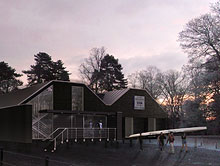
My colleagues at Oxford Brookes University Boat Club are trying to raise £1 million to extend their boathouse on the River Thames. For Oxford Brookes to maintain its position as one of the five feeder squads to the British team, the Cholsey boathouse near Wallingford must be modified to meet the ever-growing training demands.

Steve Williams OBE was at OBUBC in the late 1990s. Rowed the M2- with Fred Scarlett in 1998. Won M4+ gold in 2000. Steve won five M4- golds: Three at worlds and two at the Olympics (2004 and 2008)


OBUBC has produced some of the best rowers in the world and has the strongest undergraduate rowing squad in the country.

By backing the Boathouse Campaign you have the chance to push Great Britain towards even more glory in London 2012, and add to Oxford Brookes’ tally of Olympic gold medals won by Ben Hunt-Davis, Fred Scarlett and Rowley Douglas at Sydney, and Steve Williams at Athens and Beijing.

The team’s year-on-year success under Coaching Director Richard Spratley means more room is needed to store world-class boats and build land-based training facilities. Expanding the boathouse will bring a number of vital facilities under one roof, including a gym housing rowing machines as well as warm-up and cool down areas required by world-class performers.

Oxford Brookes’ rowers train for up to 25 hours a week. They currently divide their schedule between river-based training and a land-based rowing suite in the University’s Centre for Sport 14 miles away. The new building features larger changing rooms for the club’s male and female rowers. The squad has 50 elite athletes but changing facilities for just 12 men and six women. OBUBC is therefore planning to build the boathouse by this Christmas to give its rowers as much use of the new facilities as possible before London 2012.

How the new boathouse will look

Speak English, for goodness sake!

My colleague Tim Phillips usually has more to say on this. But, at last, it’s official – 62 per cent of managing directors, marketing directors and CEOs believe that prospecting communications sent to them are so riddled with ‘new business-speak’ that they are made almost unintelligible and are, therefore, counter productive.

The result is that most letters, emails and direct mail are binned within the first five seconds of being opened. In fact, the practice of inserting gobbledegook to replace plain English words has become so prevalent that many companies are harming their chances of working with other organisations.

The company that carried out the research – Retriever – found that 54 per cent of companies used unintelligible and meaningless words instead of straightforward prose. Says Mark Young, Retriever’s MD: “There is a belief amongst a significant majority of business personnel that inserting new business-speak somehow shows them as being intelligent and professional. Instead, it would seem that the opposite is true. People are just fed up with being sent letters that, rather than convey intention, are full of innuendo and misleading sentences.”

The research found that the words most detested are:

‘at the coalface’ (42 per cent)

‘win win situation’ (39 per cent)

‘over arching’ (34 per cent)

‘mind set’ (31 per cent)

‘think outside the box’ (30 per cent)

‘client interfacing’ (27 per cent)

‘tooled-up’ (25 per cent)

‘blue sky thinking’ (24 per cent)

‘singing from the same song sheet’ (19 per cent)

‘drill down’ (18 per cent).

Some of the more bizarre sentences included:  ‘run up the flag pole and see who salutes’, ‘working to a wire frame structure’, and ‘not lying in the long grass on this decision’.

Whilst many consider the use of clichés and tortuous sentences as a reflection of their business acumen most senior personnel see their use as a reflection of the senders’ ignorance and inability to be direct and engaging.  Explains Young:

“There are over 171,000 words in the English language; there is no need to add more. There are plenty of existing words in everyday usage that can explain most business situations. Unfortunately, a whole industry seems to have grown up to try and distance business from those it is there to serve. The use of convoluted language has served only to alienate people. The research shows that most people respond better to plain, simple and straight forward messages, especially those that are emotionally engaging as well as commercial.”

Some of the more irritating words that those researched disliked included: ‘elucidate’ instead of ‘make clear’, ‘heretofore’ instead of ‘until now’, ‘a percentage of’ instead of ‘some’, ‘promulgate’ instead of ‘advertise’, ‘over arching’ instead of ‘all’, and ‘mind set’ instead of ‘think’.

The research also found a correlation between the use of business jargon and the seniority of the personnel interviewed. Employees  – those under 25 years of age – were less likely to pepper their correspondence with new fangled business jargon, as were those over 50 years old or those who were at director level. However, managers or those aged between 25 and 45 were over three times more likely to use language that sought only to confuse rather than define.

It would appear that the less confident a person is the more likely they are to use inappropriate or, in many cases, completely inaccurate and meaningless words. Those new to work have not been indoctrinated into the dark arts of gobbledegook, and those confident in their position within a company seem to favour plain talking.

In fact, Retriever’s research also found that the use of plain English within communications – letters, emails, memos and direct mailers – generated a three-fold increase in response over ones that incorporated ‘new business jargon’ – the use of any of the words like ‘client interfacing’, ‘win-win’, ‘at the coalface’ or other inane words for which there already exists a perfectly clear, succinct and accepted one.

There were differences in opinion between business sectors. Some directors responded more favourably than others to the use of jargon. Advertising agencies used more jargon than any other industry, followed by marketing agencies, estate agencies and IT companies. Retail was low down the list, just ahead of banking. However, the finance industry, as a whole, was relatively clear of jargon with most of its correspondence in plain English.

The hotel, travel and leisure industry seemed to have a predisposition to using as much jargon as humanly possible, coming second behind the advertising industry.

A message from Sir Stirling Moss

The greatest F1 driver never to win the World Championship fell down the lift shaft in his Mayfair home last weekend. Pretty serious for a young man, but Stirling’s 80. Incredibly, he’s OK and true to his spirit has been complaining not about his two broken ankles and what might have happened, but the quality of his hospital brekkie.

Anyway, the great communicator has issued an epistle about the incident, which he describes in his usual way:

Dear all of you

The last few days have been quite fantastic and I’d like to thank each and every one of you for your kind thoughts, messages and other paraphernalia.

On Saturday evening, I was at home with Susie, Elliot and Helen and about to leave for a curry, for which we were running late. I asked Helen to join me in the lift to go downstairs, because Susie and Elliot were smart enough not to ride in my lift. I opened the door and stepped into the lift, with Helen ready to follow me, which she never did. That is because the lift had stopped on the floor above and incorrectly allowed the door beneath to open.

Still chatting to Helen, I stepped into the open doorway – and fell to the bottom of the lift shaft.

The ambulance was called and arrived at racing speed, whereupon they put me on to a series of about 10 stretchers! Having finally settled on what must have seemed a good one, I was taken, along with my family to the Royal London Hospital in Whitechapel, where they used another batch of similar stretchers!

They did a good job of helping me, but were unable to do the requisite surgery. So, on the Sunday, I was moved to the Princess Grace, where a fantastically efficient, kind and amusing staff did all the jobs.

I am now in a lovely room, Number 222, and with the help of Elliot and the porter, am finally on the email. That does not mean that I will be able to actually send this to you, but I will try!

Now for the future… Which I can see with Susie, Helen and Elliot around me, is going to be a bloody struggle!

Sir Stirling and wife Susie (Getty Images)

As some of you may know, Susie and I are booked on a Seabourn Cruise for our 30th anniversary, next month. I have to cross the hurdle of getting the doctors, and family hangers-on, to allow me to thin my blood, in order to avoid any issues involving deep vein thrombosis. It will be six to eight weeks from Sunday before I will be able to put any load on my feet. Therefore I’m facing my sixth or seventh reduction to a wheelchair (Susie says she’s stopped counting) which I must admit, is rather boring. The good news is that I didn’t sell the wheelchair after the last shunt!

The whole thing is a real pain in the arse. If I had looked where I was going, I wouldn’t be here at all, so it’s my own damned fault.

I have been absolutely overwhelmed by your collective concern and kindness. I can tell you that currently I’m lying in hospital, taking deep breaths, lifting one arm with the other, raising my legs (with plasters on the end) and doing all I can do to keep myself as mobile as possible, but, having said that, I’m not yet winning the battle.

I’m not sure when I’ll be able to go home but the lift has to work, otherwise I’ll never be able to get upstairs in my wheelchair. Maybe I’ll go and stay with Helen and Elliot for a while…

This really has opened my eyes to how kind all my friends are, over an old ex-racing driver, flogging a faded image!

I look forward to seeing you soon, and many thanks for all of your thoughts.

Ciao

What a guy. We wish Sir Stirling a speedy recovery. In the meantime, the great man speaks from his hospital bed and via his site.

Dear, oh dear, oh dear!

A press release from the FIA just out this evening:

“The USF1 Team have indicated that they will not be in a position to participate in the 2010 FIA Formula One World Championship. Having considered the various options, the FIA confirms that it is not possible for a replacement team to be entered for the Championship at this late stage.”

So, that’s USF1 and Stefan GP of the supposed ‘new entries’ out for the coming season. Autosport.com is claiming an exclusive with USF1 boss Ken Anderson about what went wrong.

“In the coming days the FIA will announce details of a new selection process to identify candidates to fill any vacancies existing at the start of the 2011 season.”

What a mess. Why weren’t these ‘new entries’ vetted properly in the first place? There are major safety issues, as well as Formula One’s reputation on the world stage at stake here. Won’t someone get a grip – please!

Virgin Racing and Lotus are in of course. So is Campos Meta which has been renamed Hispania Racing Team, or HRT (no jokes please, they’ve been cracked already). Sauber will be known still as BMW Sauber.

HRT's new owner Jose Ramos Carabante

Some words of wisdom for the UK’s IT industry

Says Director of Secure Thinking and Secure Resources, Lee Hezzlewood:

Educate staff to design and deliver solutions that are secure from the outset.

Stop Big Bang projects which almost always fail, overrun or go over budget (or all three) particularly in the public sector. Deliver projects incrementally with realistic goals and objectives.

Integrate more with the business – this needs to be approached from both sides. IT is fundamental to most businesses these days but there is still an us-and-them attitude.

Stop inventing jargon which is designed to baffle and confuse non-IT people. Speak plainly and simply!

How to get weather right

Many people consider long range forecasts to be no more than guesswork. That’s a little unfair. There is some real science behind these outlooks.

However, says Netweather.tv’s director Ian Michaelwaite: “When forecasters get long range forecasts wrong it can bring chaos, such as much lower stockpiles of grit and salt being pre-ordered as has been the case this year.”

So, with the fanfare reports of the coldest winter for 30 years directly contradicting the Met Office forecast of a mild winter, what can we do to get it right?

Perhaps we should now be using at least one other weather forecaster to compare to the Met Office. A coordinated approach using seasonal forecasts with monthly, weekly and daily updates is now crucial as we limp unconvincingly through the last steps of a very cold winter and into spring.

Just a thought…

Kitchen of the future – imagine…

According to the UN, 74 per cent of the world population will live in cities by 2050. This high level of urbanisation means that we have to rethink the way we’re using space, energy and our environment.

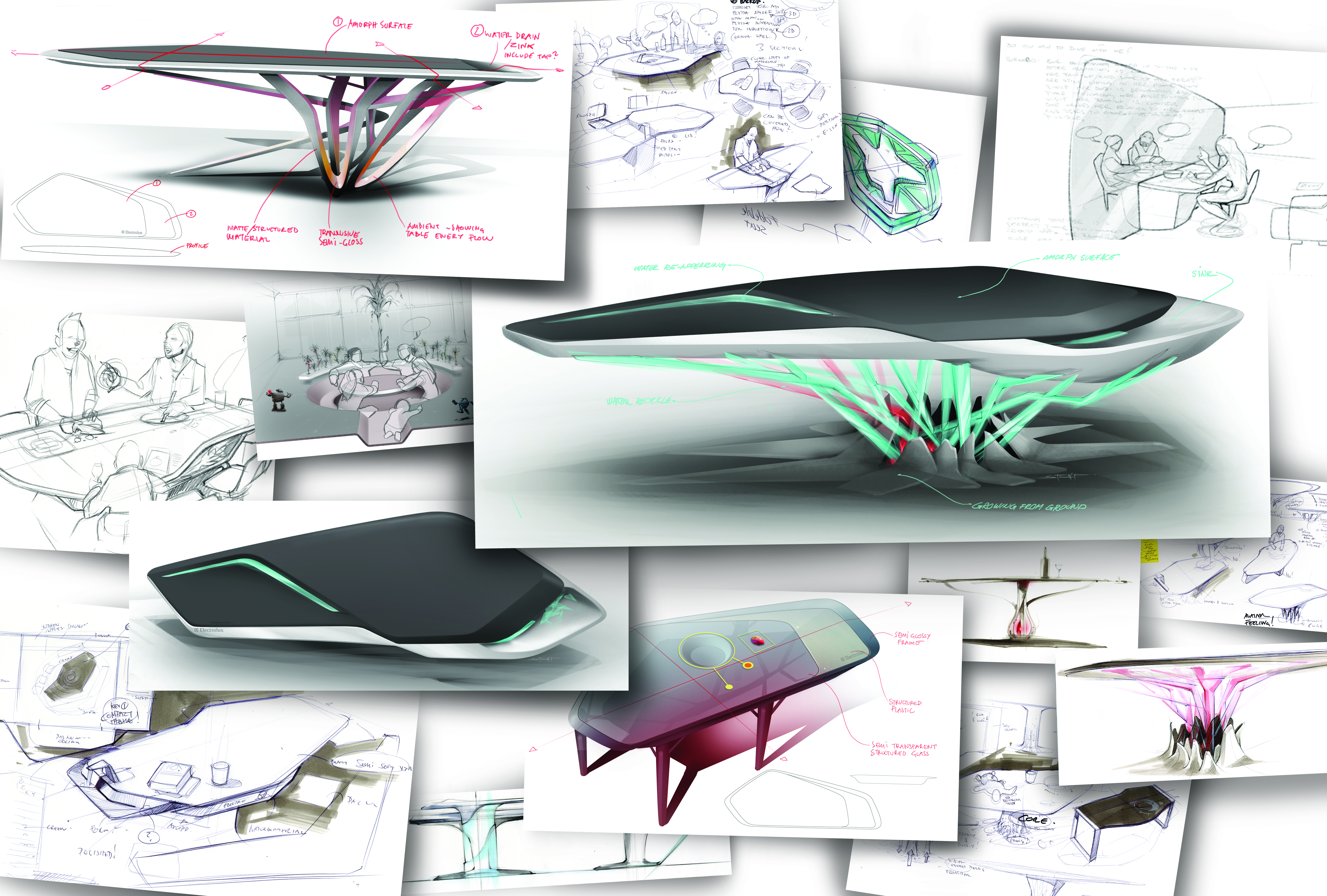
Those awfully clever people at Electrolux have used this scenario as a foundation and developed a brand new design concept to illustrate how we’ll live in the future. Heart of the Home is an integrated solution functioning as a kitchen table, cooking surface and bar all in one. Or as Electrolux says: “An intelligent, amorphous, interchangeable cooking surface that adapts to user needs”.

When using the Heart of the Home one simply places one’s ingredients on the surface. The appliance then analyses the ingredients and presents a list of suitable recipes. After deciding on a recipe, the user marks an area with his hand to determine how large the cooking area should be. Then the desired depth of the surface is created by simply pressing the hand against the malleable material. After achieving the required width and depth it’s just a matter of setting temperature and time with a simple touch of a finger.

Fantastic idea! Imagine never having to use pans or pots, worry whether the ingredients are fresh or look up a recipe in a cook book. All we need now is the built-in chef.

Formula One – new regs for 2010

You may not have realised it, but there are big changes afoot for the coming F1 season. Some good, some odd. Here’s a summary:

Refueling

For the first time since 1993, refueling will be banned, although drivers will still need to come into the pits to make a compulsory tyre change. The cars will be sporting a larger fuel tank of around 250 litres (70-95 litres was a typical fuel fill in 2009). This has led to a wider and longer chassis design to accommodate it. Coupled with a change to a smaller front tyre (reduced to 245mm width from 270mm), the cars will therefore run a different weight distribution.

Verdict: Never mind about saving money, removing refueling takes away some of the spectacle. Pit stops will be much quicker, with teams estimating between 3-4 seconds. The drivers and their engineers will have to carefully manage their tyres and brakes on heavy fuel loads.

New teams

It was 1995 when Formula One last had 26 cars taking part in a race, but with 13 teams entered for the 2010 season the grid will be larger than usual. To comply with a new Resource Restriction Agreement the number of trackside team personnel teams can have has been restricted. For Saturday’s qualifying session, eight drivers will be knocked out of both Q1 and Q2, leaving 10 drivers to fight for pole position in Q3.

Verdict: The more the merrier. Should add enormously to the racing and we might even get some overtaking. Imagine that! However, let’s see how many of these ‘new’ teams actually make it to the grid.

Points system

To take into account the increased numbers of cars, the points system has been amended. The previous system (10, 8, 6, 5, 4, 3, 2, 1) will change dramatically in 2010 with the race winner being awarded 25 points and the top ten drivers awarded points (25, 18, 15, 12, 10, 8, 6, 4, 2, 1).

Verdict: I suppose the logic here is to encourage drivers to fight more for position. Going for the win, rather than, say, settling for second. Let’s see what happens in the first race.

Weight

The minimum weight of the car in 2010 will be 620kg compared to 605kg in 2009. This was introduced to offset the disadvantage faced by taller, heavier drivers in KERS-equipped cars. However, by mutual agreement, KERS will not be used in 2010.

Verdict: Shame KERS won’t be around. I thought it was a good thing. Anything that helps overtaking is fine with me. Of course the cars will be heavier because they’ll be carrying fuel for the full race distance. Tyre wear will therefore become an even bigger factor.

Testing

Only four pre-season winter tests were permitted with the ban on in-season testing remaining in place. The winter tests took place at Valencia (1 – 3 February), Jerez (10 – 13 February; 17 – 20 February), and Barcelona (25 – 28 February). One day of testing will be permitted by the FIA if a new driver is required to drive for a team during the season. To qualify, the driver should not have participated in an F1 race in the previous two years and the test will take place on an FIA-approved track not used for a Grand Prix.

Verdict: I’ve never understood why track testing was dropped. To me, it’s not just about the wealthier teams improving their performance, more about safety. After all, we don’t want bits coming off cars because they haven’t been tested in real-life conditions as thoroughly as they might have been, now do we? There’s a limit to how much you can achieve using CFD analysis and wind tunnel. Whatever data a team has they only find out how good their car is when they run it on a track. One day’s testing for a new driver is also not enough, by a long way. But, then again, what do I know?

Lotus Racing back on track – after 15 years

We were looking forward to watching four new teams earn their racing spurs in F1 this year. But the USF1 team is coming apart at the seams – or so it appears, Spain’s Campos Meta F1 is undergoing a major financial restructuring, and Serbia’s Stefan GP is still without an official Championship entry (it may end up using USF1’s if the team goes belly-up). Whoops – forgot Virgin Racing. More of them in a later post. However, it seems to be a very different story at Lotus F1 – now back where it belongs for the first time in over 15 years. Post testing the Type 127 (‘T’ 127 at the launch) in Jerez, on Monday Malaysia’s longest serving Prime Minister and one of Asia’s most influential political figures, Tun Dr. Mahathir, officially opened the team’s factory. The day after, HRH The Duke of York turned up for a tour of the facility.
Lotus Racing was officially born on 12 September 2009 when the FIA granted the new team its entry into the 2010 FIA Formula One World Championship. Headed up by Team Principal Tony Fernandes, supported by Chief Technical Officer Mike Gascoyne and Chief Executive Riad Asmat, the team has made its base in Hingham, near to the home of Group Lotus just a few miles up the Norfolk roads in Hethel.


Prince Andrew is the UK’s Special Representative for International Trade and Investment. Says Tony Fernandes:

“What is perhaps less well recognised is that the Duke was one of the primary catalysts behind our substantial capital investment here in Norfolk. Indeed it was thanks to the Duke’s advice in June of 2009 that we began another extraordinary partnership between Malaysia and the United Kingdom that has culminated in the successful entry and creation of the Lotus Racing T127.”

Interview with Eric Boullier, Renault F1

The start of a new Formula One season is always a time of great anticipation. For Renault, this is particularly true in 2010 as it signals a new era for the team after the scandal of the previous one. With a new structure in place, new drivers, and new colours, the team feels there is a lot to be excited about and much to look forward to in the year ahead.

Eric, how’ve you been settling in as the new Team Principal of Renault F1?

“I’ve received a very warm welcome from everybody. Of course, the last four or so weeks have been very busy for the entire team, but I’ve been impressed with the motivation and work ethic of the factory.

“Now that the new season is approaching, we must keep focused and push hard to deliver a strong performance from the first race. For me, the human side of the job is by far the most important.”

Has everything gone smoothly with the new car build?

“On the whole the car build has gone to plan. Of course, there are always some issues to overcome during the winter, especially as the design office has taken some bold decisions with the design of the car. But, as I have said, everything has come together. We’ve hit our deadlines.”

The R30 features a classic yellow and black livery. Are you pleased to see the return of these iconic Renault colours?

“For me it’s definitely a good decision and I think the car looks stunning – it’s eye-catching and reminds people of Renault’s heritage in the sport. It reminds me of when I was a kid, watching Arnoux, Prost… It also sends out a clear message about Renault’s commitment to Formula One.”

Robert Kubica – what’s he like to work with?

“We are of course delighted to have Robert on board as he is clearly one of the best drivers on the grid. He’s extremely quick, experienced, and is a real fighter who never gives up, which fits well with our attitude at Renault. Robert’s approach is helping push the team forward because he’s just as hungry for success as we are.”

It’s early days in the season, but what objectives do you have in mind for 2010?

“We clearly want to be back at the front and capable of challenging for podiums as soon as possible. It would be too optimistic to say we want to be there from race one, but the progress and simulations we have seen over the winter are encouraging. We also have the resources at Enstone to deliver good development steps during the season so that we continue to improve from race to race. The aim, then, is to fight regularly for the podium in the last part of the season.”

Talk us through the resources that will support this aggressive development programme?

“Most importantly we have just completed a considerable upgrade to the wind tunnel. This will play a major role in our aero development throughout the year. We also have a modern CFD facility, which complements the work done in the wind tunnel (and vice-versa). It’s still a relatively new technology, but it’s now starting to reach a level of maturity and is giving us the results we always expected from it.

“There’s also the mechanical design team which has done an excellent job with the R30 and it will continue to feed upgrades to the car during the season.”

How do you feel about the first race of the season in Bahrain?

“It will be our first chance to see where we stand compared with our competitors in real racing conditions. We can go there safe in the knowledge that the entire team has put in an enormous effort over the winter and is determined to convert all that hard work into a strong performance on the racetrack.

“I would just like to take this opportunity to thank all the team members for their efforts over the last few months. I’m convinced that they’ll pay off on the racetrack.”

iPad…worth the wait, or lost the plot?

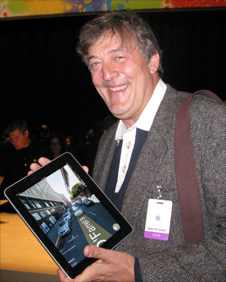
Apple's new iPad

Steve Jobs’ – or should I say Jony’s, Apple designer Jonathan Ive’s – long-awaited tablet device (April/May 2010 delivery – tune into the launch event in QuickTime and MPEG-4 here) has been much hyped as something we’ll use to read our books and papers on.

This may happen – The Economist takes a positive stance; it may not, especially if Fujitsu has anything to do with it. The Japanese company holds an iPad trademark. The jury’s out on whether the tablet’s screen is up to the job (no pun intended). And for some, the iPad’s price is lower than expected. This may discourage other suppliers from launching their own and scupper the market before it’s had a chance to take off.

The technical cognoscenti will no doubt be whining about the lack of a camera, support for Flash and Java, adequate battery life, etc, etc. Whether it’s the new ‘I want’, or the new ‘I can do without’. If you’re a woman, you’ll think the former – watch this very funny YouTube take from the US. And another, slightly longer but in my view even funnier take using Adolph H.

If you really want to understand where Apple’s going with iPad, ask Apple Meister Alan Kay. The real point is: Apple’s iPad is more than an iPhone with go-faster stripes on the side.

It represents refinement – of features, of use. It isn’t a revolutionary product, but a supremely evolutionary one. The epitome of product design and the nearest thing we have to a ’rounded’ computer that has to pay its way alongside a best-selling phone and music/film player.

Or, if you’re Apple fan and UK telly treasure, Mr Stephen Fry (bless ‘im):

“It’s transcendentally smooth and fast. It’s astounding. God, it’s beautiful. The display is stunning. I’m drooling with anticipation.”

Tiger, Tiger…

About time the Tiger Woods story was put into perspective. Soldiers are dying in Afghanistan for goodness sake.

Says Mr Brian Moore in today’s Telegraph Sport section:

“He deserves the criticism befitting a married man with two young children who has allegedly had multiple affairs…He does not, however, deserve ignorant, self-righteous lecturing from all quarters. I don’t remember him ever saying that he was better than anyone else, apart from on the golf course, where he certainly is. Is a higher moral standard expected of the top physicist; archaeologist; Fleet Street editor?”

He plays in a boring manner.

“Well, only to the stupid, who believe the ability to fire long iron shots to the heart of the green consistently is such. This description of his play is stupefying to anyone with even a smidgen of sporting knowledge.”

Work makes us blokes happy

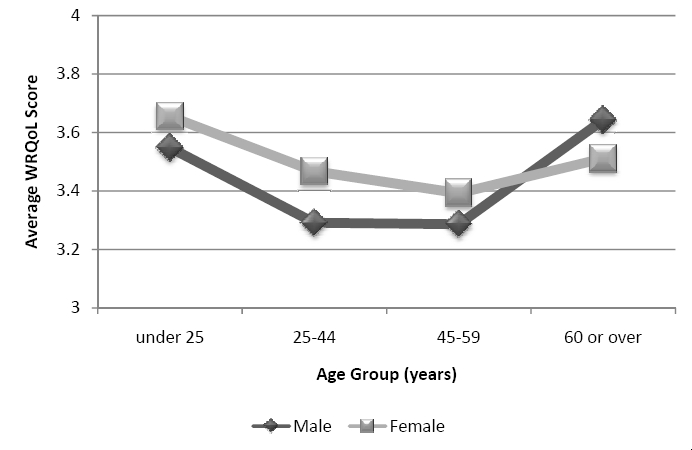
New research shows that UK employees in the 60 or over age group report a significantly higher quality of working life than their middle-aged colleagues. And this pre-retirement bounce is more pronounced in men.

The research shows that quality of working life tends to be higher in the under 25 and in the 60 or over age groups, with the 25 to 59 year olds reporting the lowest quality of working life. This pre-retirement bounce in quality of working life reflects a strongly positive change in the way people feel about their work as they near retirement.

But the trends for men and women show interesting and highly significant differences, especially in the context of the planned changes in retirement age.

Previous research has shown that women are generally happier than men at work. However, this study carried out by University of Portsmouth spin-out company QoWL shows that as we get older the difference in happiness narrows.

The trends completely reverse at around age 60. At this age, men – with several years of working life still to go – seem to experience a notable increase in quality of working life. However, women – typically nearer to retirement at this age – report much less of an increase.

Men, for the first time, have become much happier at work than women.

It isn’t clear exactly why the pre-retirement bounce is so much stronger in men, but there are a number of interesting possibilities:

  • It might be related to the differing job roles occupied by men and women. Men may have roles that provide more flexibility and therefore are able to wind down more and reduce their stress.
  • Men may typically have the prospect of a much higher pension, which also provides more flexibility and options.
  • Alternatively, it may have something to do with gender differences in attitudes towards work and retirement. Men may look forward to retirement much more and see it as an opportunity to stop working and spend more time doing the things they like doing.
  • Women on the other hand may value work for the social opportunities and networks it provides rather than simply as a means of earning money.
  • The prospect of more leisure time may not seem nearly as attractive to women as they may see themselves as ‘still working’ but at home and in a different way. The prospect of more time at home with their husbands may not be a cause of joy and happiness!

The level of improvement in the quality of working life is certainly interesting because it shows that satisfaction with work can improve. It is therefore worth exploring ways of making things better for all workers. Says Dr Darren Van Laar, QoWL’s lead researcher:

“While we are only now beginning to identify the factors that contribute to quality of working life, this research underlines the potential benefits that might be reaped from taking action to enhance the work environment and experience for all age groups.”

This becomes more than of academic interest when the trends are analysed more closely in the light of the planned increases in retirement ages. Men report little change in their quality of working life from 25 to 59 years, so it might be expected that a relatively small lengthening of their working lives due to later retirement ages could slightly delay the ‘Pre-retirement Bounce’.

But, for women, the apparent gradual lessening of their quality of working life with age, coupled with a more substantial increase in the number of years they have to work before retirement, might mean that older women experience further reduction in their quality of working life. They may end up less content in their pre-retirement years – missing out on the ‘Bounce’.

QoWL will next be looking to see if the changes in retirement age do lead to lowering of reported quality of life. They’ll be working with employers to learn why men see things so much more positively after 60. If they can identify the sources of that improvement for men, it may well be possible to work with employers to help their women employees enjoy the ‘Pre-retirement Bounce’ as well.