Reporting for beginners

It’s amazing how much broadcast tech is finding its way into the hands of the non-telly market.

Get in there. Get reporting..

Get in there. Get reporting..

Take Livewire Digital’s NetCaster, for example. A low-cost iPhone and iPad app can be used by groups of untrained personnel to send in realtime photos, sequences of stills and video directly to a producer or a command centre.

Ideal for event organisers, the emergency services, the military and NGOs, this new application is perfect for breaking news coverage of sporting events, expeditions and situation awareness.

Designed to help users reduce and manage operational costs, this new app provides rock solid audio and uses the ‘pay by volume’ Inmarsat satellite service to transfer media.

Netcaster uses sophisticated bandwidth control to efficiently deliver media to base – be these photos, realtime sequences of stills or motion video. Producers or command centre staff at base can then determine how the footage from multiple field personnel is presented to the viewers.

Easy-to-use production facilities offer split-screen functionality so the producer or command centre staff can view media from up to six contributors at once and manage their audio feeds.

Shining a light on infection

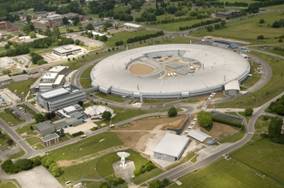
Using its new lab – Crystal – the UK’s national synchrotron facility, Diamond Light Source, has become the first and only place in Europe where pathogens requiring Containment Level 3 – including serious viruses such as those responsible for AIDS, Hepatitis and some types of flu – can be analysed at atomic and molecular level using synchrotron light.

Aerial image of Diamond Light Source

Aerial image of Diamond Light Source

This special light allows scientists to study virus structures at intense levels of detail and this new Crystal facility extends that capability to many viruses that have a major global impact on human and animal health. Studying pathogens in this way has the potential to open up new paths for the development of therapeutic treatments and vaccines.

Diamond already has a strong track record of studying viruses at lower levels of containment. In 2012, scientists determined the structure of the virus that causes hand-foot-and-mouth disease, which can cause severe central nervous system disease in children and poses serious public health threats across the Asia-Pacific region. Some 1.7 million cases were reported by the Chinese Ministry of Health during 2010, and there is no vaccine or therapy available.

An Anglo-Chinese collaboration used the facilities at Diamond to solve the structure of the Human Enterovirus 71 (EV71), which is the root cause of the disease.

EV71's structure

EV71’s structure

Using synchrotron light, the team were able to visualise the virus in different states and collect a series of structures, from which they were able to uncover a detailed picture of the virus’s actions in sequence. Rather than being a rigid object, the virus appears to actually breathe. Such visualisation requires specialist microscopes 10,000 times more powerful than standard laboratory microscopes.

Crystal enables researchers to rapidly visualise viruses in their entirety and at incredible scales. The facility’s brilliant beams of X-rays allow scientists to study crystallised virus particles, and so produce a comprehensive 3D image of the virus structure. By identifying the virus structure in atomic detail, scientists can target research into vaccines and anti-viral drugs.

Says Dr Katherine McAuley, science leader for the facility:

“Crystal is a major advance, not just for the UK, but for Europe at large. We are introducing a step change in research capabilities, so that more complex studies can be undertaken in a swift and effective way. The unique capabilities that the facility offers are expected to draw scientists from around the world, and establish the nation’s synchrotron as a hub of world-leading research into disease prevention.”

50 years of McLaren

“Life is measured in achievement, not in years alone.”

A 1969 McLaren M7C sits alongside todays 12C Spider

A 1969 McLaren M7C sits alongside today’s 12C Spider

When a 27-year-old Bruce McLaren penned these words in 1964, his new company – Bruce McLaren Motor Racing Ltd – was less than a year old.

In those days, Bruce’s vision was shared by fewer than half a dozen loyal souls who slogged across the world to race his self-made cars. Nowadays, the McLaren Group employs more than 2000.

On 2 September 2013 the McLaren Group will celebrate its 50th anniversary. Its Formula One team has become a global household name. Since its arrival in the sport – at the 1966 Monaco Grand Prix – it has won more races (182) than any other constructor, started from pole position 155 times and scored 151 fastest laps. In 2012, McLaren achieved the fastest-ever time for a Formula One pitstop (2.31s at Hockenheim), recorded its 58th consecutive points-scoring finish – an all-time record – and has now led more than 10,000 racing laps.

It’s all a long way from that small south London lock-up back in 1963.

Have a look at this superb piece of film:

Thanks Bruce..

Well done, Kimi – great drive

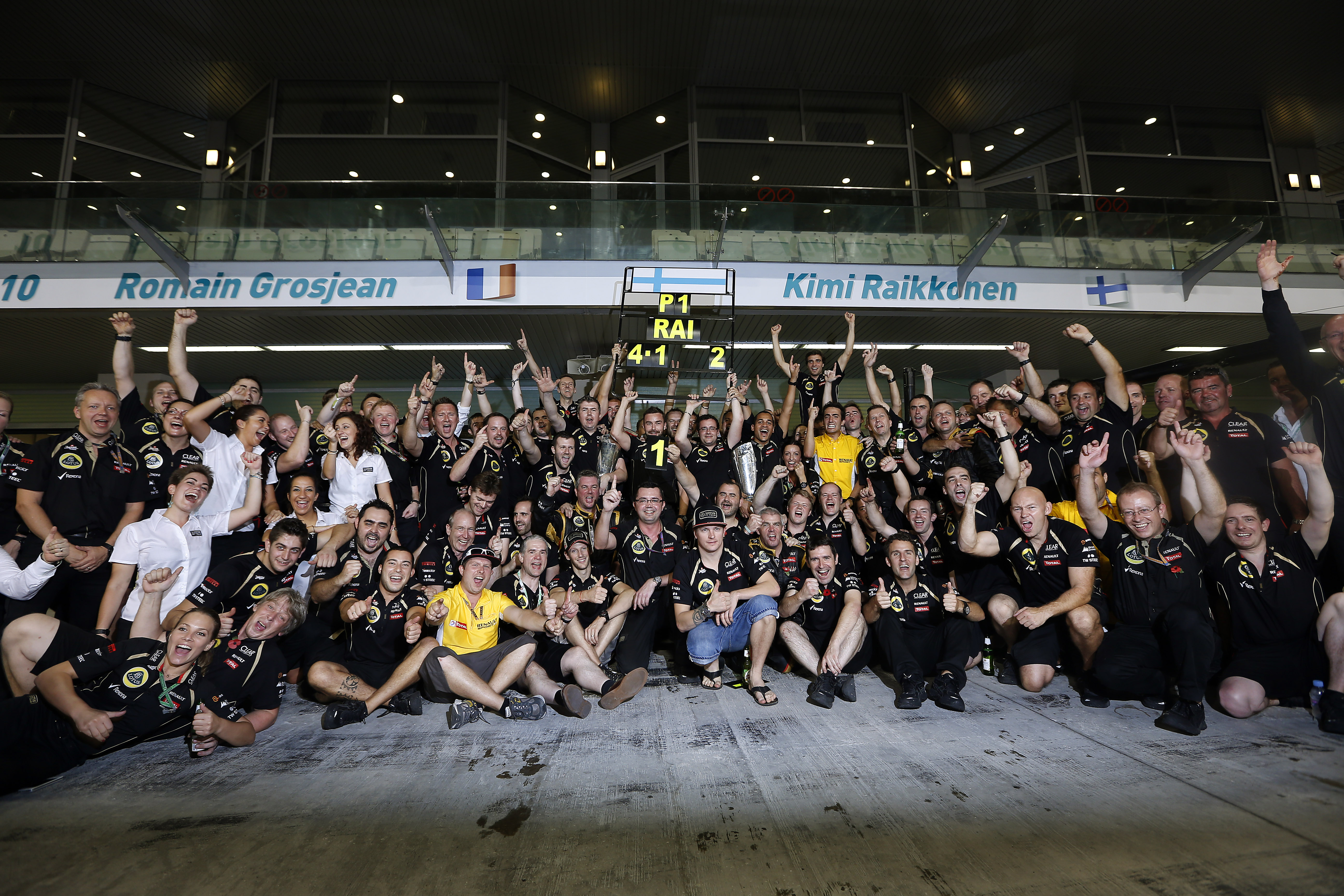
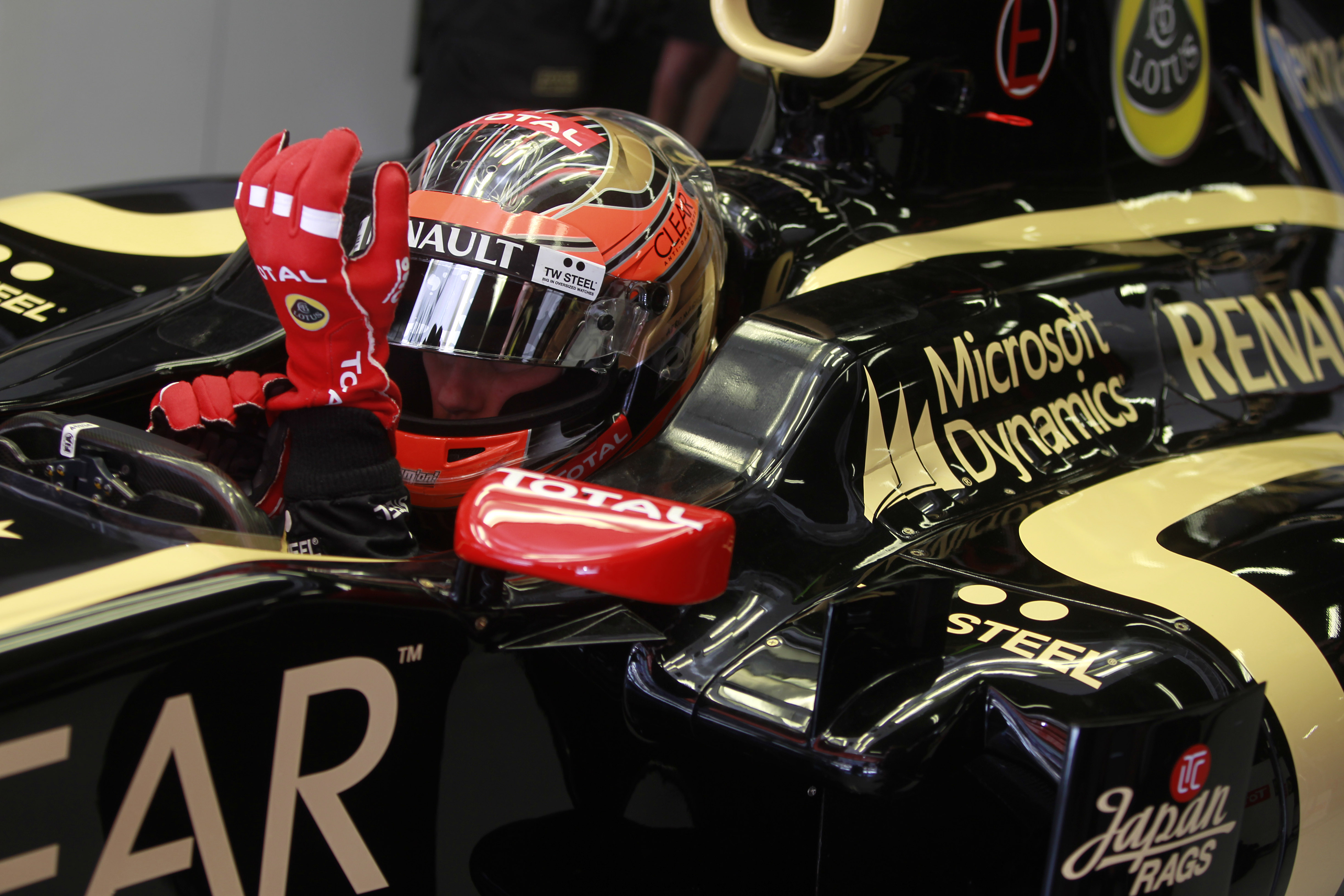
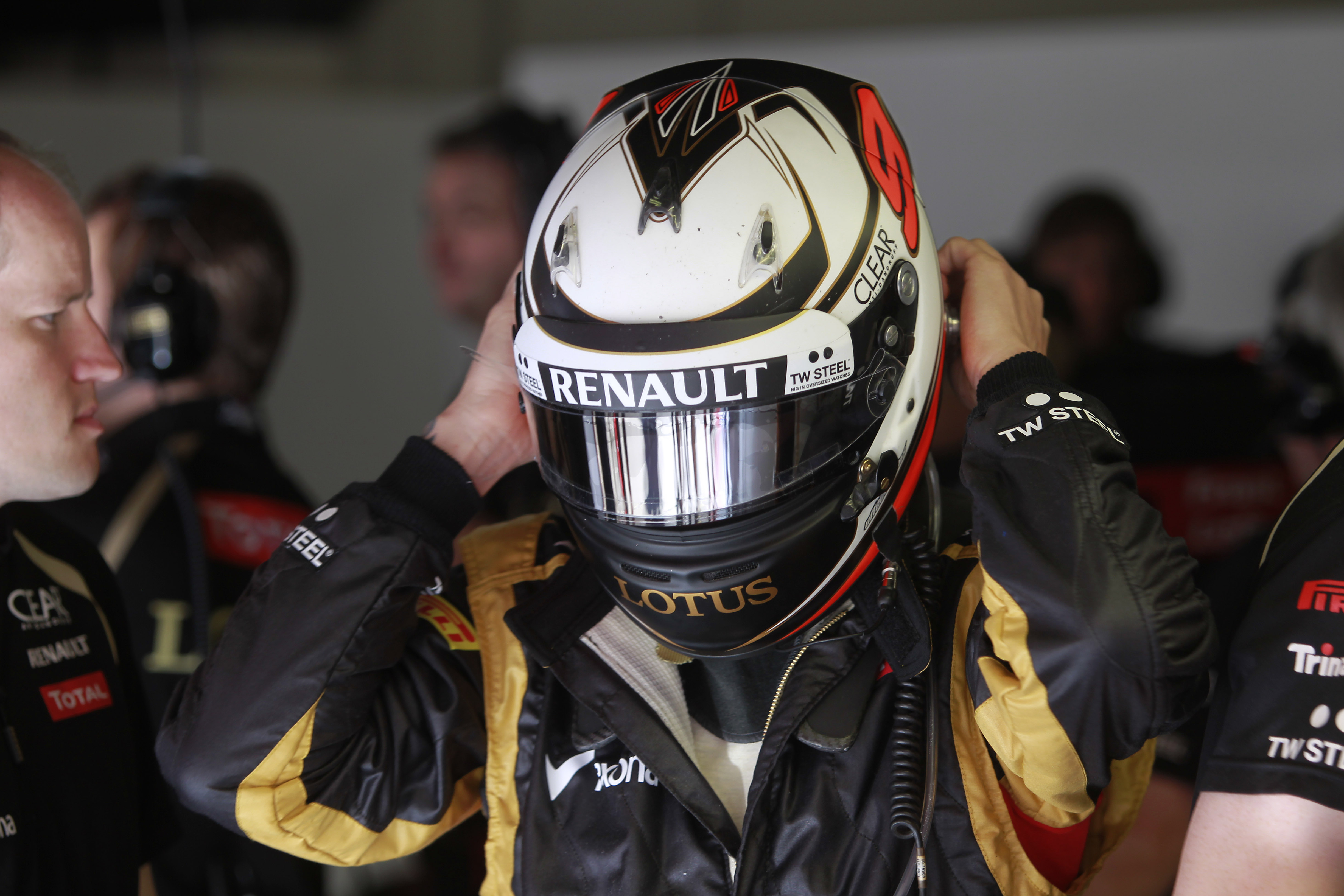
On taking his 19th Formula 1 Grand Prix victory – and 48th win for an Enstone team – Kimi Räikkönen answers the questions following today’s Abu Dhabi Grand Prix:

Kimi soaks up the accolades after winning the Abu Dhabi GP at Yas Marina Circuit

How does it feel to take your 19th win ?
We’ve not had the easiest time in the last few races. Hopefully this gives everyone more belief, not just for everyone working at the track and at the factory, but for everyone behind the scenes running the team. I hope this can turn around the tables and give us many more good races and wins; if not this year, then next year.

How does this win stack up against the other eighteen?
To be honest it’s just another win on the list for me. It’s great of course, because it’s been a few years, but the wins prior to this one were very similar; we didn’t have the best car, but we fought and still won.

Is it good that you’ve answered that ‘when’s the win coming’ question ?
I never cared really what people think – if I don’t finish the next race, then they’ll think that I’m as bad as that race. I’ll just do my thing, and if I’m happy with what I’m doing and it’s the best it can be for the team, then that’s that. So I really don’t care if people are thinking differently of me now, than what they did three hours before the race.

Tell us about your emotions as you took the chequered flag ?
I’m happy, but there’s nothing to jump around about. We still have a few races to go, I’ll try to do the same again. For sure, we’re going to have a good party tonight and hopefully tomorrow, when we are feeling bad after a long night, we will remember how we feel. I’m just happy for everybody in the team.

Tell us about your cracking start ?
It was key to get behind the faster car and not get stuck behind cars that aren’t as fast as us. We had a good position on the grid and we made it better at the start. I think we’ve had some very good starts before and compared to the others, today was a pretty normal start on our scale. I managed to pass Mark (Webber) and Pastor (Maldonado) before I changed into second gear. I’d had a very good practice start on the warm-up lap so I knew this was going to be good.

How long will your celebrations of this win last ?
I have almost two weeks. As long as I manage to get myself to the next race I think the team is happy. Maybe I will try to get home at some point.

Sport in schools rant

Predictably, the politicians, Uncle Tom Cobley and all are jumping all over it.

The decision by the Coalition Government not to require schools to provide two hours of physical education every week will destroy any possibility of Britain’s businesses feeding from the feel-good factor created by our Olympic success, warns Will Davies – co-founder of London property maintenance and refurbishment company, aspect.co.uk.

You’ve probably never heard of the guy, or his organisation, but he has a point (perhaps reinforced because he used to be a rugger player, as was I briefly before seeing sense and taking up a rowing career). Unsurprisingly, he says:

“The boost our economy could have received from the energy created by Britain’s astonishing successes in the Olympics will all be washed away by this political blunder. In my experience, the leaders on the sports field often become the leaders in the workplace, and the sorts of young people who commit themselves to excelling in sport are also the individuals who work hard to make a success of the working lives.”

He’s right there. Even under the previous government all children were required to take part in two hours of sport every week and there was an outline plan to increase that requirement to five hours every week. Blair started it off in fact.

A spokesman for the Department for Education said, perhaps somewhat naively if you give them the benefit of the doubt:

“Instead of handing down target and quotas from Whitehall, we have chosen to trust teachers and parents when it comes to deciding how much sport pupils should do.”

What tosh. You can just hear them smirking as they say it. But the Youth Sport Trust criticised the decision saying:

“Measuring the number of young people participating in two hours of school sport did give a clear indication of participation levels in sport in schools across the country. There is still some great work going on in schools but it is now more difficult to know exactly where provision is good and where it needs to be improved.”

Figures obtained by the Guardian through a freedom of information request also demonstrate embarrassingly that 21 school playing fields have been sold off since the Coalition Government came to power. Adds Davies:

“Selling sports fields and replacing competitive sports with yoga and circus skills will not build on our Olympic legacy. Working hard to become competitive at sport instills passion, teamwork and dedication in our youngsters. All of which are attributes that will help them be successful in their working lives.”

Cue National Anthem.

Why the Bank of England is wrong

The Bank of England has just issued a forecast predicting zero growth this year – down from a prediction of 0.7%  GDP growth three months ago. But the bank continues to downplay the UK economy because it is basing it on the wrong measure.

If you play conkers then you can recognise when someone is playing with stones rather than horsechestnuts. But what if the game is about winning and not sport?

The problem with measuring the performance of the UK economy against the rest of Europe is that the Bank of England continues to regard it as a conker match and fails to see that the UK is an aggressive performer which does not compete on the same terms as most other countries.

The UK is by far Europe’s single biggest exporter of foreign direct investment in the rest of the world. It is not another Germany producing manufactured products or a country with a service economy largely based on retailing or IT services.

UK investments can be found all over the globe and it owes its success to a powerful financial sector.  For this reason GDP – which measures production within the confines of national borders – is not an appropriate measure of UK success.

We therefore need to look at real gross national income (GNI) which takes into account the proceeds of foreign direct investments. And on that measure the performance of the UK looks very healthy – with significant gains for the last two available quarters in a row and a 5.7% improvement since Q3 2009.

Yes, Germany continues to outperform the UK in terms of real GNI – but because Germany’s economy relies on manufacturing it is necessary to offset the capital reinvestments required to maintain growth.  On a net basis the UK economy is moving at an equal pace to Germany and there is every sign that this pace of growth could continue – unless companies believe the Bank of England and retrench.

Responding to the latest Bank of England forecast The Secretary-General of the Federation of European Employers (FedEE), Robin Chater, said at a press conference today that:

“a reliance on GDP as the only measure of economic performance can be highly misleading and we must recognise that the world is far from the position it was in during the Autumn of 2007. We are in danger of talking ourselves into a double dip recesson and the UK has certainly reaped additional advantages in recent months from not being part of the eurozone.”

Dreaming of Rio 2016

Southborough, Kent rowing star Edward Couldwell is hungry to take his sculling to the next level after representing Great Britain for the first time at the World U23 Championships in Lithuania last weekend, writes Oliver Porritt in the Kent & Sussex Courier.

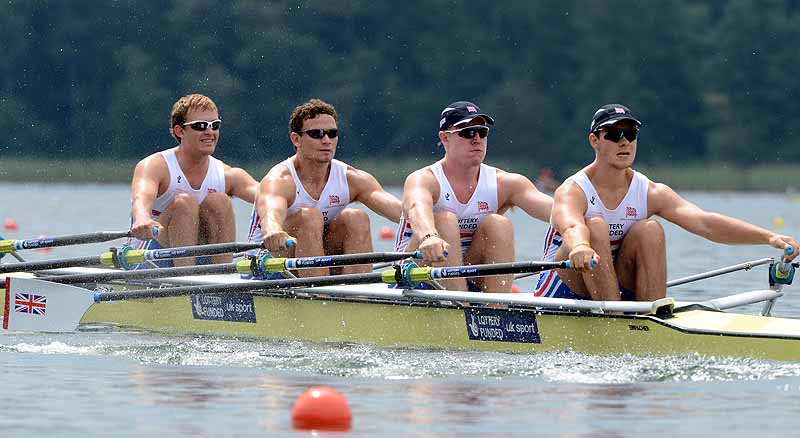
Great Britain’s under-23 men’s quadruple sculls. Couldwell is rowing at ‘3’, second from the right.

Couldwell, 20, was part of the quadruple scull which finished fifth in the B final of a regatta packed full of crews looking to be part of the Rio 2016 Olympic Games.

The former St Andrews, Beechwood and Tunbridge Wells Grammar School pupil was disappointed not to make the A final, but relished the opportunity to test himself in competition.

“It was a brilliant experience but it was a little disappointing in the end to under-perform,” he said. “The calibre of rowers at this level is not something I had come up against before.

“But coming out to the water wearing a GB vest was a fantastic feeling and that first heat was the perfect way to start the event.”

The British crew finished that race second behind Australia to qualify for the semi-finals with ease, and Couldwell revelled in the atmosphere.

He said: “I came off the water so excited on that first day and it was a feeling like nothing I’ve experienced before. When we started six weeks ago our starts were pretty slow but we’d worked on that and we went out clear in the first heat before Australia came back at us.

“After the heats we looked at all the qualifiers and there were no more than five seconds separating all the crews – it was that close.”
The top three from each semi-final qualified for the A final, but the British quartet came fifth over the 2000m course, just 3.5 seconds behind the Czech boat in third.

This result put them into the B final, though illness struck down one of their crew before the race, meaning they could only finish fifth.

Couldwell said: “The margin for error is so small at this level and if you are slightly off you have no chance. On the last day one of the guys was really suffering and in the second half of the B final we could feel the boat get heavy.

“We lost a little composure as we were coming under increasing pressure, though it was a real learning curve. But we are a really young crew. I still have another year as an U23 and two of the others have a couple of years left.

“So we have a very realistic chance of developing this boat and will be very strong when we come back next year.”

2016 Games a realistic target for talented rower

Southborough, Kent’s Edward Couldwell is on course for the 2016 Olympic Games in Rio after being selected to row for Great Britain at the World U23 Championships in Trakai, Lithuania, writes Oliver Porritt in the Kent & Sussex Courier.

Edward Couldwell – aiming for the Rio Games

The former St Andrews, Beechwood and Tunbridge Wells Grammar School pupil started rowing at Bewl Bridge Rowing Club when he was 13, and is representing his country for the first time in the quadruple sculls. Couldwell, 20, was looking forward to getting out on the water for the first heats and is glad to have been chosen for his first international regatta.

Said Couldwell:

“When you are in a GB squad you can’t take anything for granted. And just because we were in the boat for the last few months didn’t mean we would still make the World Championships.

“You can never assume you’ve made it, so when I got confirmation the first feeling was relief followed by a real satisfaction that I had got there. It means all the hard work has paid off and having the GB vest in your hand means you have something tangible to show for your effort.

“Getting the vest was the moment you realise that this is actually happening and it is nice to know people know you are representing your country.”

Couldwell, who continued to hone his rowing skills at Loughborough University, had to go through a gruelling series of trials over the last year to make the squad.

He adds:

“We had trials in October, December and February before the final tests in April where we were put into teams of two and raced against each other. The selectors saw the potential of a team consisting of me and the other three guys, and since the last week in May we have been training and racing full time.

“We raced at Dorney Lake before a big regatta in Amsterdam where we won both days of competition in our quad. Our final event in preparation was the Henley Royal Regatta where crews race one-on-one with the final two boats going head-to-head.

“We got to the final (The Prince of Wales Challenge Cup) where we were up against a crew from the Leander Club, which wasn’t limited to Under 23s. They had been together for over a year and we had lost by some distance to them a few months earlier. This time we were ahead all the way until some issues on our boat saw them pip us right at the finish, which was a real shame.”

Great Britain traditionally struggles in the sculling discipline, where each competitor has two oars, but Couldwell is hopeful of getting through to the last day and also has the Olympics in his sights:

“No British quad has made the ‘A’ final since about 2008. So my main aim is to get to the ‘A’ final as one of the top seven boats and then see what we can do from there.

“But as an athlete, and especially as a rower, everything is geared towards the Olympics. Being part of the U23 set-up is seen as a stepping stone to greater things and getting to the Olympics has been a dream of mine since I took up the sport.

“Rio 2016 is my ultimate aim and it is a long way away at the moment, but to be part of it would be something special.”

Williams on fire

It certainly was – and in more ways than one.

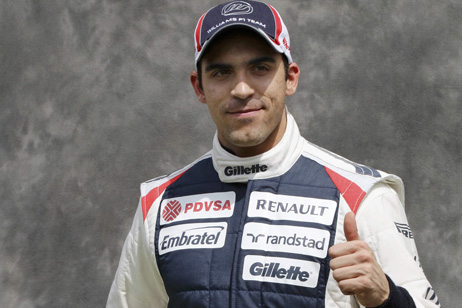
In only his second season in Formula One, Pastor Maldonado – the first Venezuelan to win a Formula One race – secured the Williams F1 team’s first win since the 2004 Brazilian Grand Prix –  and the first Williams-Renault win since the 1997 season – with a brilliant performance in Barcelona.

Team mate Bruno Senna’s race unfortunately ended early as he was forced to stop on track with damage sustained following an incident with Schumacher.

Said Mark Gillan, Williams’ Chief Operations Engineer after the race:

“What can I say – a massive result for the team and a stunning drive by Pastor. The whole race went well from start to finish with every team member playing a vital part in this victory. We will allow ourselves a bit of time to savour the win and then will refocus to concentrate our efforts on continuing to improve throughout the remainder of the season.

“Obviously it was disappointing that Bruno got taken out of the race by Michael but Bruno is looking forward to getting back into the car in Monaco.”

Predictably, Pastor Maldonado said it was an unbelievable feeling winning his first race:

“The car felt really consistent, was fantastic to drive and our pace was strong throughout. Alonso was chasing me hard but we looked after our tyres well and I managed to open the gap towards the end.

“The team has worked so hard all year and this win is for them. To be the first Venezuelan to win a Formula One race is a big honour and hopefully I will win more races in the future.”

Unfortunately, after the race a fire took hold in the team’s garage which originated from the fuel area. Four team personnel were injured in the incident and subsequently taken to the medical centre. Three are now receiving treatment at local hospitals for their injuries, while the fourth has been released. The team is monitoring their condition to ensure they receive the best possible care.

The team, the fire services and the police are working together to determine the root cause of the fire and an update statement will be released in due course, although it’s thought a KERS unit sparked the fire.

Smoke bellowing out of the pit area. Where were the sprinklers?

Congratulations to Williams

What a day. Pastor Maldonado delivers William’s first win since 2004. McLaren’s Lewis Hamilton fights back from last on the grid to finish eighth, and Kimi Raikkonen in the Lotus Renault just fails to catch Ferrari’s Alonso for third.

More later.

Hamilton

Five places back. Well, I got that wrong yesterday. Disqualified and stuck on the back of the grid? Bit harsh. The stewards have some explaining to do.

Still, Maldonado held his second position well after losing pole to Alonso. Not a lot he could have done about that. And Hamilton is battling through the field, despite his pit crew almost putting a spanner in the works, or was it a wheel gun..

Williams back on top for Frank’s birthday

Of course with Lewis Hamilton being docked five places for stopping on track, Pastor Maldonado has now claimed his first front row grid position in qualifying for tomorrow’s Spanish Grand Prix.

Pastor Maldonado

After topping the times in Q2, Pastor drove a great lap on soft tyres to post a time of 1:22.285 putting him second overall behind Hamilton’s McLaren. After being hampered by traffic on earlier runs a frustrated Bruno Senna ended Q1 in the gravel and will therefore start 18th in tomorrow’s race but with extra sets of tyres available.

Williams’ Chief Operations Engineer, Mark Gillan says:

“Pastor’s qualifying performance was stunning today with a collection of very strong laps throughout the session which allowed us to save a set of soft tyres to fight for a decent qualifying position in Q3. To finish P2 is a great boost for the whole team and gives us a very good position from which to push hard in the race for decent points and hopefully a further belated 70th birthday present for Frank. It is obviously disappointing for Bruno to have crashed out of Q1 but we expect the race pace to be strong so points are still possible from P18.”

Sahara Force India at Spanish GP (Saturday)

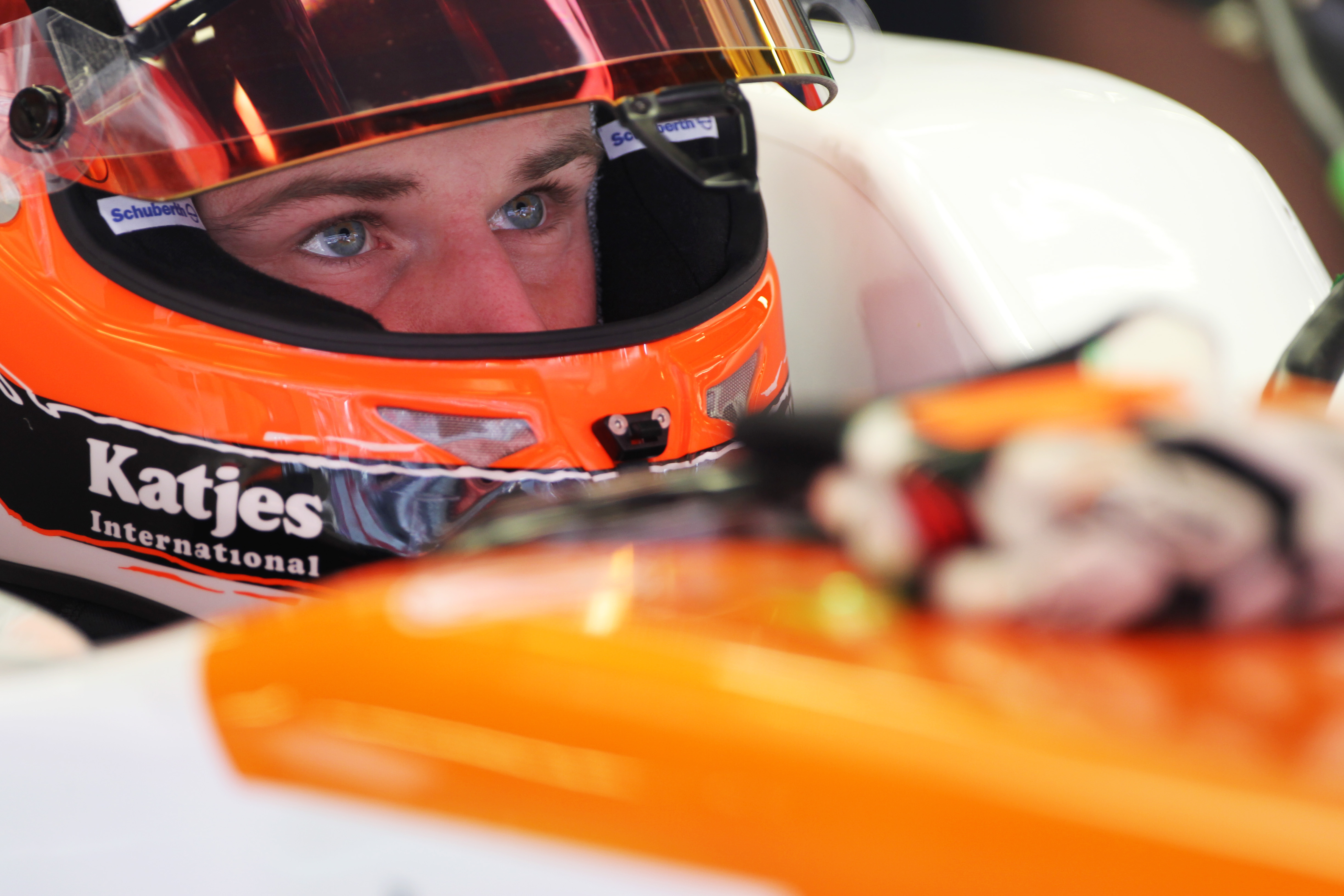
The boys will line up on the seventh row of the grid for tomorrow’s Spanish Grand Prix as Paul Di Resta qualified in P13 just ahead of Nico Hulkenberg in P14.

More trackside images:

Lotus F1 at Spanish GP (Saturday)

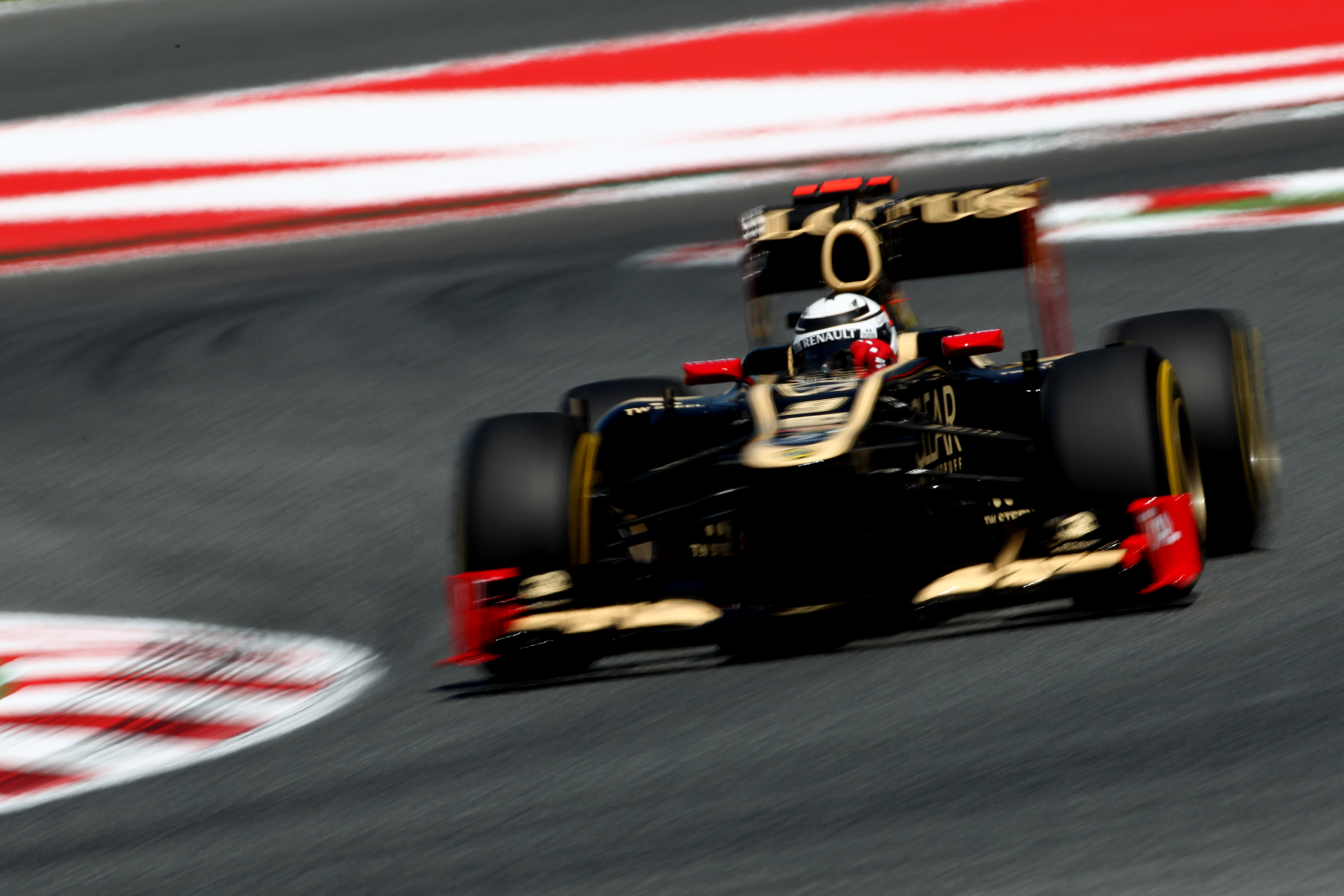
The comeback continues. Romain Grosjean qualified in P4 whilst Kimi Räikkönen set the fifth fastest time under blue skies and light clouds in qualifying for tomorrow’s Spanish Grand Prix at the Circuit de Catalunya.

Some nice images from the trackside:

Paedophile profiling

Community management software company, Crisp is noticing a 10 per cent, month on month increase in spam targeted at the brand pages of social media sites, such as Facebook.

Chris Hildreth, Crisp’s Founder

With the world’s biggest brands currently paying hundreds of thousands of pounds per year to protect their online communities from spammers and profanity, Crisp Founder Adam Hildreth argues that the widely adopted human moderation techniques are no longer scalable or indeed feasible when used in isolation.

In 2005 Hildreth (27) founded Crisp to make the internet a safer place for children. After realising that simple human moderation methods would never be able to spot online predators – their numbers ever increasing – the British entrepreneur invented a new type of technology that could accurately spot the underlying context of online conversations and ultimately the behaviour of a user. The technology went so much further than simple keyword filtering.

Using behaviour analysis technology Crisp can identify harassment, spamming and predators on the lookout for victims with over 98.4 per cent accuracy. Since 2006 Crisp has helped hundreds of global child entertainment brands – including Sony Online Entertainment, Nickelodeon, Electronic Arts and the LEGO group – keep their online game areas a safe place for children.

By applying the same intelligent technology it uses to identify online child grooming, Crisp is now protecting global brands; their social media and online communities from a different kind of threat.

The Crisp Community Management platform allows a brand to pull in content from its social media, forums and other community applications. The content is intelligently categorised according to business goals and placed into priority queues for action to be taken.

Crisp’s intelligent classification algorithms prioritise which content to moderate, who to engage with and what to listen to, making it easy for the brand to manage and monitor all online activities. It not only helps brands respond to customers quicker but the technology also captures key business changing insight.

Says Hildreth:

“There are already plenty of tools to help customer service and moderation teams manually manage content from social media but none have any real intelligence when it comes to finding what content needs to be reviewed. Simple keyword filtering is more likely to block an annoyed customer’s comment for using a mildly offensive word than a commercial spammer.”

Crisp currently analyses over 600 million pieces of data for clients each month, to examine online behaviour. This is something that human teams simply cannot compete with alone. Its software complements the work of human teams by prioritising content and cutting out ‘noise’.