Those pesky hackers

In the last 10 years, cryptography researchers have demonstrated that even the most secure-seeming computer is shockingly vulnerable to attack. The time it takes a computer to store data in memory, fluctuations in its power consumption and even the noises it emits can betray information to a savvy assailant.

Attacks that use such indirect sources of information are called side-channel attacks, and the increasing popularity of cloud computing makes them an even greater threat. An attacker would have to be pretty motivated to install a device in your wall to measure your computer’s power consumption. But it’s comparatively easy to load a bit of code on a server in the cloud and eavesdrop on other applications it’s running.

Fortunately, even as they’ve been researching side-channel attacks, cryptographers have also been investigating ways of stopping them. Shafi Goldwasser, the RSA Professor of Electrical Engineering and Computer Science at MIT, and her former student Guy Rothblum, who’s now a researcher at Microsoft Research, recently posted a long report on the website of the Electronic Colloquium on Computational Complexity, describing a general approach to mitigating side-channel attacks.

This month, at the Association for Computing Machinery’s Symposium on Theory of Computing (STOC), Goldwasser and colleagues are presenting a paper demonstrating how the technique she developed with Rothblum can be adapted to protect information processed on web servers.

As well as preventing attacks on private information, Goldwasser says, the technique could also protect proprietary software so that it can’t be reverse-engineered by pirates or market competitors — an application that she, Rothblum and others described at last year’s AsiaCrypt conference.

Today, when a personal computer is in use, it’s usually running multiple programs — say, a word processor, a browser, a PDF viewer, maybe an email program or a spreadsheet program. All the programs are storing data in memory, but the laptop’s operating system won’t let any program look at the data stored by any other.

The operating systems running on servers in the cloud are no different, but a malicious program could launch a side-channel attack simply by sending its own data to memory over and over again. From the time the data storage and retrieval takes, it can infer what the other programs are doing with remarkable accuracy.

Goldwasser and Rothblum’s technique obscures the computational details of a program, whether it’s running on a laptop or a server. Their system converts a given computation into a sequence of smaller computational modules. Data fed into the first module is encrypted, and at no point during the module’s execution is it decrypted.

The still-encrypted output of the first module is fed into the second module, which encrypts it in yet a different way, and so on.

The encryption schemes and the modules are devised so that the output of the final module is exactly the output of the original computation. But the operations performed by the individual modules are entirely different.

A side-channel attacker could extract information about how the data in any given module is encrypted, but that won’t let him deduce what the sequence of modules do as a whole. The adversary can take measurements of each module, Goldwasser says, but they can’t learn anything more than they could from a black box.

The report by Goldwasser and Rothblum describes a type of compiler, a program that takes code written in a form intelligible to humans and converts it into the low-level instruction intelligible to a computer.

There, the computational modules are an abstraction: The instruction that inaugurates a new module looks no different from the instruction that concluded the last one. But in the STOC paper, the modules are executed on different servers on a network.

(With thanks to Larry Hardesty at MIT)

The secret of blonde hair

Researchers studying pigmentation in the South Pacific have uncovered a key genetic contribution to hair colour.

The findings, published in Science, reveal a functional genetic variant which has led the islanders to have simultaneously the darkest skin pigmentation outside of Africa and the highest prevalence of blonde hair outside of Europe.

Blond Solomon Islander (c. Sean Myles)

Human skin and hair colour varies considerably both within and among populations. Previous studies have shown that pigmentation is largely heritable but also suggest it has evolved to adapt to the sun’s ultraviolet rays — with populations near the equator possessing darker skin and hair colour.

However, the Melanesian population of the Solomon Islands, East of Papua New Guinea, differs from this trend.

The research – co-led by Dr Nic Timpson from the Medical Research Council (MRC) Centre for Causal Analyses in Translational Epidemiology at the University of Bristol and researchers at Stanford University in the US – sought to find out what has caused these islanders to possess such discordant patterns of pigmentation, some of the greatest in the world.

The team took samples from a pool of Melanesian participants, 43 with blonde hair and 42 with dark hair, and carried out genetic analysis to compare their genomes. The results showed that the across the whole genome, one key gene region contained the variation responsible for differences in the cells that produce darkening pigmentation, or melanocytes.

Naturally blonde hair is a surprisingly unusual trait in humans which is typically associated with people from Scandinavian and Northern European countries. The team’s findings help explain the fascinating differences in these physical characteristics, but also underline the importance of genetic mapping using isolated populations to help shed new light on the epidemiology of disease.

Samsung’s spanking new phone

The south Korean manufacturer has introduced the third generation of its flagship smartphone brand, the Galaxy S III. The phone will be branded as the official 2012 Olympics phone. It belongs to the super-phone category of smartphones which also includes the HTC One X, the forthcoming iPhone 5 and LG Optimus 2X.

According to Informa Telecoms and Media, the super-phone market will generate above 50 million units in terms of sales by the end of 2012. Galaxy S III will certainly enable Samsung to reinforce its position as the leading vendor in this market. It will also enable the consumer electronics giant to maintain its leadership as the dominant Android manufacturer, with an estimated one-third market share by end of 2012. Says Informa Telecoms and Media’s Principal Analyst, Malik Saadi:

“What is unique about the Galaxy S III is the level of intelligence Samsung has created around its embedded features and sensors which takes smartphone innovation into another league.

“The device’s features are capable of communicating with each other and sharing information, enabling it to react intuitively and automatically to an action taken by the user. For example, the phone can recognise a face in a picture taken with the camera and will associate it with a contact saved in the address book.

“The phone will then automatically save the picture in a relevant file (family, friends, colleagues), tag it, and suggest you should upload it to facebook or Twitter.”

Malik Saadi

While the Galaxy S III will be highly desirable for enthusiastic and advanced users, Samsung will have to build on the already popular Galaxy brand and push it hard to various distribution channels before the iPhone 5 is launched.

However, Samsung will find it hard to convince and educate the typical mobile phone user to adopt and use all the advanced experiences enabled by this phone. In this specific segment, Samsung Galaxy S III is unlikely to meet with great success, at least in the early stages after launch.

Continues Saadi:

“The casing of the Galaxy S III is another weakness, as it’s based on the usual plastic casing found in most of Samsung’s phones and doesn’t do justice to the device’s impressive features. Samsung needs to learn from the likes of Nokia and Apple which use high-quality materials and the best designs for casing their premium devices.

“Galaxy S III could, potentially, also cannibalise sales of some of its popular smartphones including Galaxy Note, Galaxy S II, and Galaxy Nexus. Therefore, Samsung will have to come up with a well-structured price segmentation, where Galaxy S III addresses the premium price points while the existing Galaxy devices enter the lower price points to widen the audience of the overall Galaxy brand.”

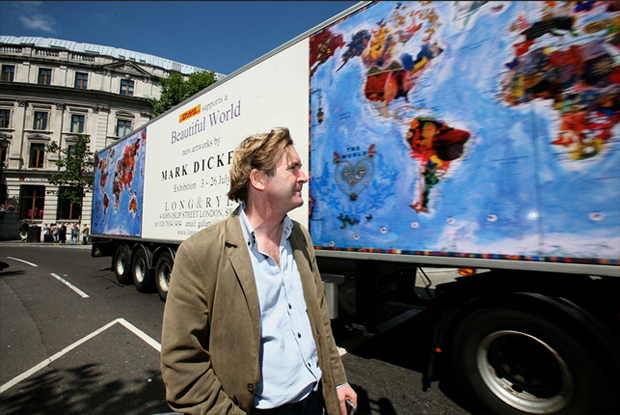
Interview with Mark Dickens

Following on from my piece on Formula One art commissioned by Bernie Ecclestone, I’ve now had a bit of time to sift through the notes of my discussion with the artist, Mark Dickens.

So then Mark Dickens, how did the idea of creating F1 art come about?

MD: Three years ago I was commissioned by the Yas Marina circuit to create 10 paintings – focusing on each F1 team – that would commemorate the opening of the new circuit.

Working with the drivers, I asked them to choose pieces of poetry from Rudyard Kipling, handwriting lines from their favourite poem which would provide me with some insight about them.

Poignantly, as circumstances were to later dictate, Massa chose If (…you can keep your head when all around you are losing theirs…) just before his accident.

Mr E saw my work at the unveiling, which gave him the idea of doing something similar for F1. We talked and shaped the new series together over a period of time, with me crafting a piece for every race on the calendar.

Why art?

MD: It’s a big passion of his. Bernie owns quite a big collection – a very eclectic mix of works. He buys what he likes, regardless of whether it’s a famous artist, or priceless piece. Very refreshing.

We then set about approaching all the circuit CEOs and feature the series on them, asking what hosting a race meant to them.

But I wanted to portray a different side of F1. I wanted to incorporate the world of F1 within the host city – blend the two together. Both have their own sense of dynamism. F1 is about the city; it often promotes the city. Countries take on the F1 challenge to promote the city.

How did the paintings take shape?

MD: I asked each CEO to express what F1 means to them, in a very personal way. Their words were then transferred to the paintings. My work is about portraying a more positive side of humanity. So I was looking for the beauty within F1.

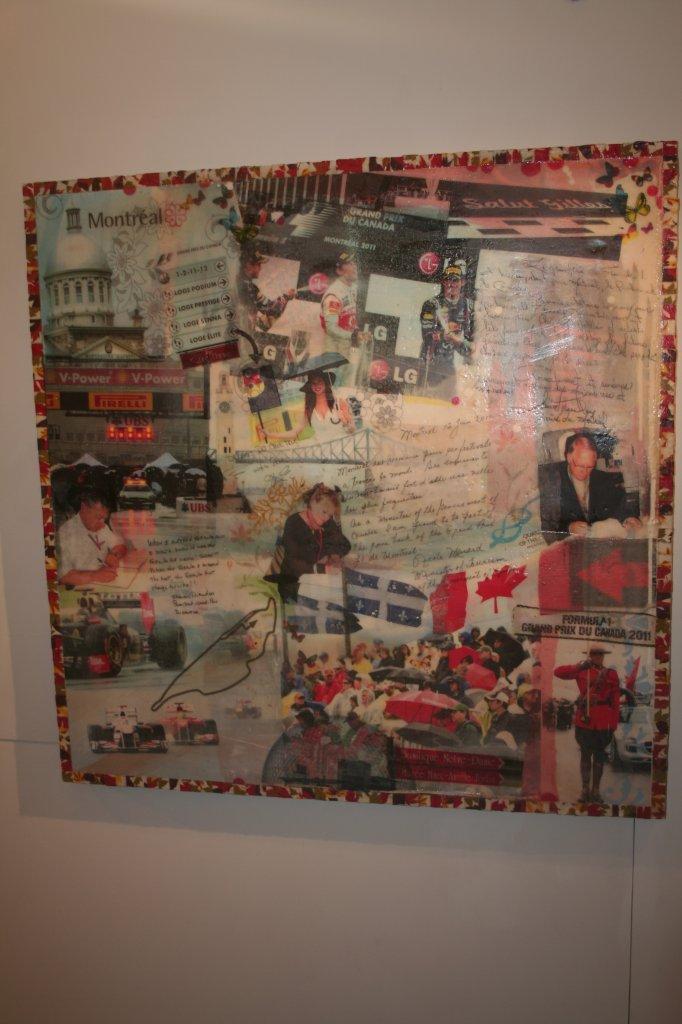
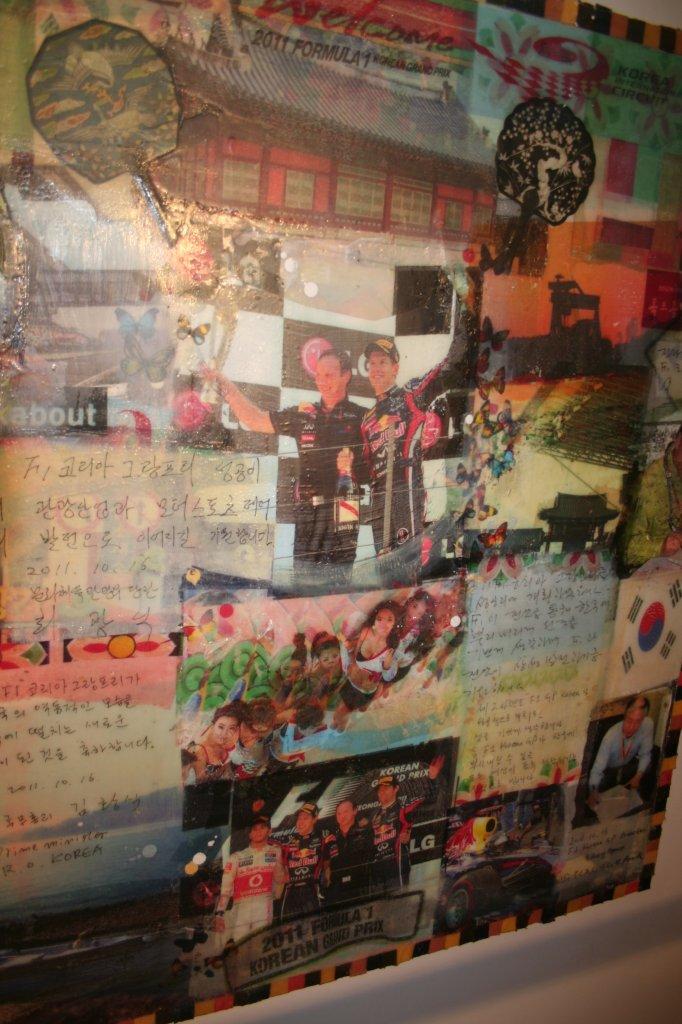
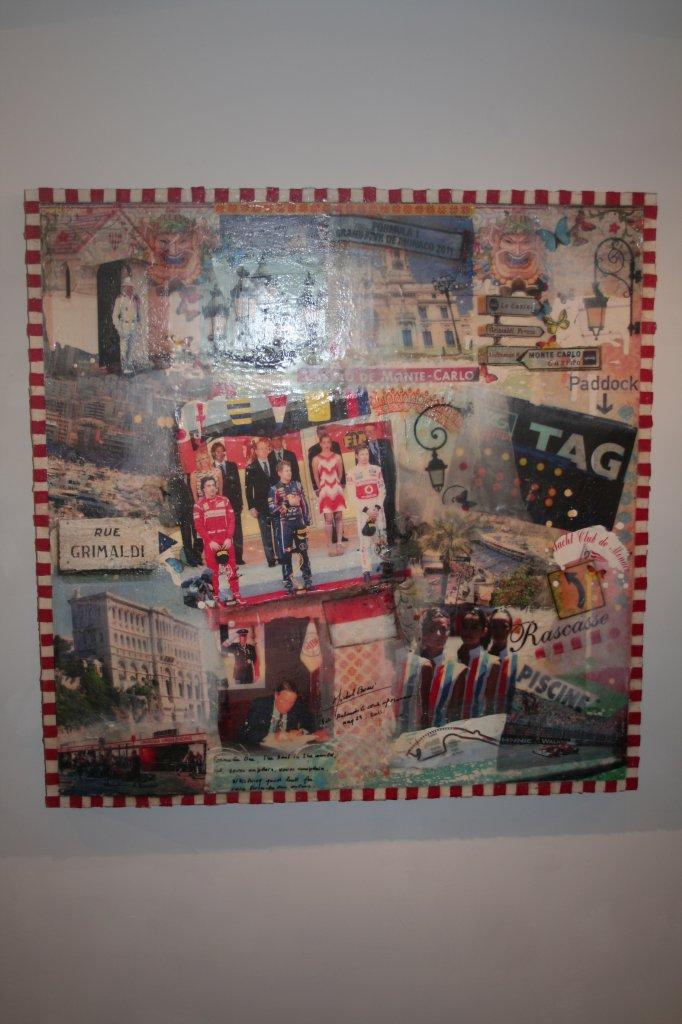
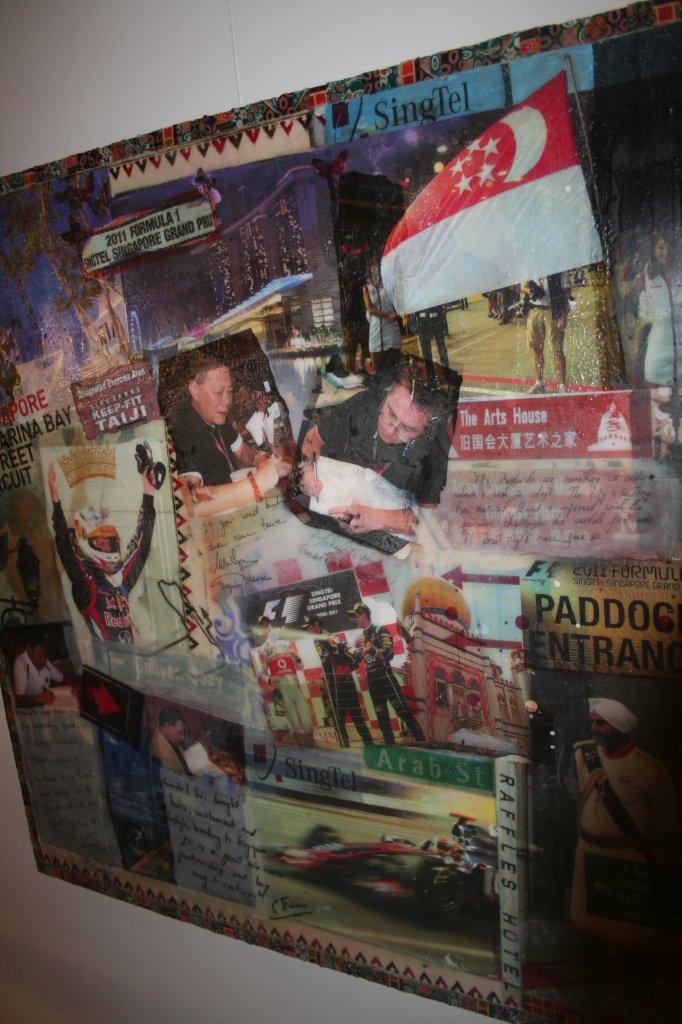
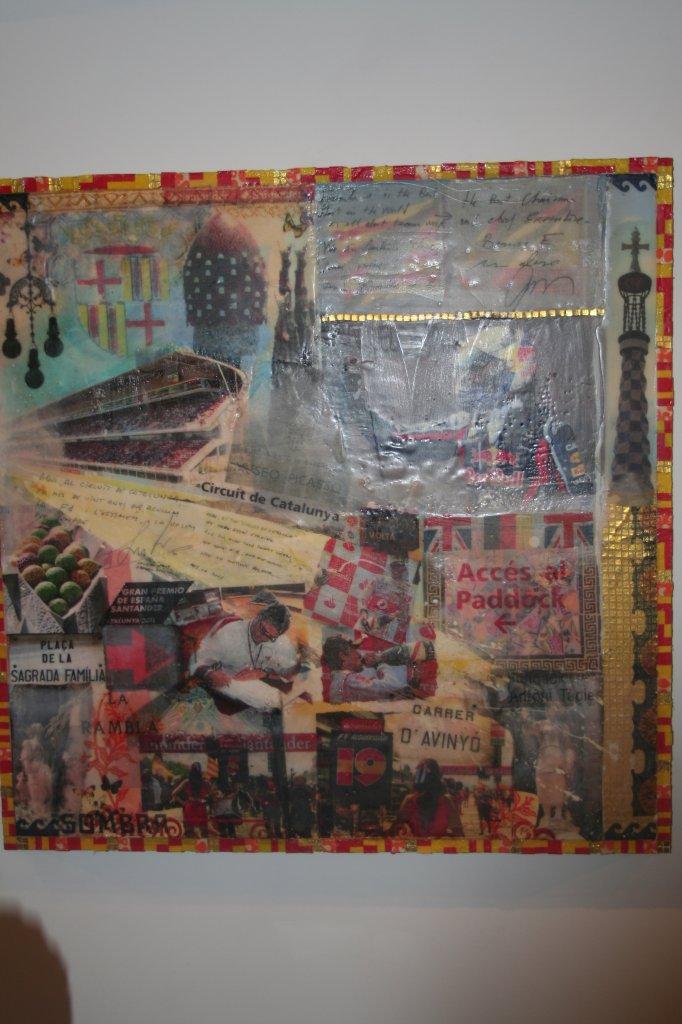
I collected all the information about the circuit and the city, then I pieced it together when I got back in the studio. I probably used about 50 photographs. It’s a question of building up story layers using resin to give each canvas a sense of depth. I also used fabric taken from every city. The resin is yellow and gives it that slightly dated look. Had them all on my wall in the studio. They all had to feed off each other.

How would you describe this beauty?

MD: By the forms – of the cars, which often show a natural beauty. They are very elegant with their flows. Even the modern motorhomes, the architecture, they are quite classic designs now. Everything has a purpose, is controlled. There is a purity of design which says a lot about the teams themselves.

Sky Sports F1 site – forget it

Unless you love ads of course.

Was looking forward to accessing some of Sky Sport F1’s much publicised video reports on its swanky new web site today. The BBC’s site has been looking tired for some time.

Imagine my disappointment, especially after all the pre-launch hype, when I click in there only to hit ad after ad before I can get to the meat. Each time you click on what you assume will be a report, you have to endure a minute or so of tedious advertising. And it’s the same ad.

I’m sure Brundle and the team have lots of interesting comments to make but I’m back to the BBC. To be honest, I never really left, but I was hoping Sky would add a little more dynamism to the package. I assume it’s there, but I can’t be bothered ploughing through the ads to find it.

At least with the BBC Sport’s F1 site I can click straight on to the highlights and they’re there. TV coverage is good too. Ironically, today’s tightly edited post qualy Melbourne report was first class.

In the case of the BBC – less, really is more. Sky – you may have quality, but it takes some finding. Please do something about it.

Formula One art: Part 2 – The images

A huge thanks to David Hayhoe for snapping the images from Mark Dickens’ F1 art exhibition the other day.

Incidentally, David compiles what I regard to be the bible for F1 stats because of its accuracy and therefore reliability for an F1 writer and analyst – the Grand Prix Data Book.

It’s a complete statistical record of the F1 World Championship since 1950 and David is now looking for a new publisher. Someone please give this wonderful man a home. He’s on djhayhoe@gmail.com

Let’s start with Australia..

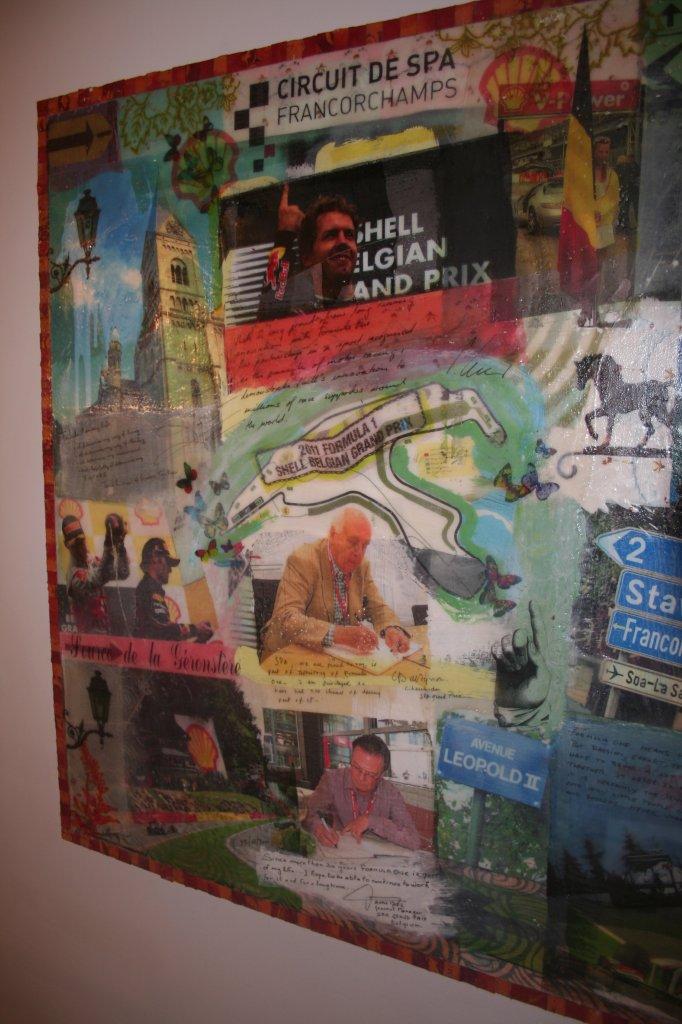
Belgium

Belgium

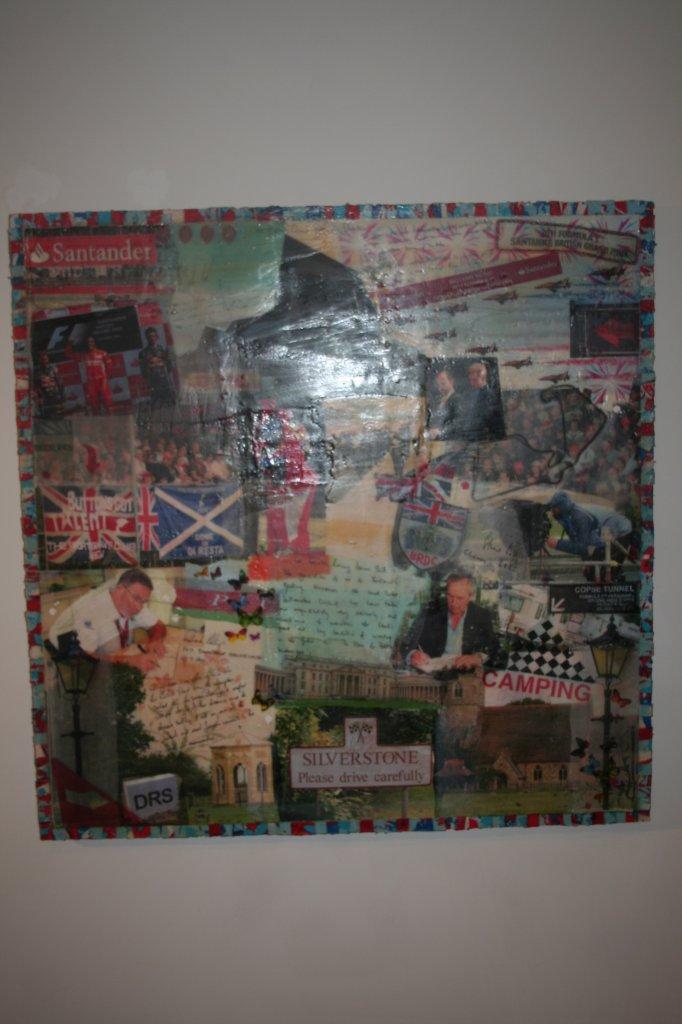
Britain

Britain

Canada

Canada

China

China

Europe

Europe

Germany

Germany

Hungary

Hungary

Italy

Italy

Japan

Japan

Korea

Korea

Malaysia

Malaysia

Monaco

Monaco

Singapore

Singapore

Spain

Spain

Turkey

Turkey


Formula One art

Can’t understand how few news outlets have picked up on this. But a special exhibition of Formula 1 inspired artwork was unveiled by artist Mark Dickens in London the other day.

Eager buyers at Mark's private viewing

Held at the Cello Factory on the South Bank, the exhibition marked the culmination of a year-long art project, commissioned by Mr F1, Bernie Ecclestone, aimed at capturing the essence of the 19-race 2011 Formula 1 World Championship from Australia to Brazil.

Through these pieces of art, Mark Dickens has showcased the beauty and dynamism of each host city. Integral to the artwork is Mark’s collaboration with the circuit CEOs and chairmen, sponsors and other dignitaries all expressing what Formula 1 means to them in their own writing. The works have all been individually created and finished by Mark, using mixed media panels combining print, paint, fabric, photographic transfers, embellishments and hand-written text set on to marine board panels.

Mark with Mr T

Mark attended each of the races throughout the 2011 F1 season, taking in first-hand all the culture, atmosphere and excitement. The works have succinctly blended the cultural and architectural beauty of each host city with the technology and unbridled passion of Formula 1 racing – a potent combination.

The works of art of each the featured host cities will be presented at each event throughout the 2012 Formula 1 season which gets underway this weekend.

Images and interview with Mark to come.

Sponsor a future F1 star

Ronan McKenzie’s the name. Our budding F1 star needs money – and now.

Ronan at Ellough Park Practice Day

His father and step-mother – Jason McKenzie and Karen Box – are trying to secure the budget which will enable Ronan to take up an offer from kart manufacturing giant Birel of a place on its Junior Motorsport team in Karting Formula 3 (KF3) for the 2012 season.

Races take place in Italy, Spain, France and the UK. They’re televised on Italian tv and the Internet.

At this level Formula 1 teams begin to take an interest in young drivers. Ronan’s ultimate goal is to reach F1, and this is the next step.

Ronan is the Associate Driver of Cranfield University’s prestigious Motorsport Programme and is already very well publicised in the media and online.

He will work hard as your brand ambassador, exposing your company to a wide audience and working to promote your brand and/or products.

You will see from his achievements and photos he is a very marketable young man, and he is also very personable and understands fully the obligations to marketing partners.

Jason and Karen have a very limited deadline of 16 December 2011 to accept the offer from Birel. They’re looking to open communications with potential partners at the earliest opportunity.

Please visit Ronan’s LinkedIn profile to access pdf files under “Marketing Partnership Opportunity” – these are details of Ronan’s recent career, a selection of photos and the 2012 season budget to enable Ronan to compete.

If you are interested in partnering with Ronan, or you have contacts who may be interested, please don’t hesitate to get in touch.

Formula One images

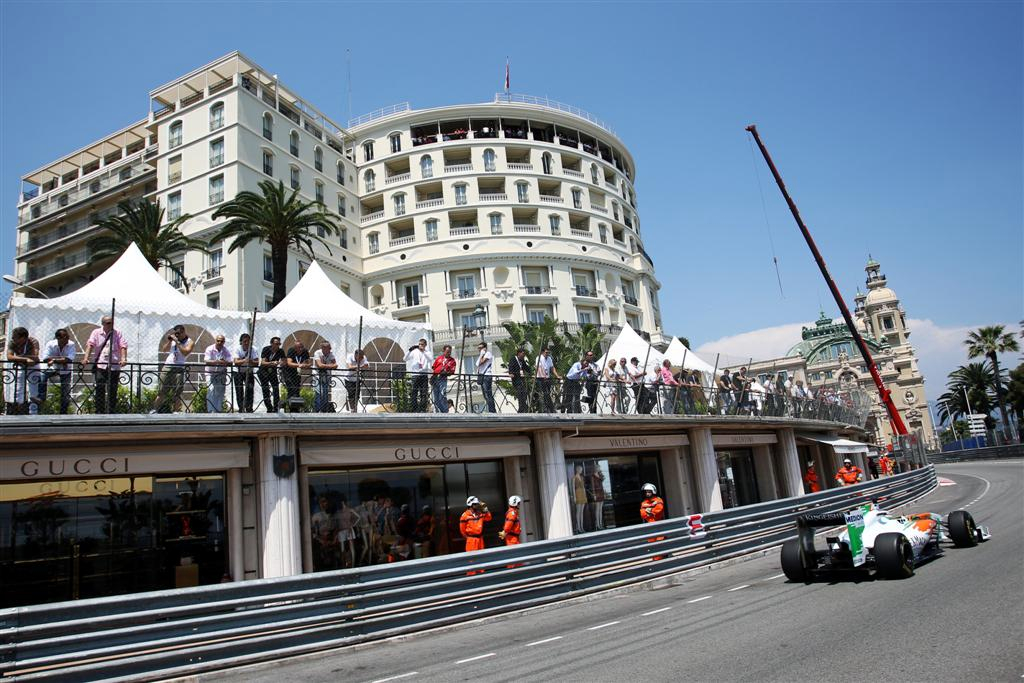
Some nice shots by Force India from today’s practice sessions at Monaco:

The future of Formula One

Yes, the sport is up for sale.

It’s just a question of price.

Jim Clark 1936 – 1968

Motor racing lost a legend at Hockenheim 43 years ago today. It’s a good day to take a few moments to remember.

Force India – images

Come to think of it – so has Force India:

Adrian Sutil in VJM04

The next two are from the recent test in Jerez:

(L-R): Paul di Resta with team mate Adrian Sutil and the new VJM04

Adrian Sutil in VJM04 during testing, Friday 11 February 2011

Lotus Renault – images

The team has released some stunning images from its recent Barcelona test

Hot off the press – Lotus judgement

SUMMARY JUDGEMENT APPLICATION

Hingham, UK 24 January 2011

Team Lotus is delighted that we were successful at the Summary Judgment Application hearing today and that the Judge threw out Group Lotus’ application even before hearing the arguments of the barristers on either side.

Although this decision was never in doubt, it means that we start the 2011 season under the Team Lotus name. Whilst we expected that the Judge would refuse this application, it is good to have the decision in black and white.

The Judge also felt that it was in everyone’s best interests to bring the hearing date for the full trial forward and that is now fixed for 21 March rather than us having to wait until Autumn 2011 or even later. We remain confident that we will succeed at the full trial and we can now focus on the challenges ahead in the 2011 FIA Formula One World Championship.

Williams F1 to be floated?

Williams chief exec Adam Parr

For some years Sir Frank Williams has been considering how to secure the long-term ownership of his racing organisation such that it will remain true to the aims with which Patrick and he established the team back in 1977. Says Williams:

“My goal then was to race in Formula One as an independent Constructor. This was and is my great passion and I will race for as long as I continue to be blessed with good health. It is also my desire that the team is in good shape to go on racing long after I am gone. To that end, it is prudent and necessary to plan for an ownership structure that will enable Williams to be an independent Constructor, owned and staffed by people committed to Formula One and to the sound business practices which have supported us over three decades.

“I have concluded that the option which will best achieve this is to broaden our shareholder base with public shareholders, while having a stable core of long-term investors closely involved in the running of the team. This will ensure stability, good governance and will, I believe, enable us to attract and retain the best people and partners.

“Patrick, Toto and I are therefore examining this option closely and, if the environment is propitious, we may act in the near future. Regardless of whatever steps we take, I shall remain the majority and controlling shareholder and the Team Principal of AT&T Williams.”

Q&A WITH ADAM PARR – CHAIRMAN, WILLIAMS F1

Q: It sounds like Williams is considering a flotation on the stock exchange. Would that be correct?

ASP: Yes, it would be correct to say that Williams F1 is considering a flotation on the stock exchange. At this stage, all we have concluded is that it is the best way to secure the future of the team and its 450 employees.

Q: What is the timetable?

ASP: As the plan develops we will provide further information.

Q: Is retirement a current consideration for Frank?

ASP: No. Retirement is categorically not on Frank’s agenda. Anyone who knows Frank knows this.

Q: Are there any concerns surrounding Frank’s health?

ASP: No. Frank’s health is absolutely fine.

Q: What other options has the Board investigated?

ASP: We have had many approaches in the past, but none have offered the same benefits as this route.

Q: Toto Wolff invested in the team in November 2009. What is his future role?

ASP: Toto is a non-executive director and a significant shareholder in the company. He has already established himself as an important part of the team and he will play a central role in its future.

Q: If Williams were to go public, what are the implications for the team’s partners and relations with the FIA and FOM?

ASP: The team has always enjoyed honest and open relationships with its partners, the governing body of the sport and the commercial rights-holder. Whether we are a public or private company, this will not change.

Q: Would any flotation involve raising funds for the company?

ASP: No.

Q: Does Williams F1 have the financial track record to support a flotation?

ASP: Yes, we believe we do. The company has always been run on sound financial principles. In spite of the economic environment in recent years, we have turned a profit and generated positive cash-flow from operating activities in 2008, 2009 and 2010 and we have a fully contracted budget for 2011.